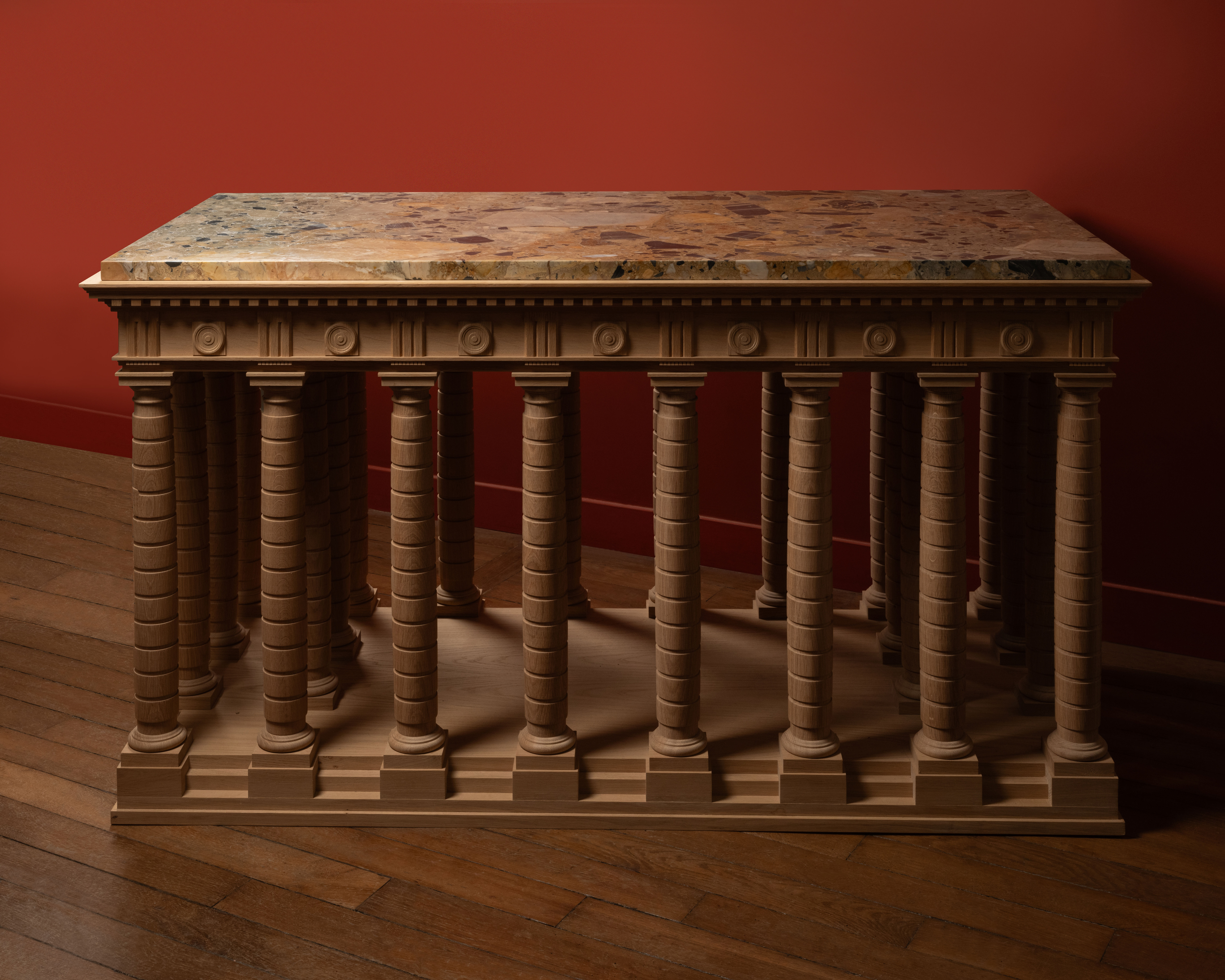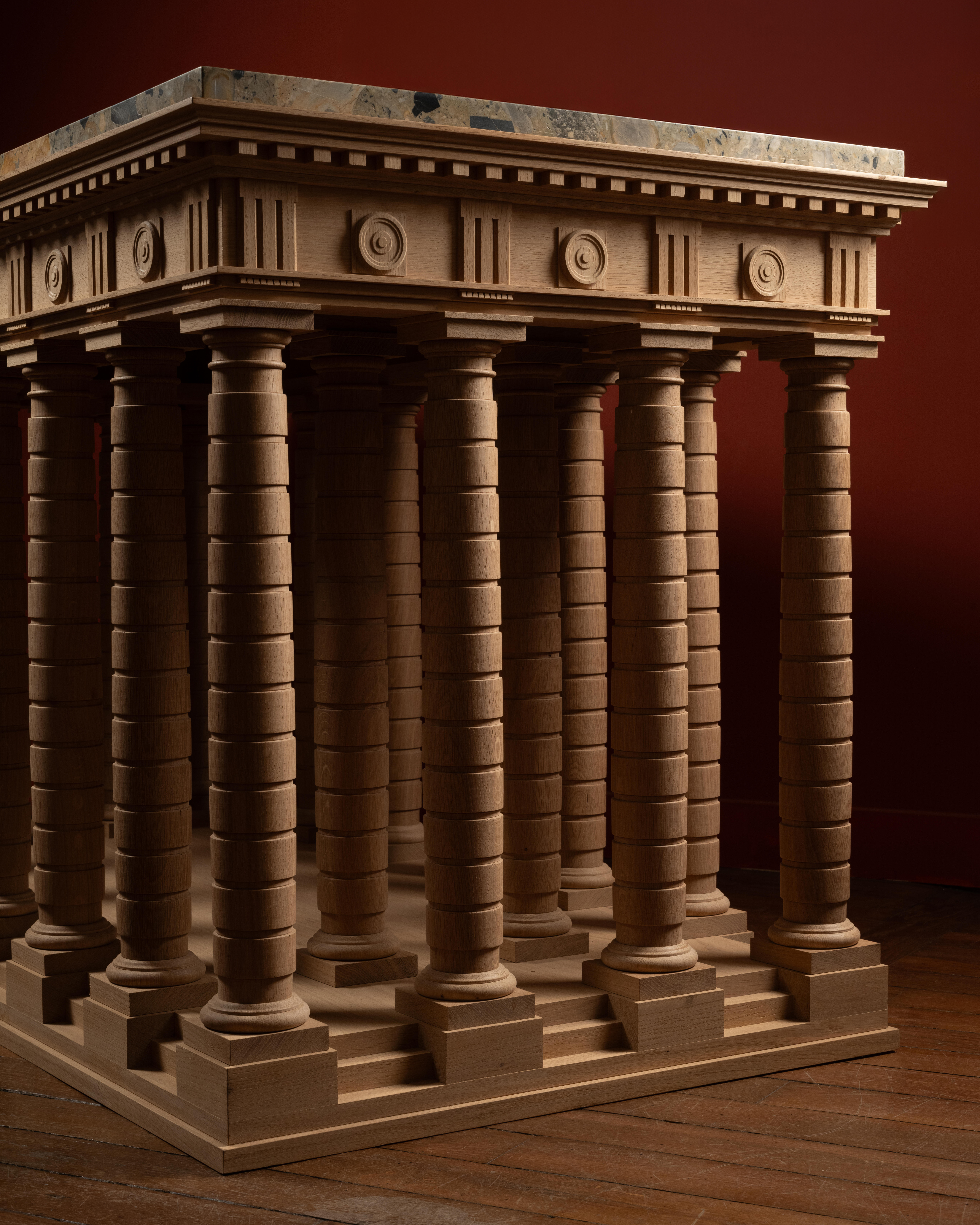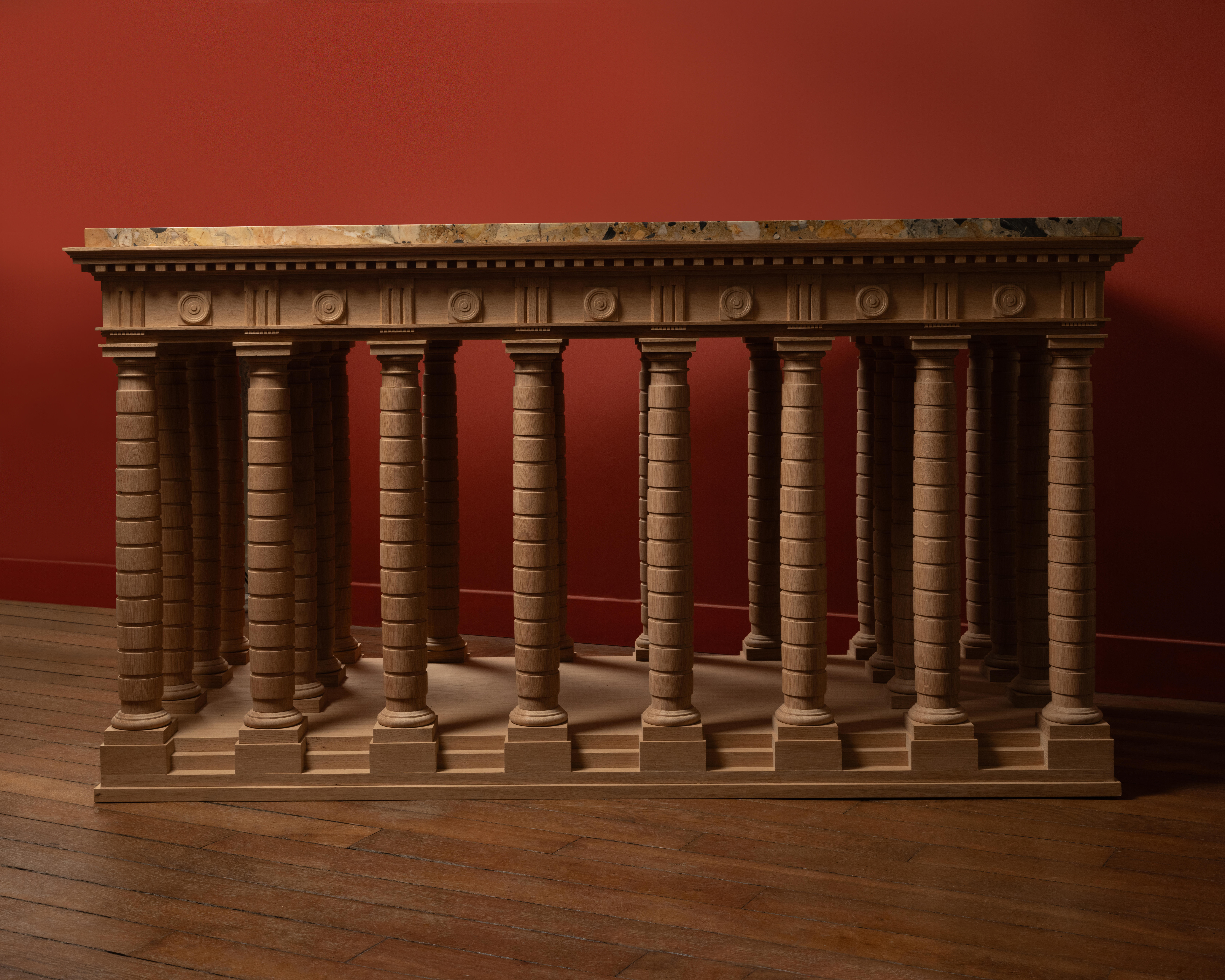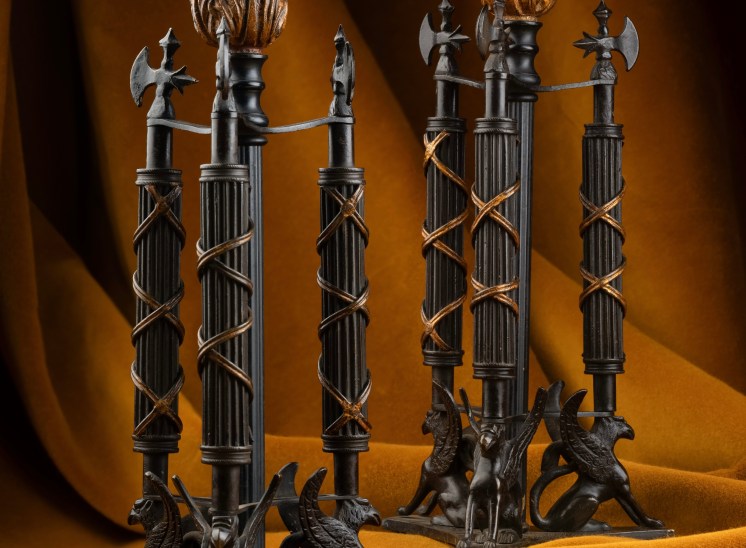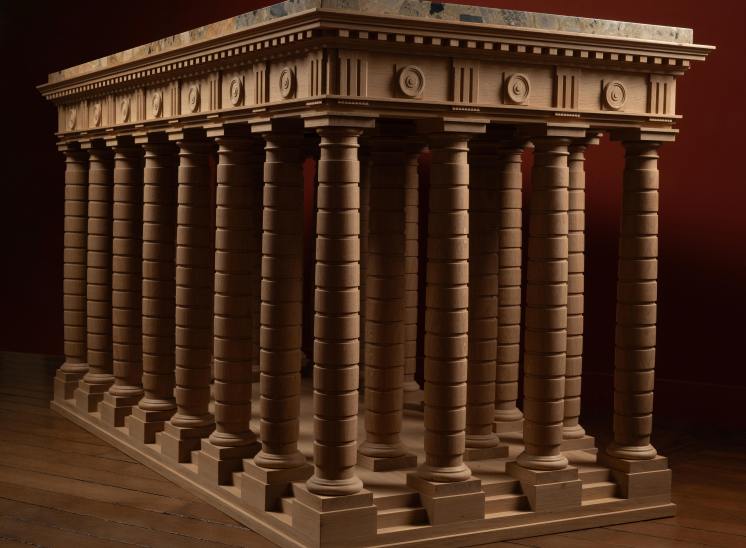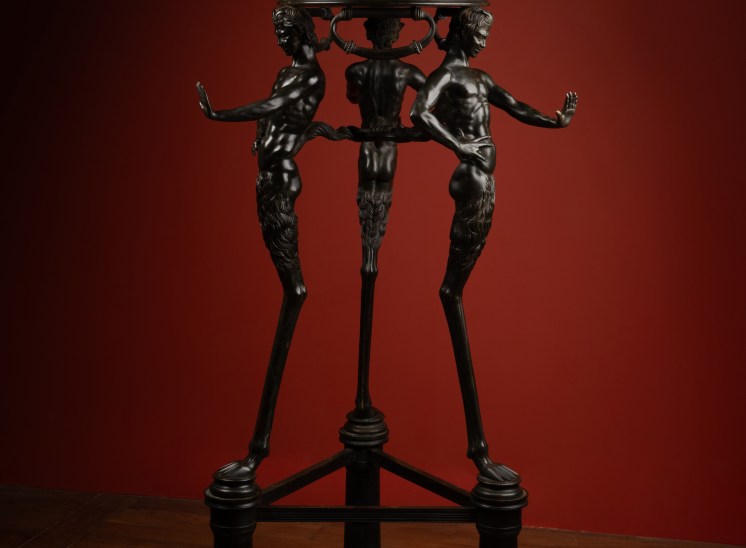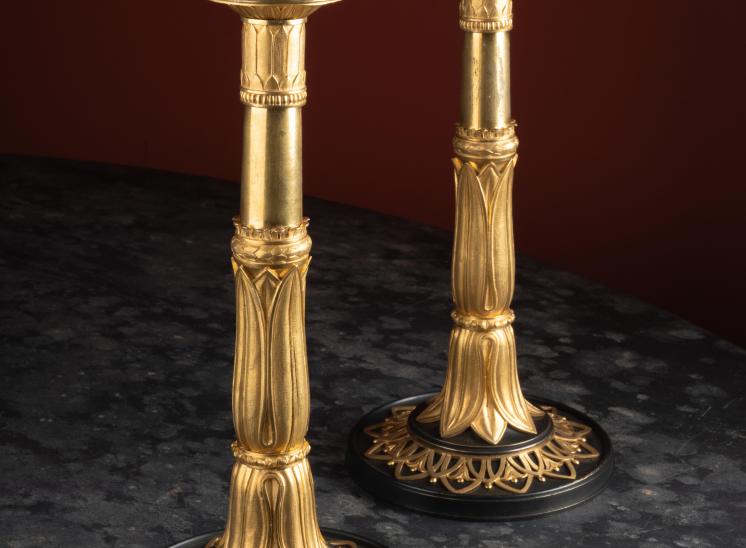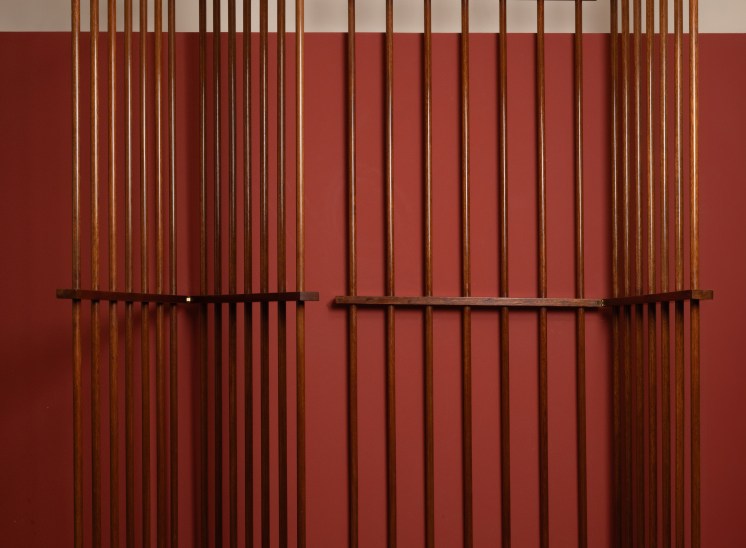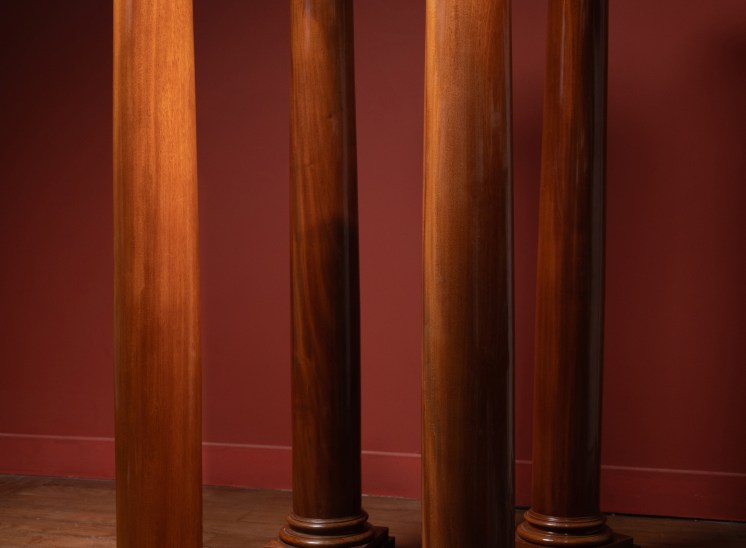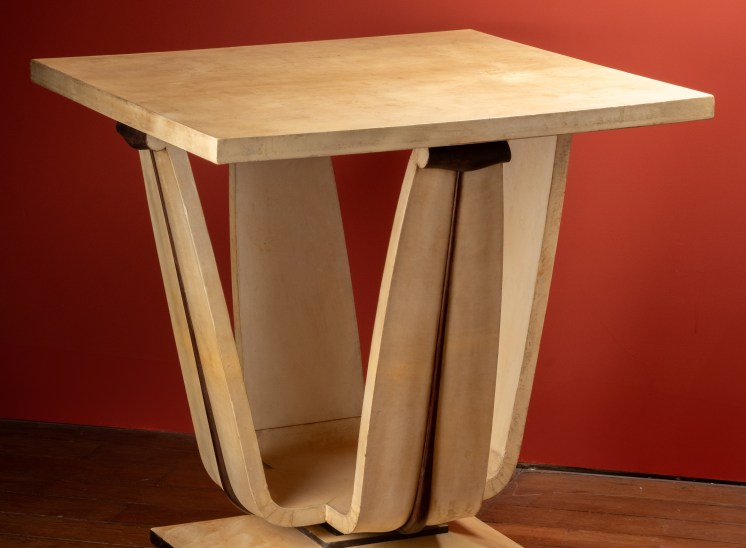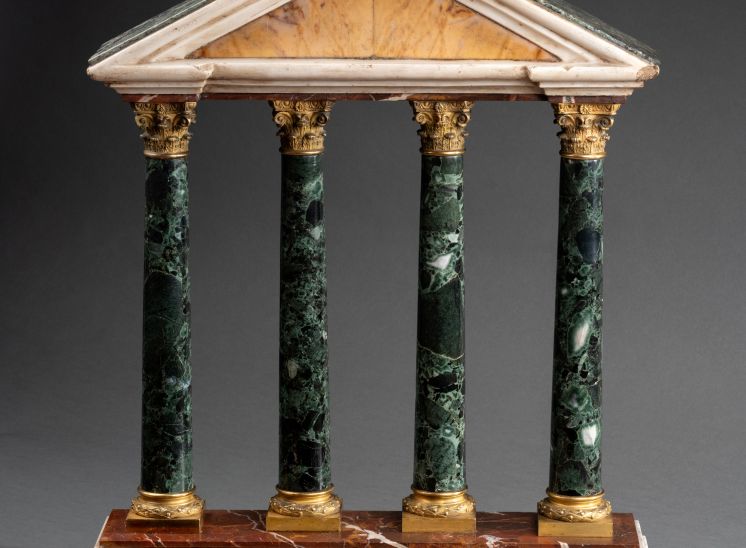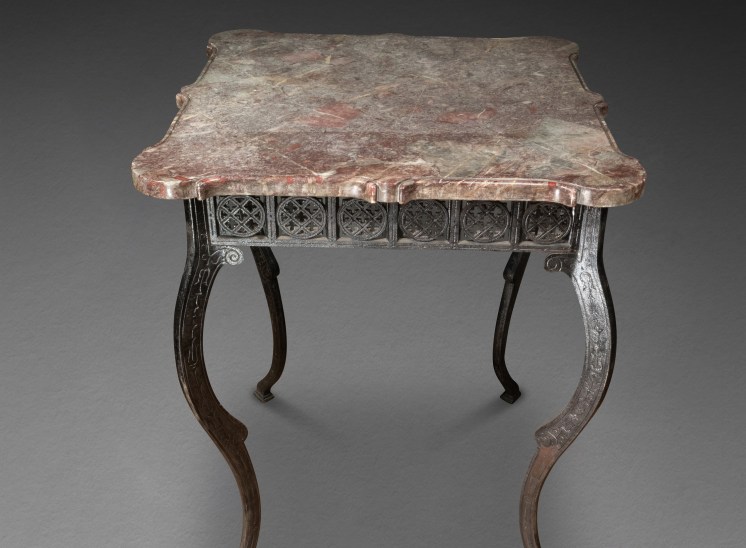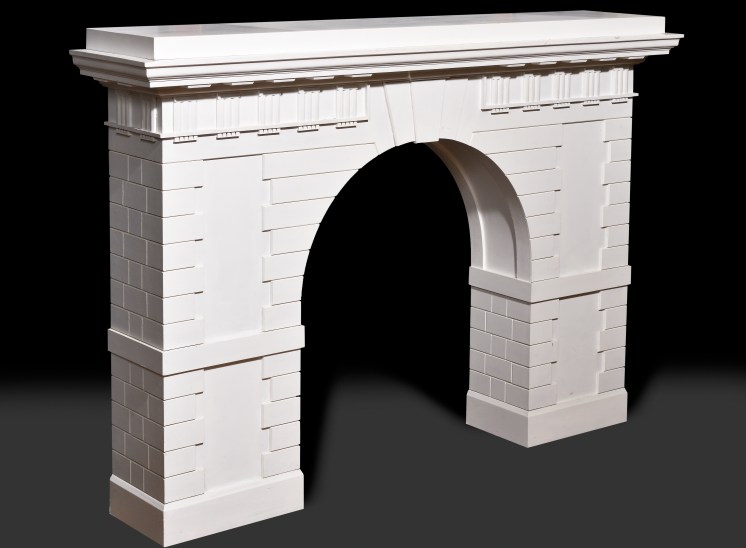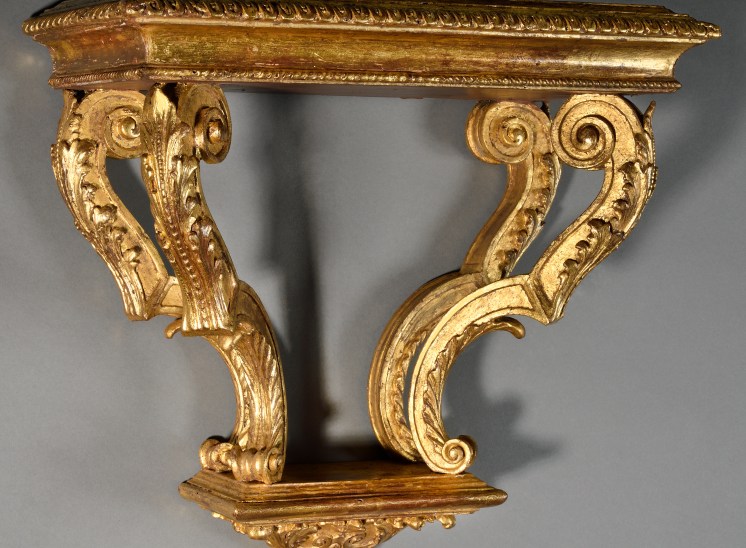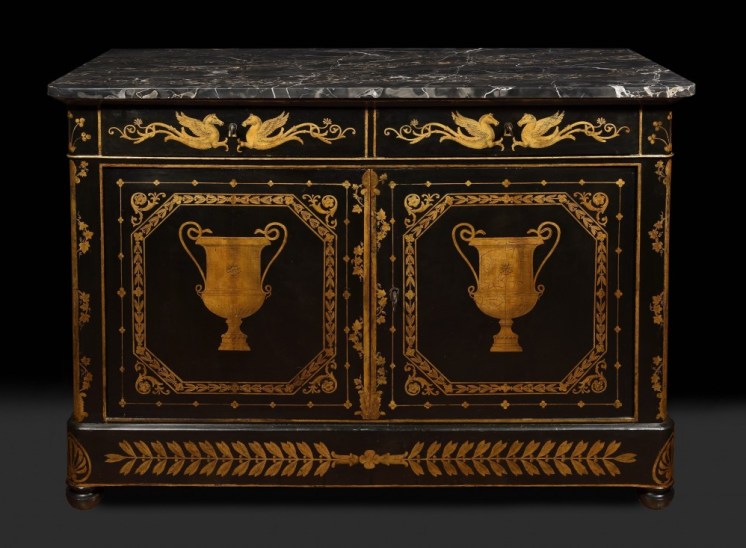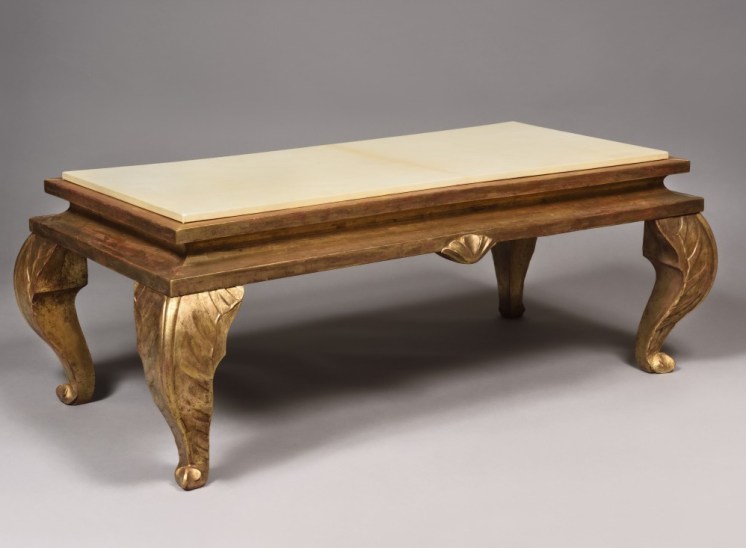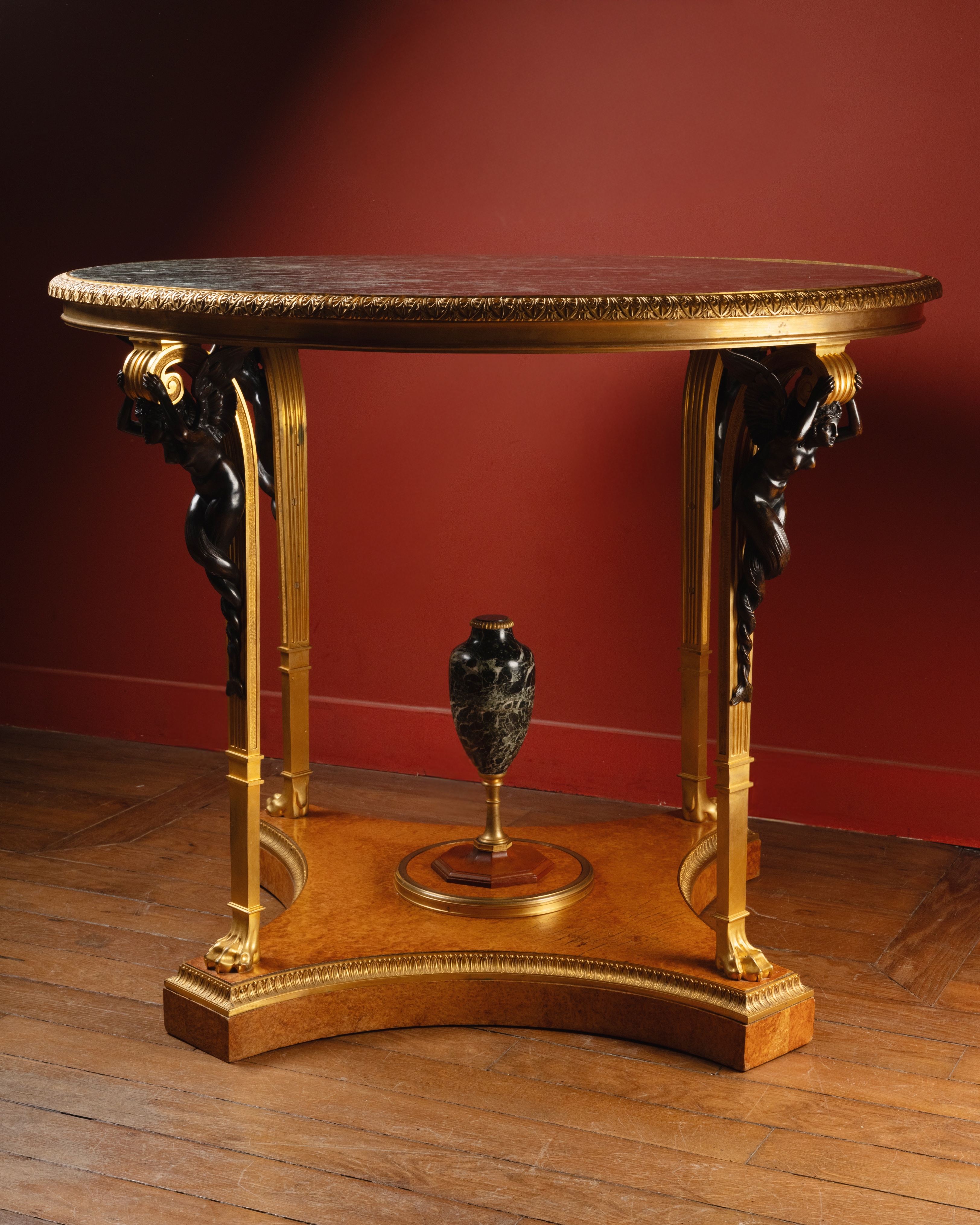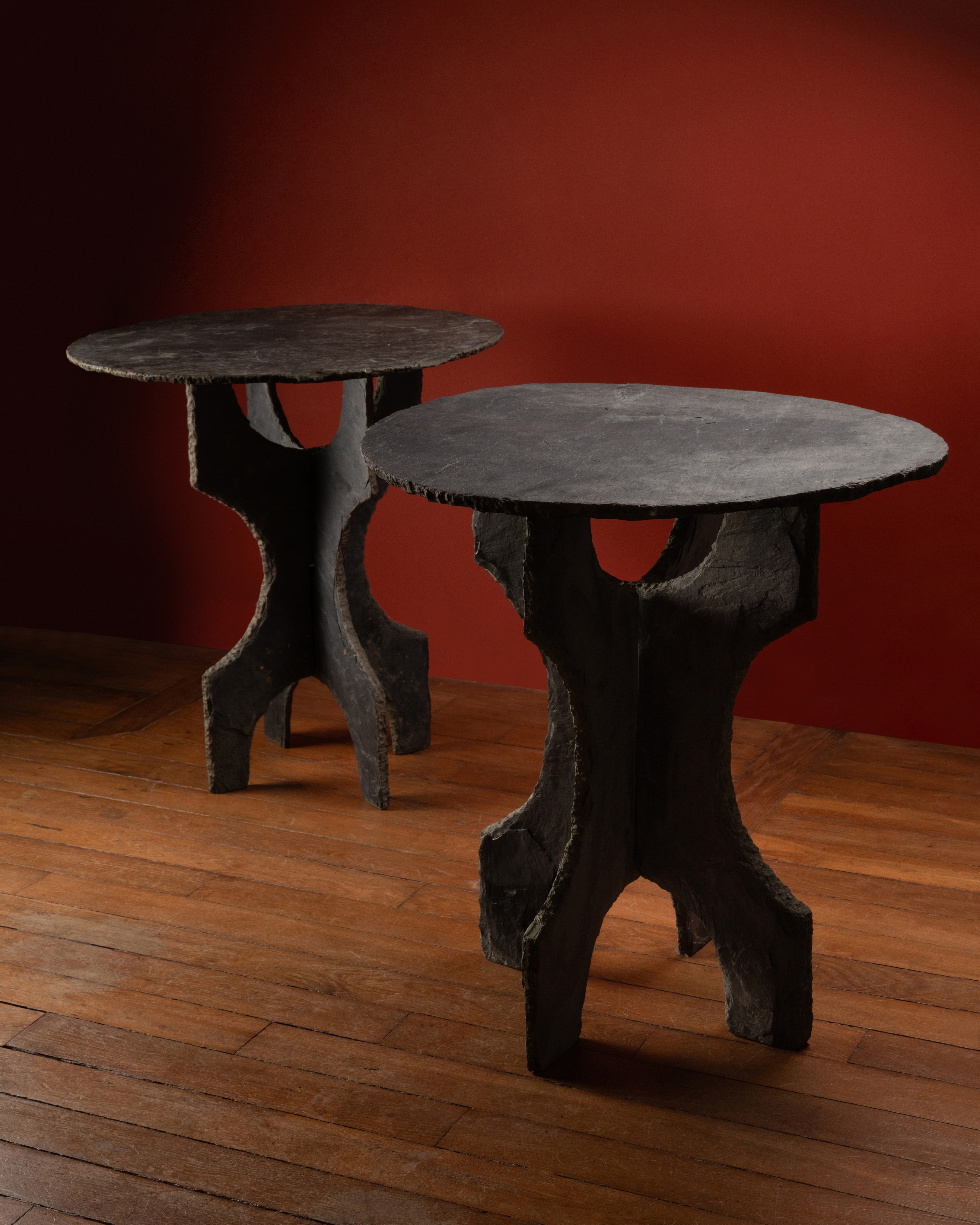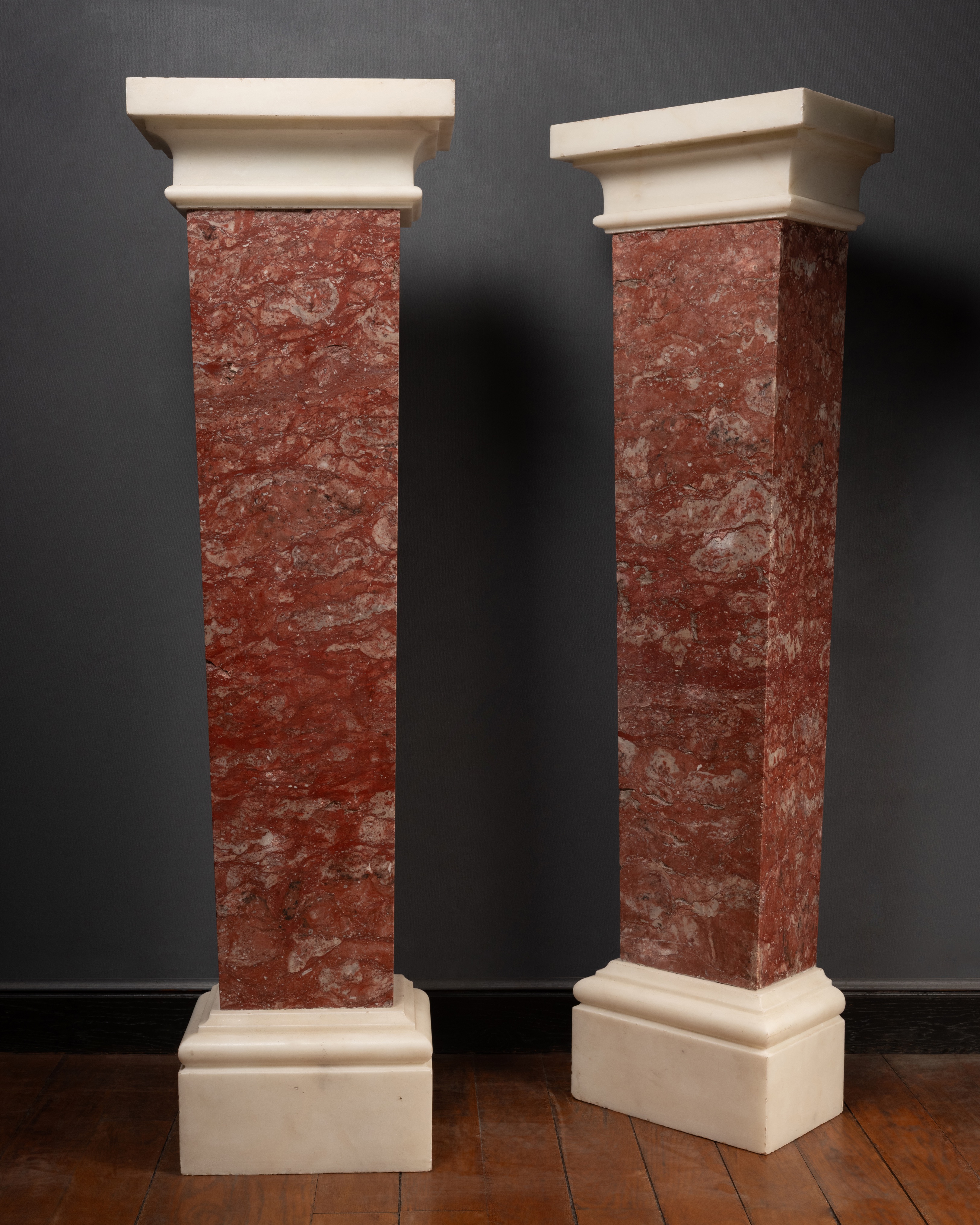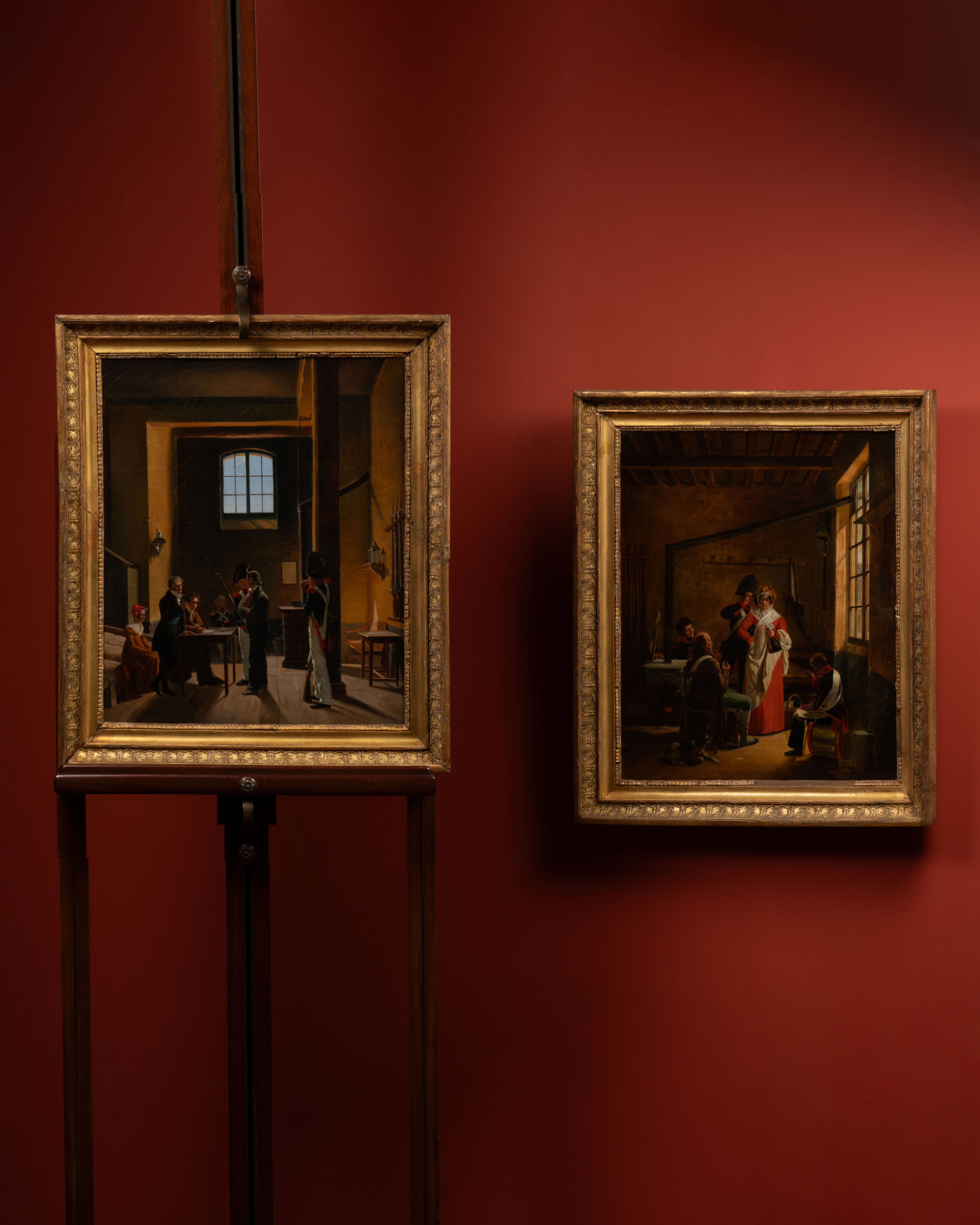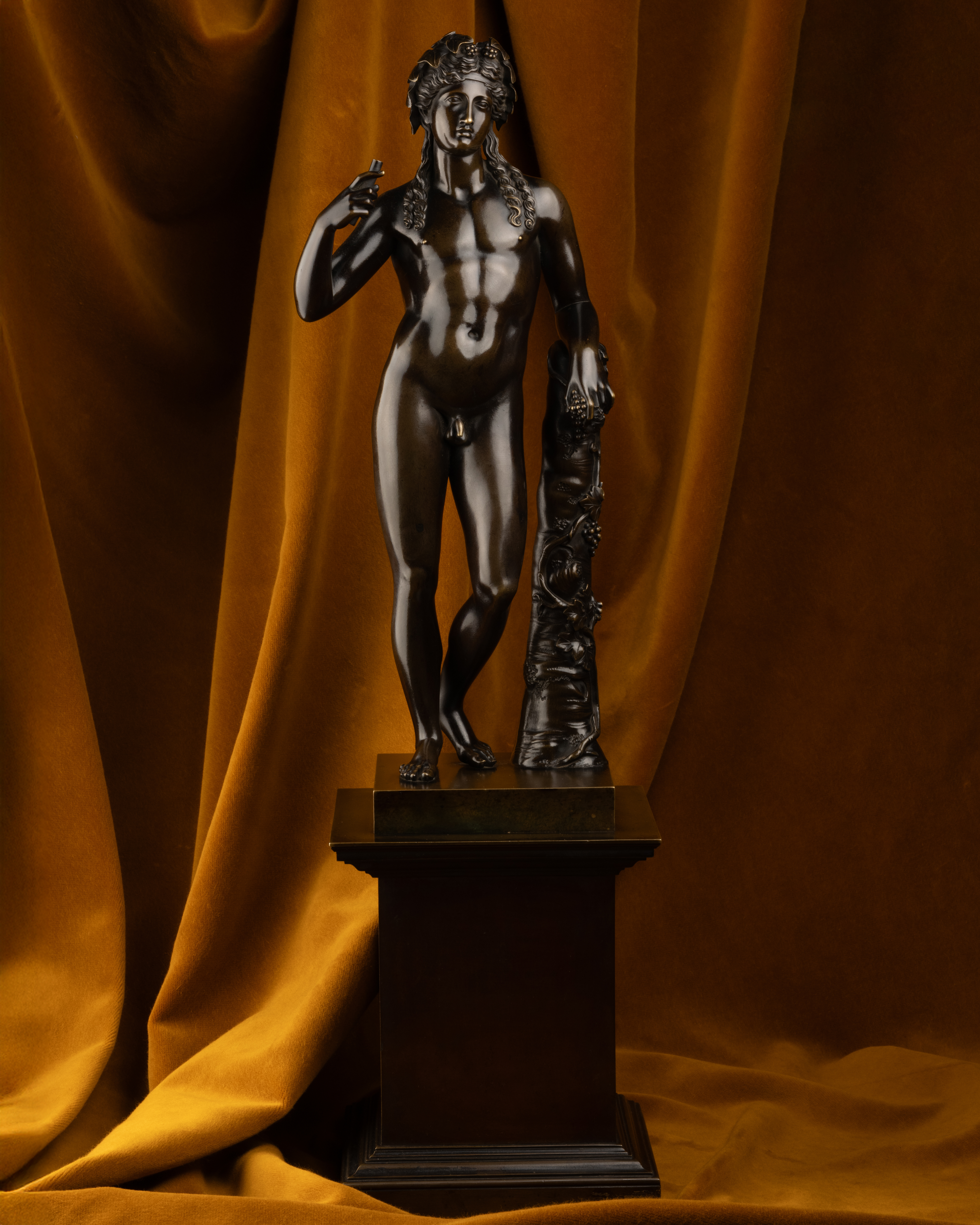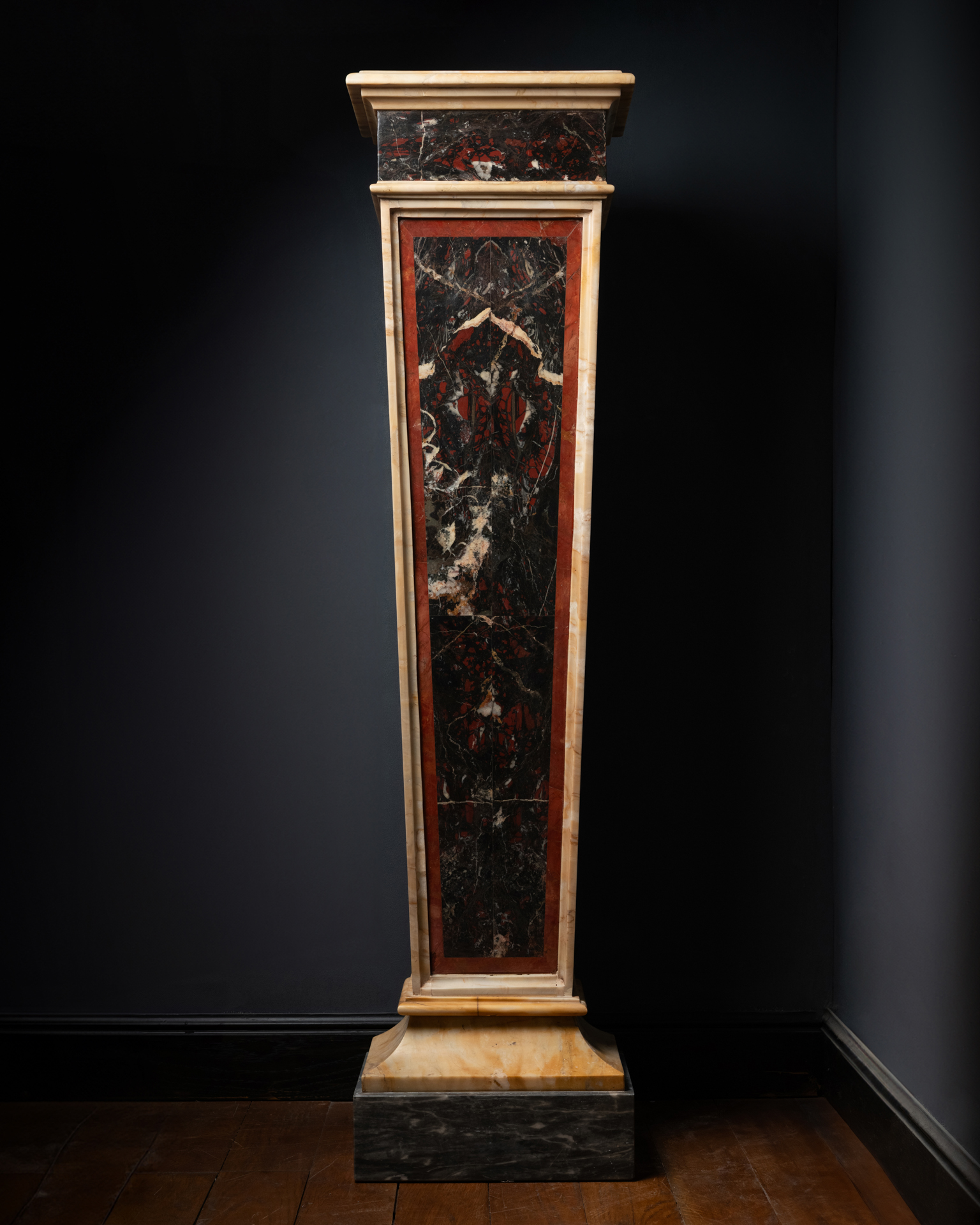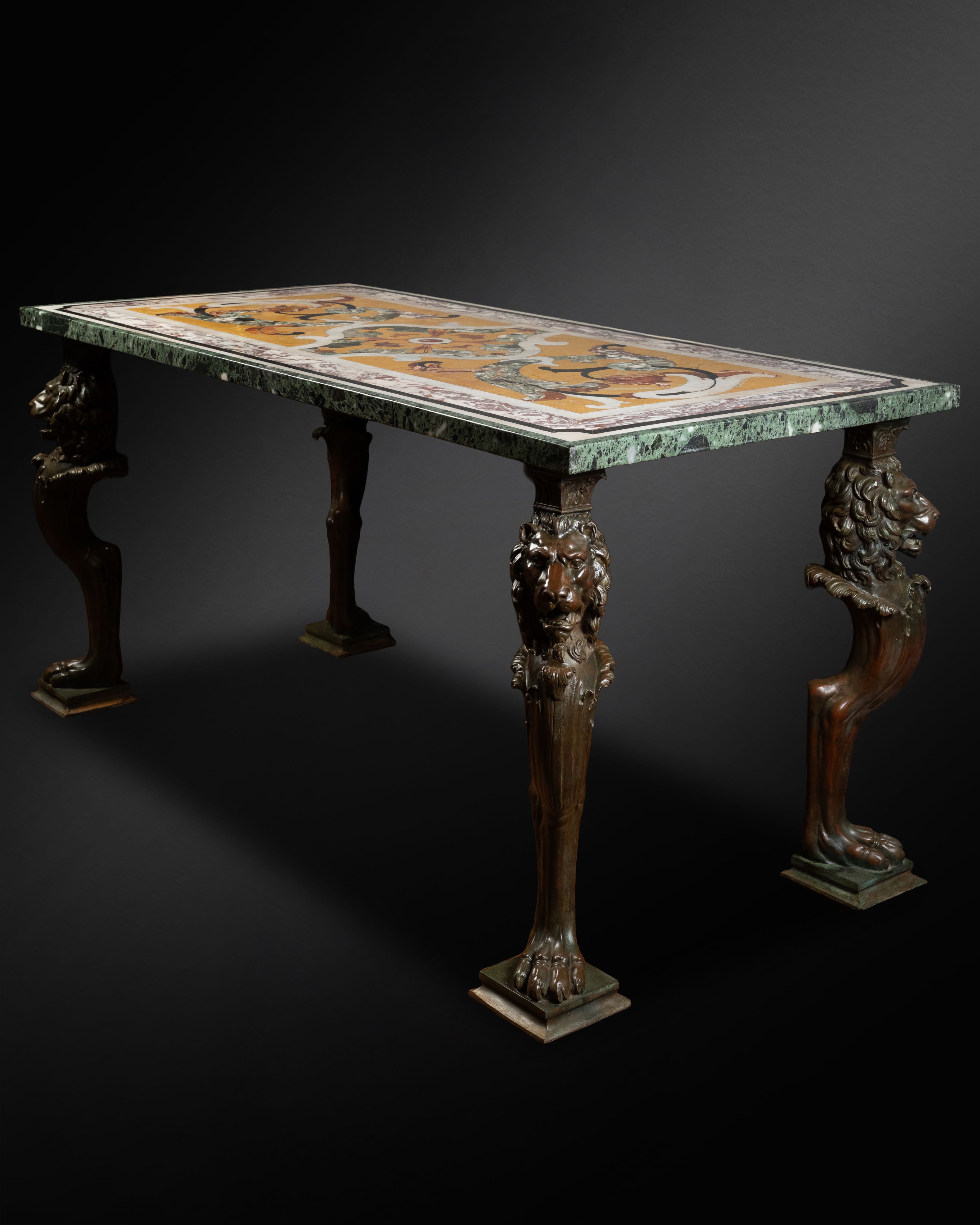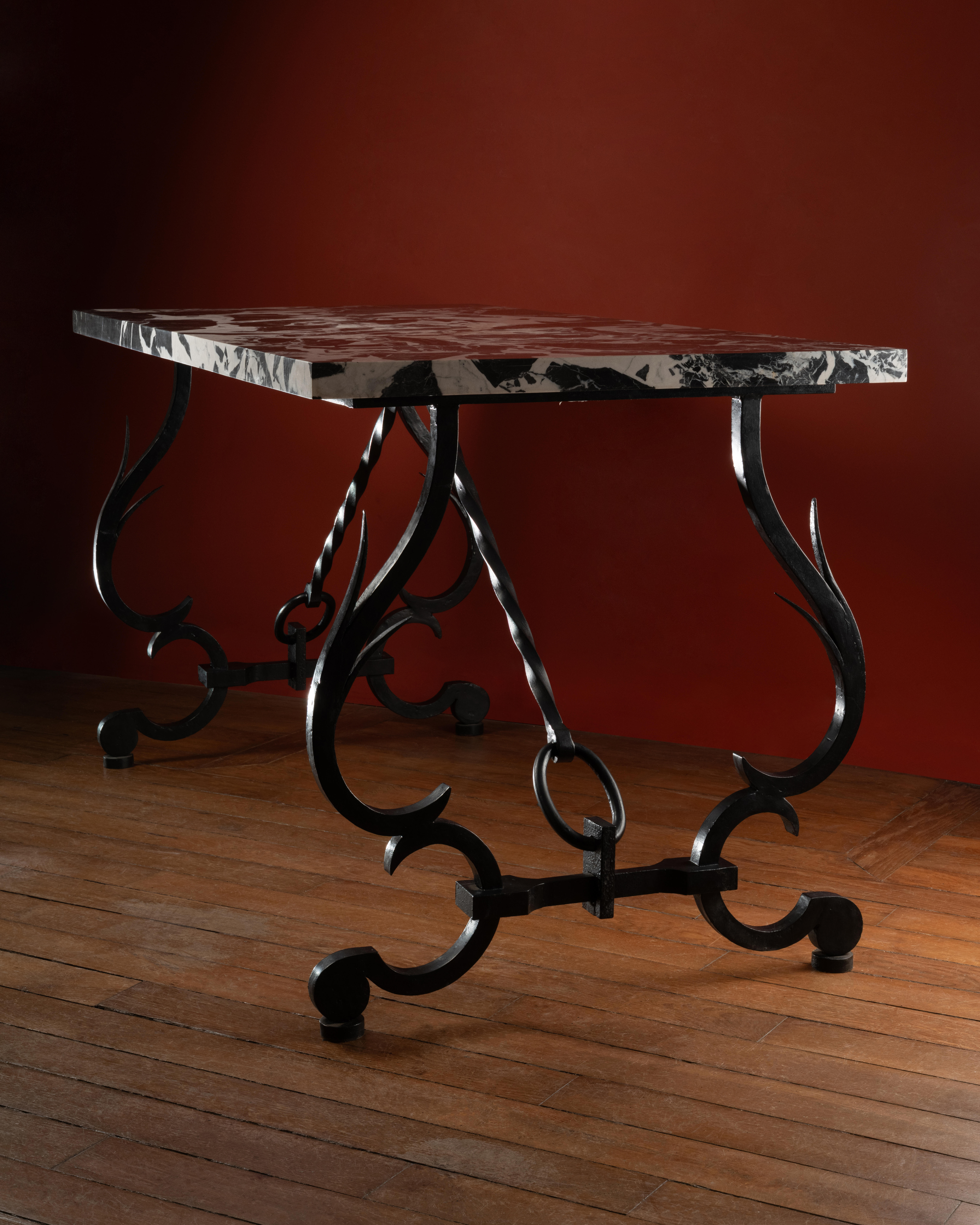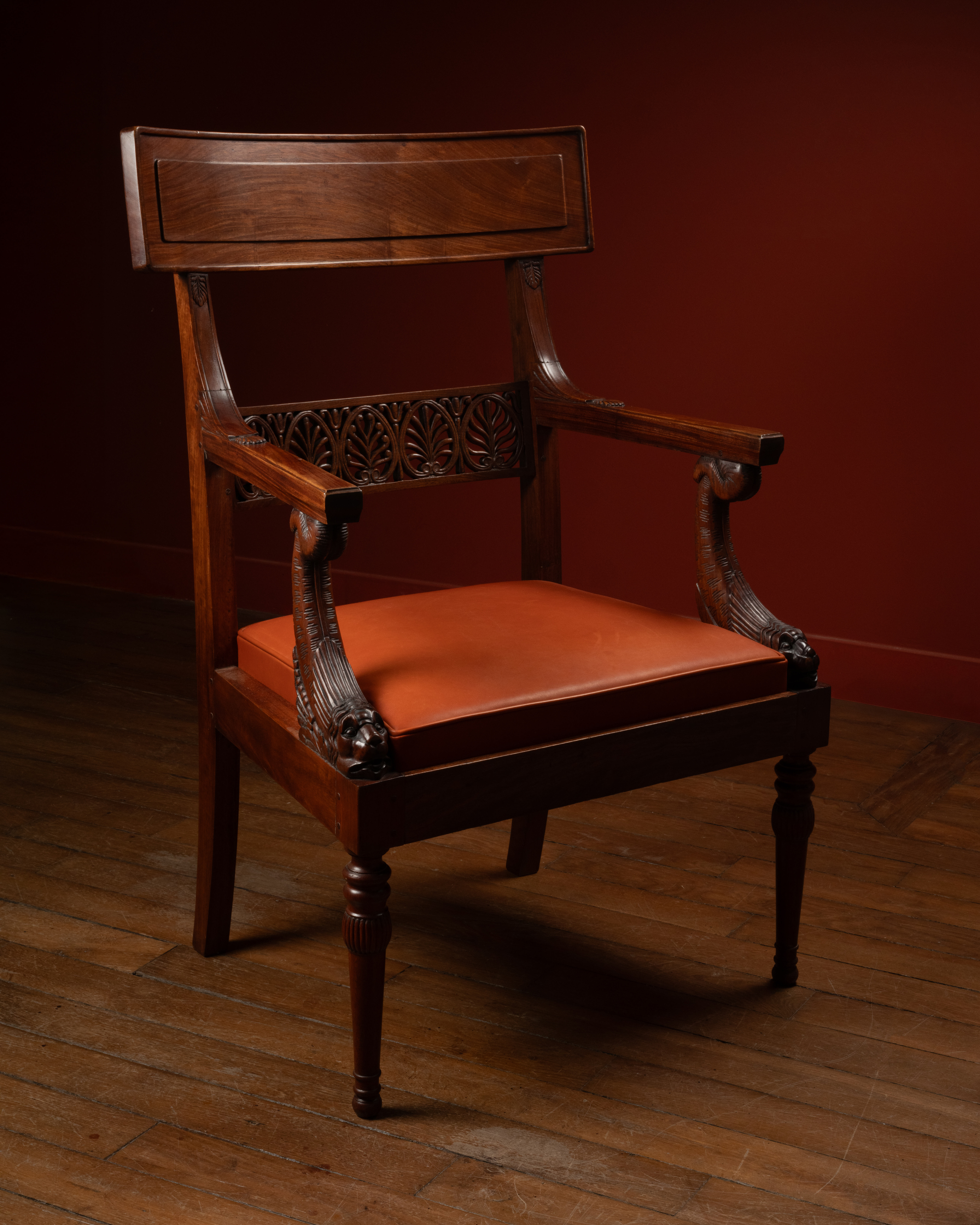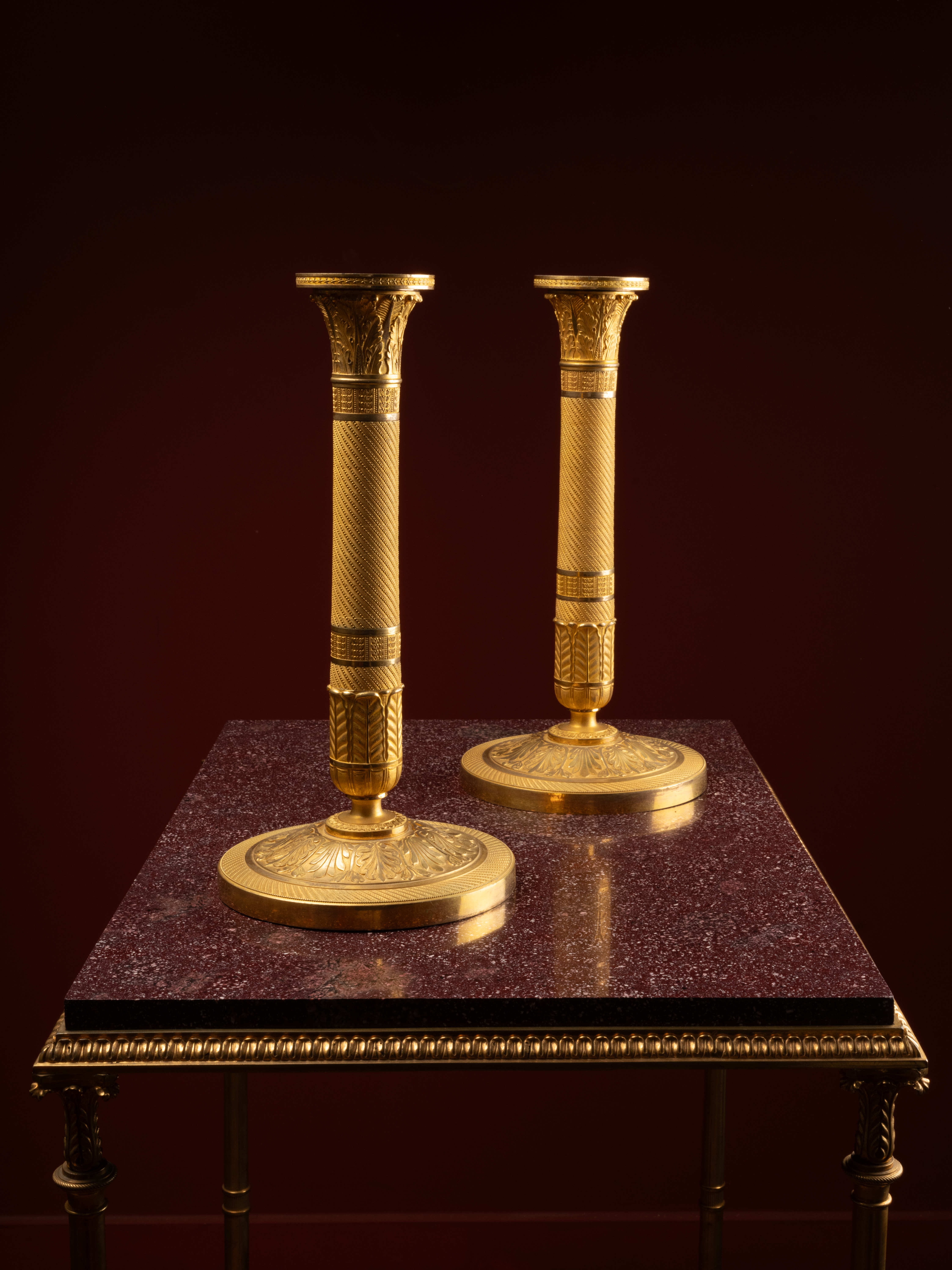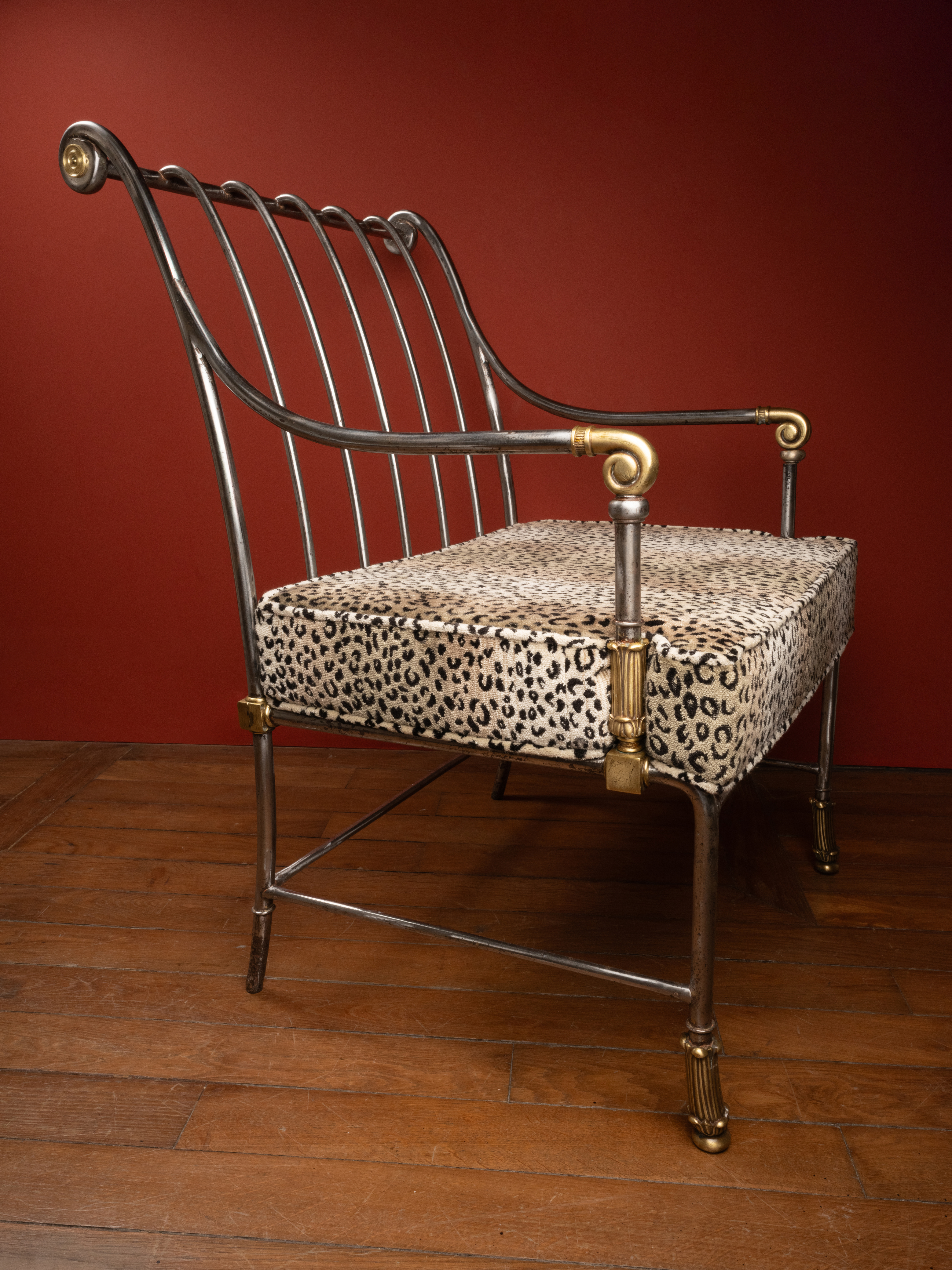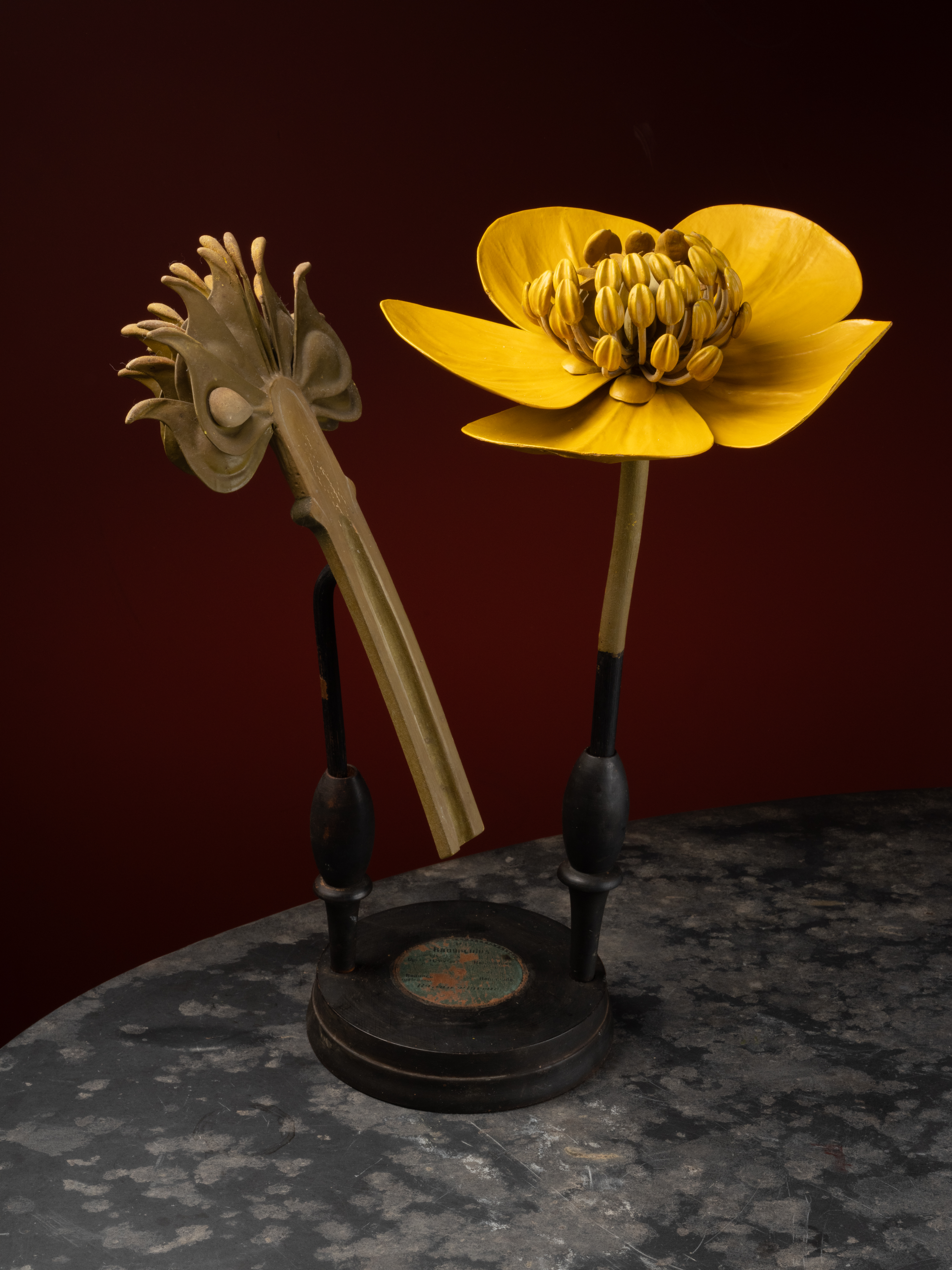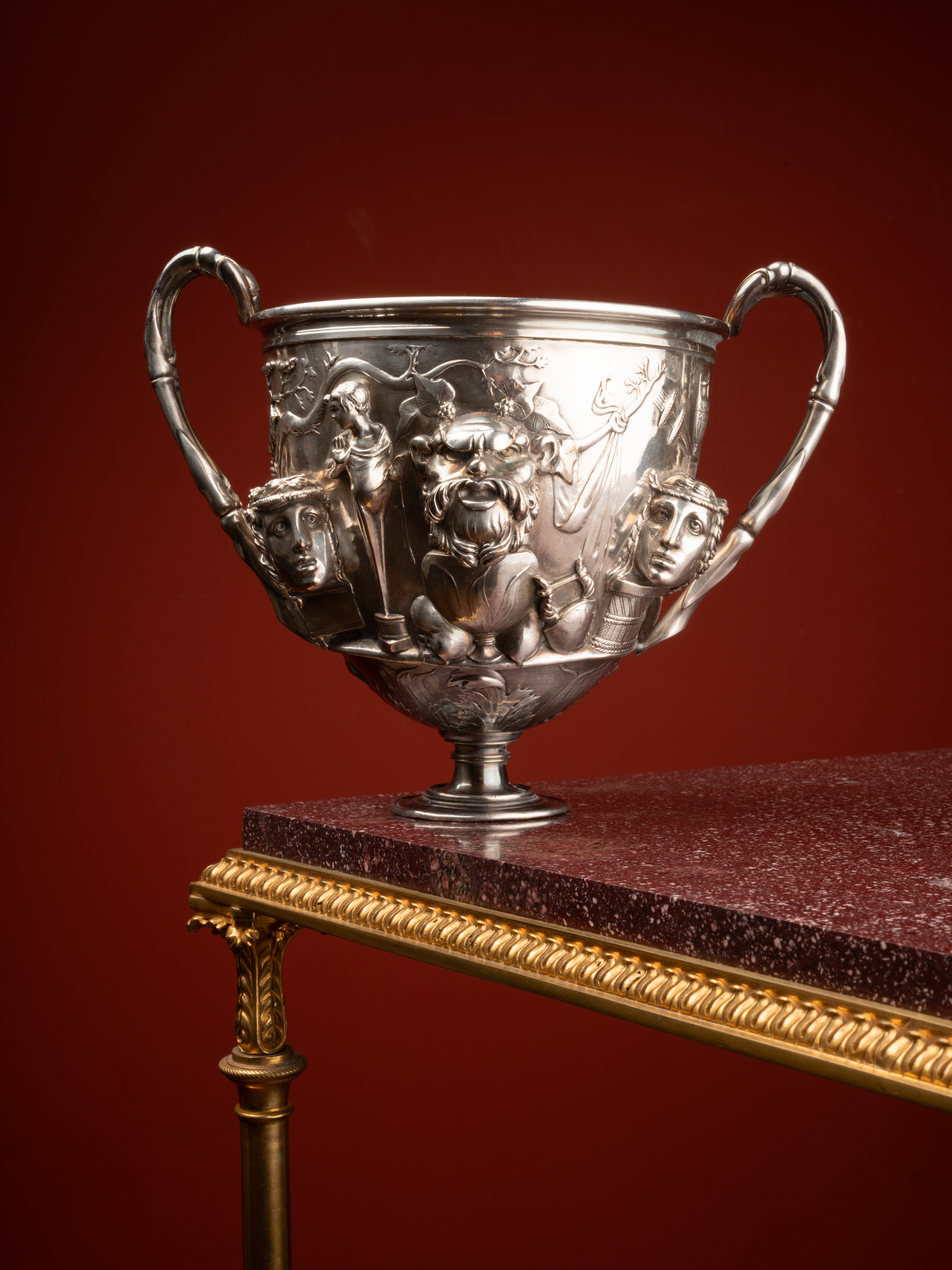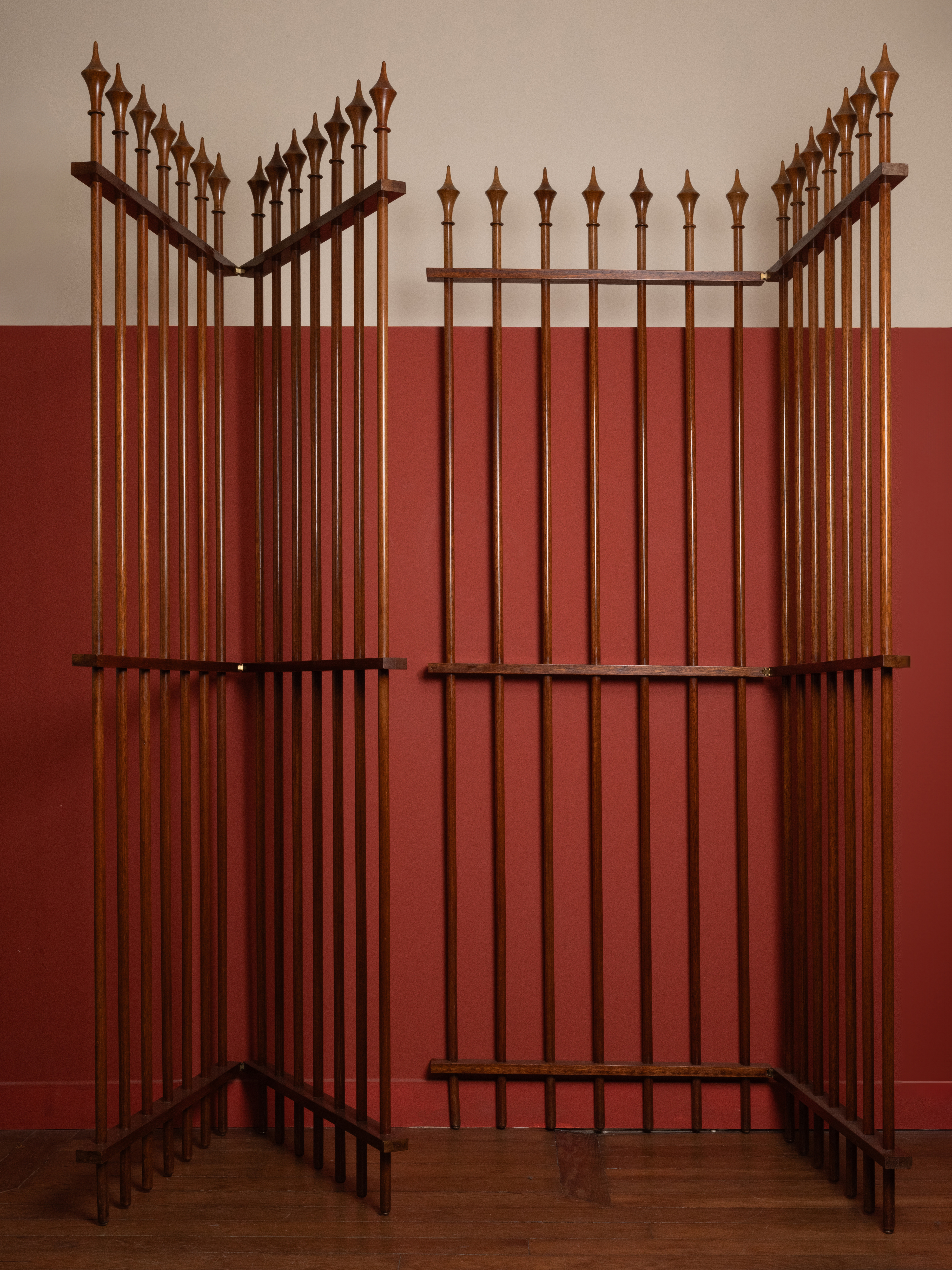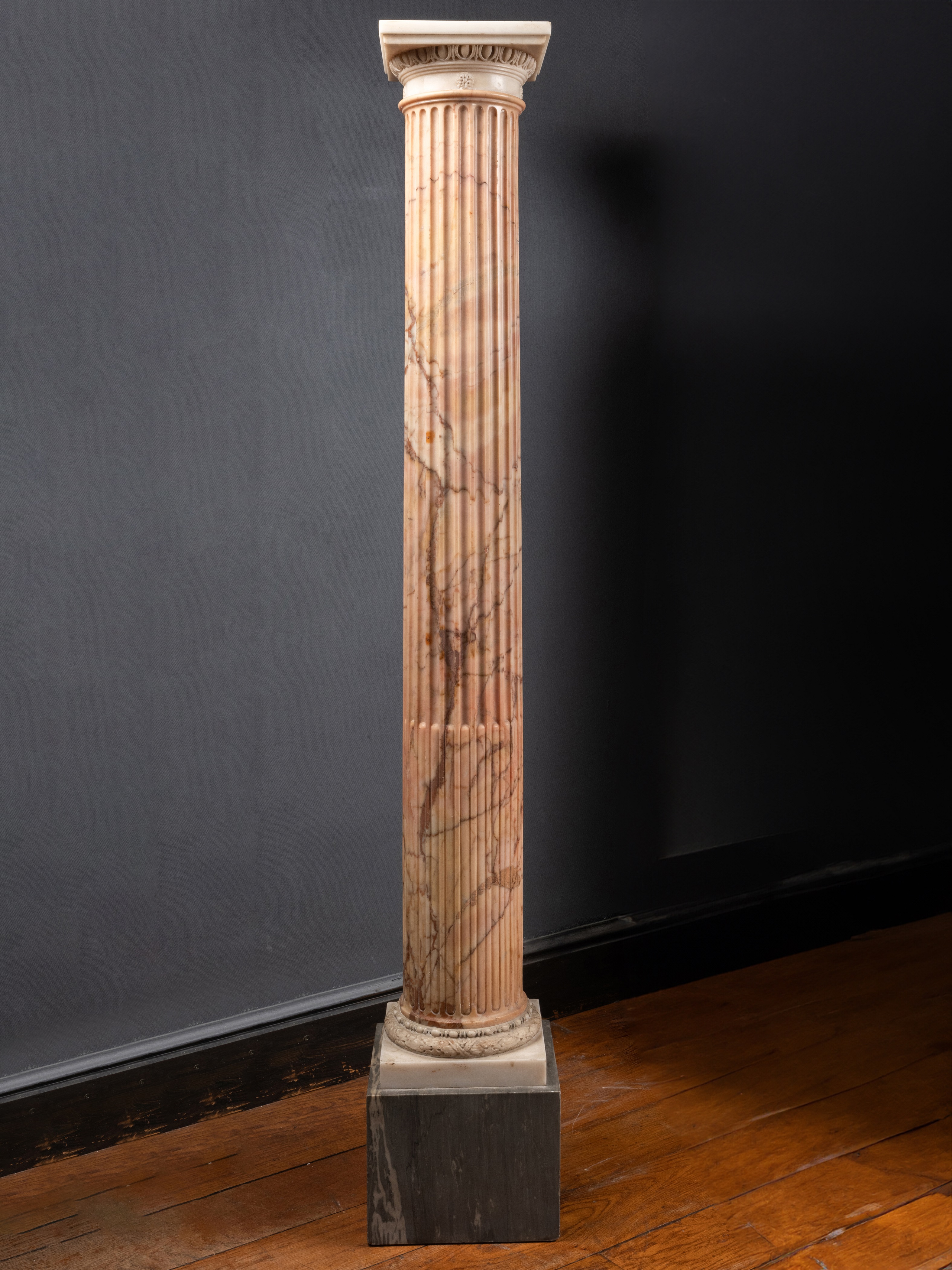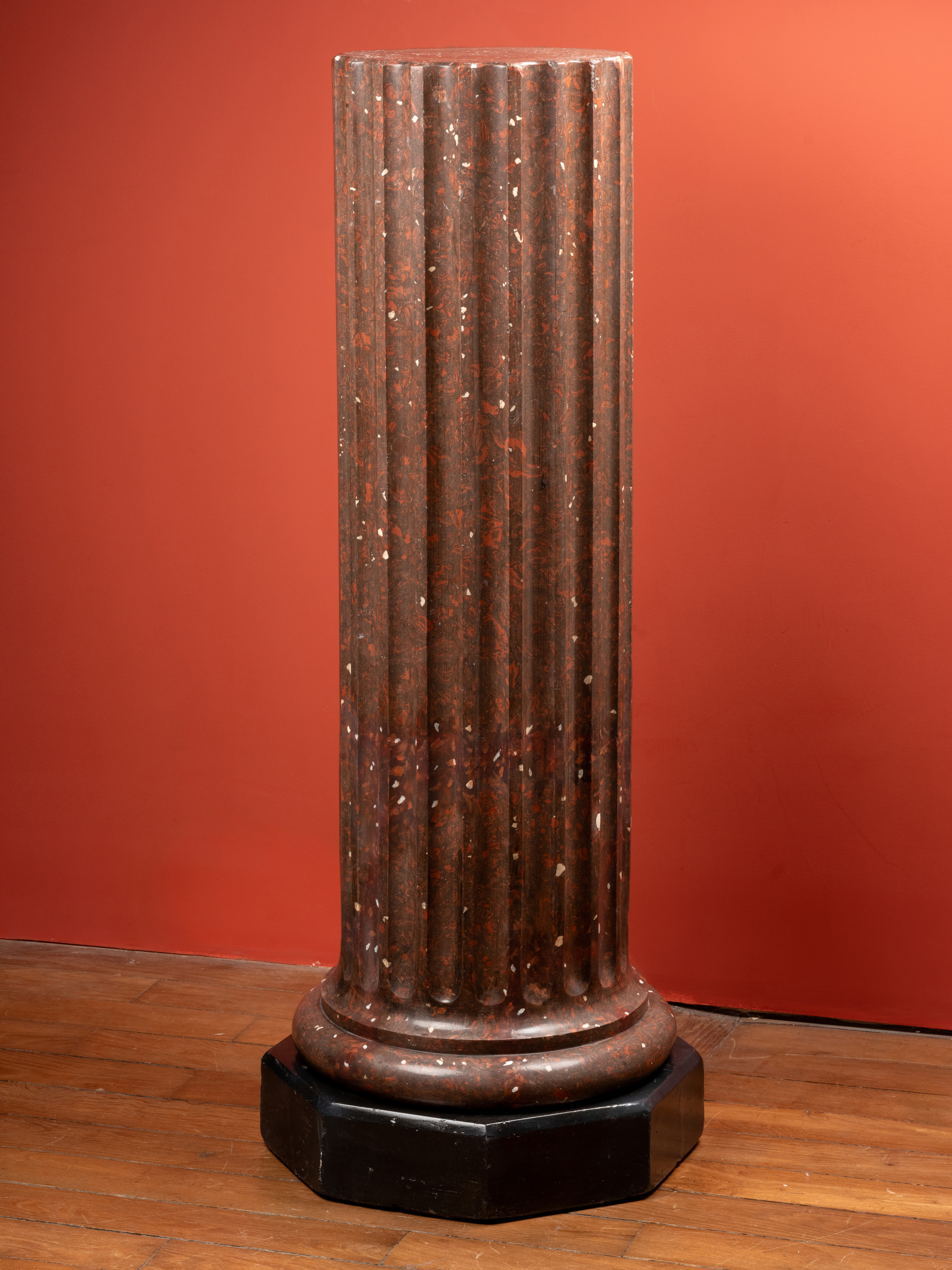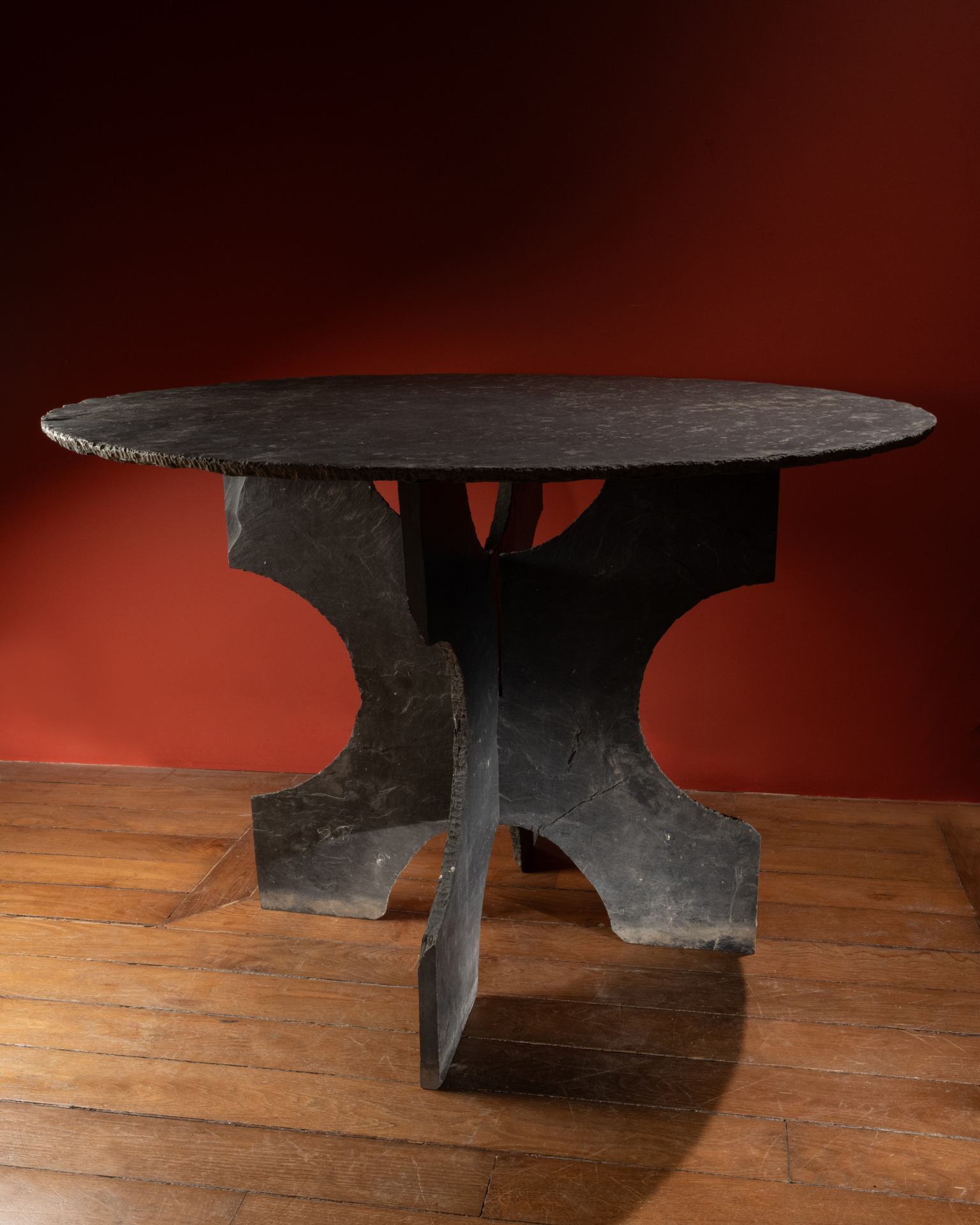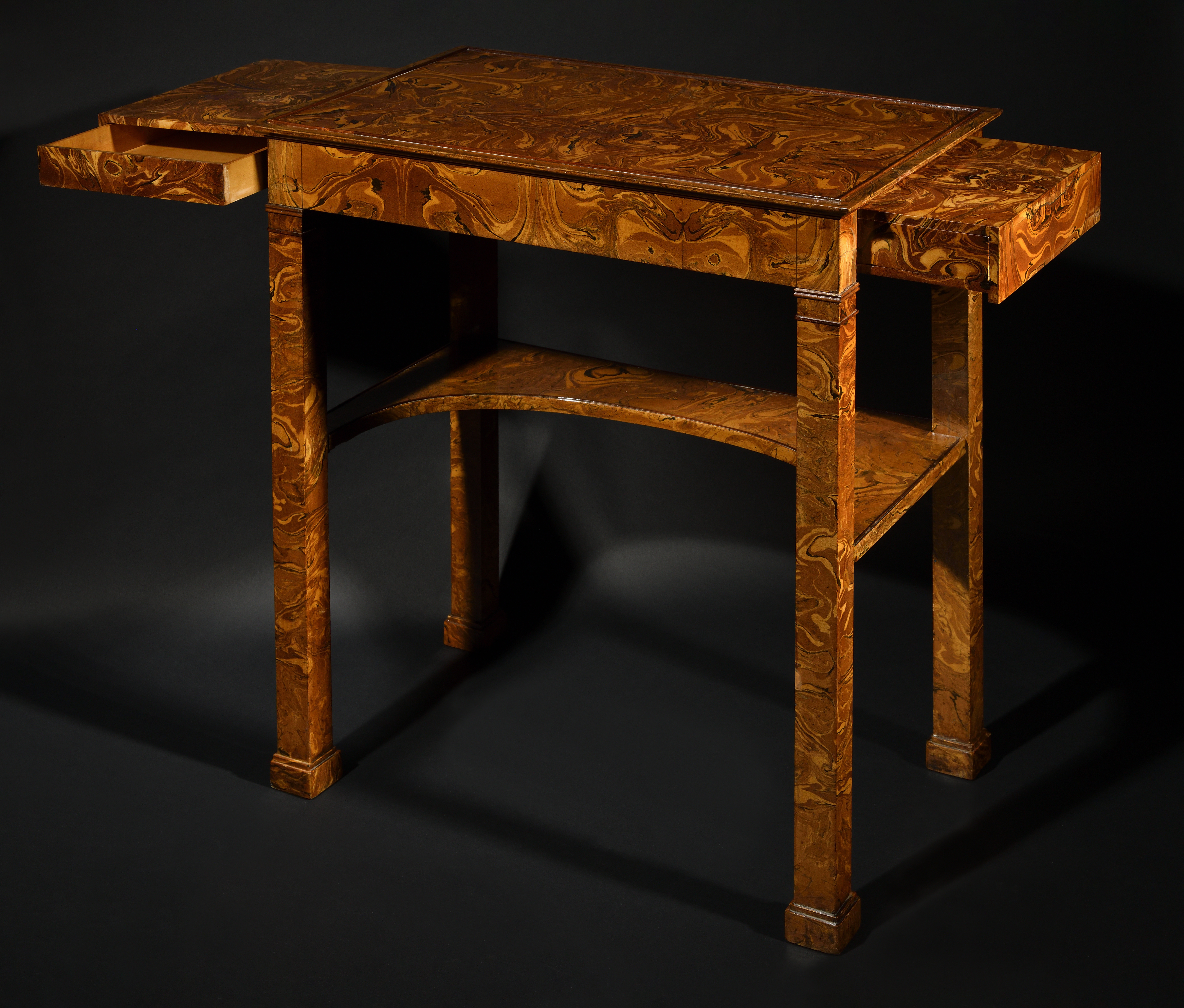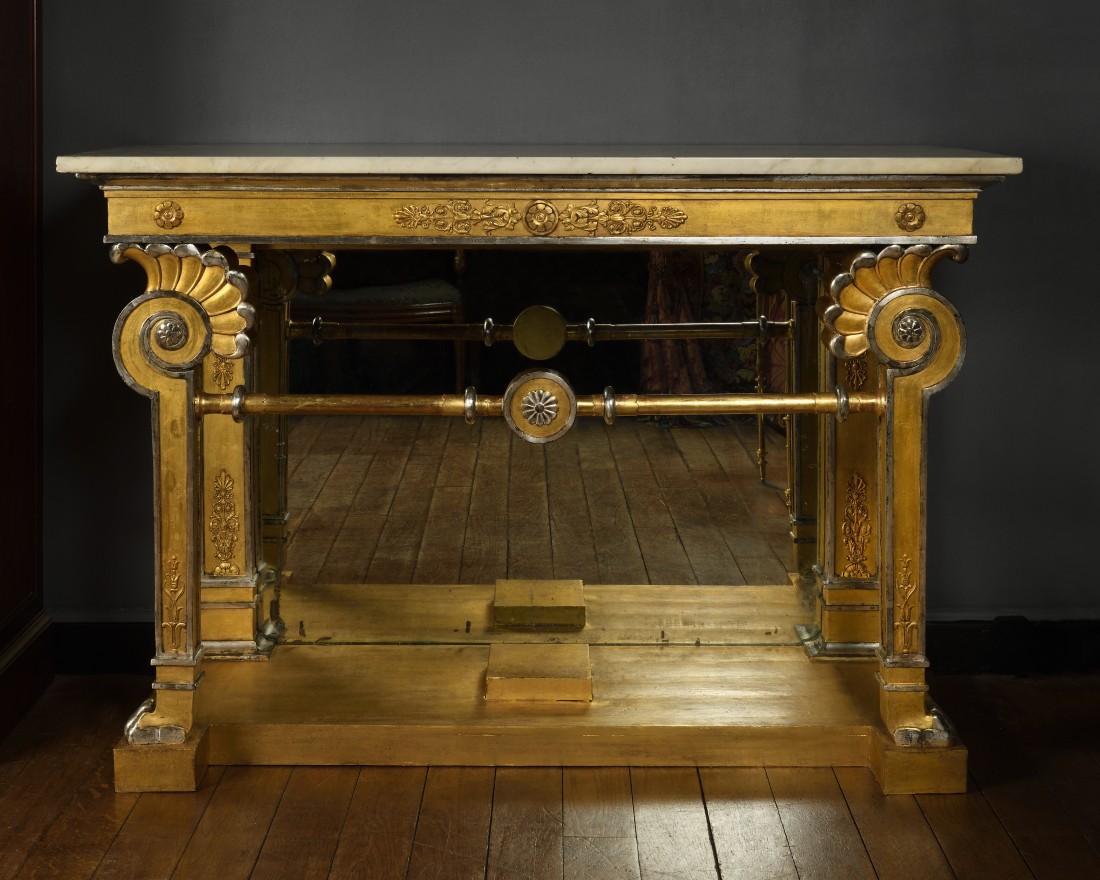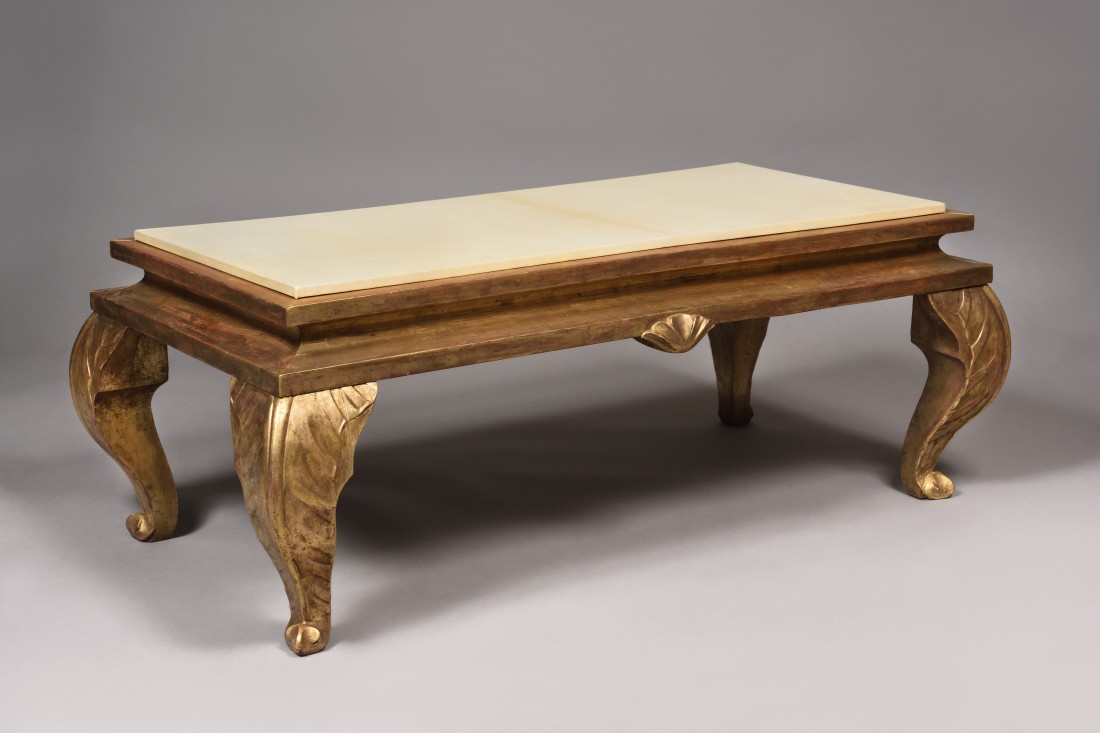

‘Charles de Wailly’ Column Table.
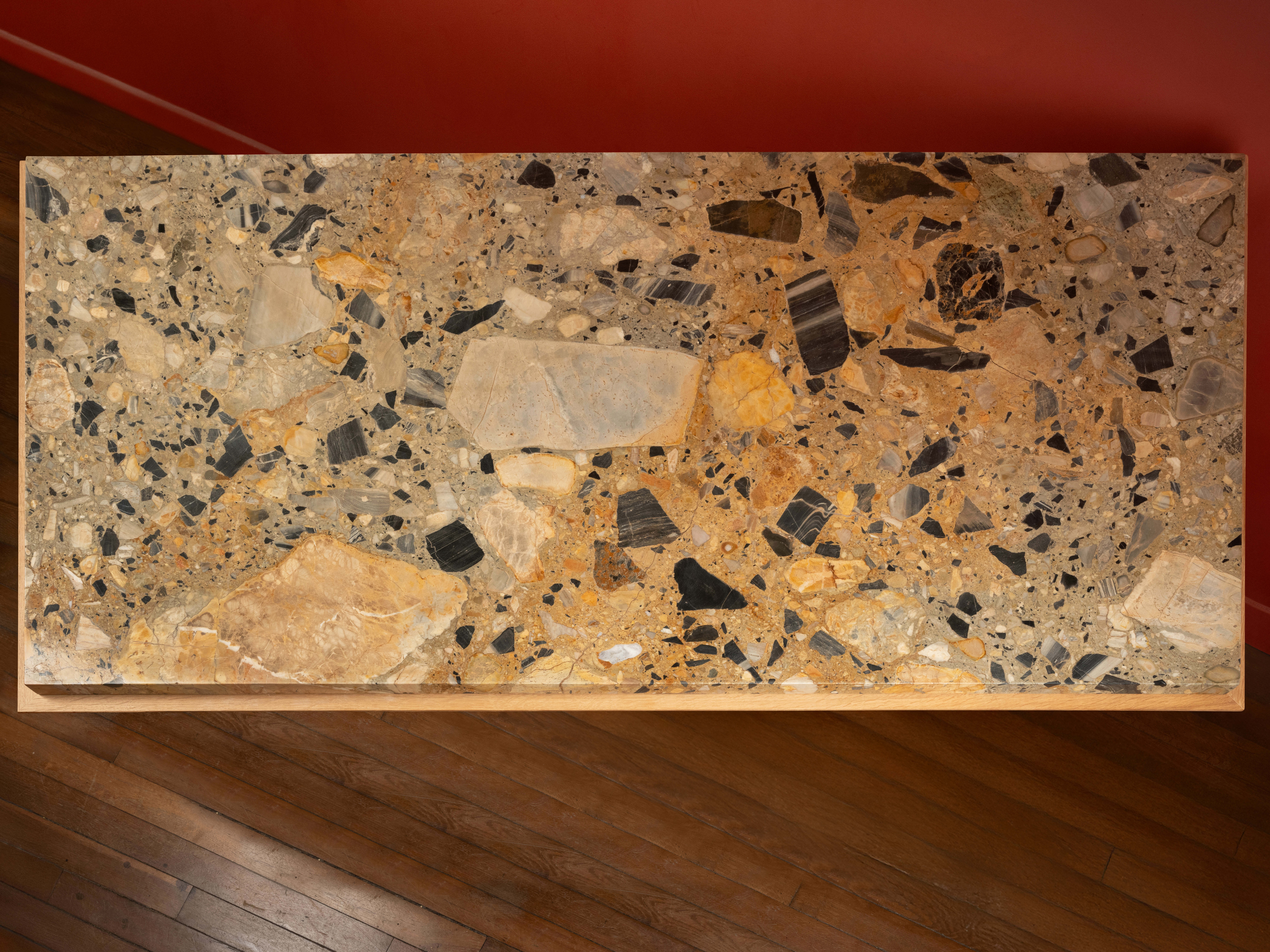
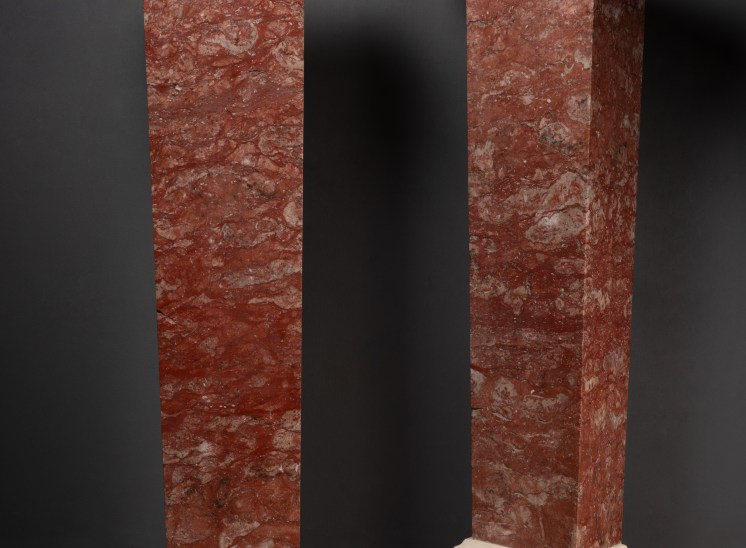
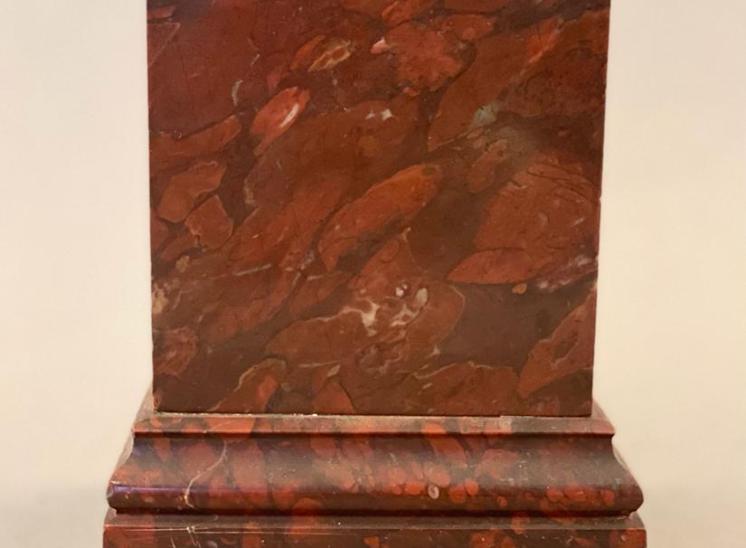
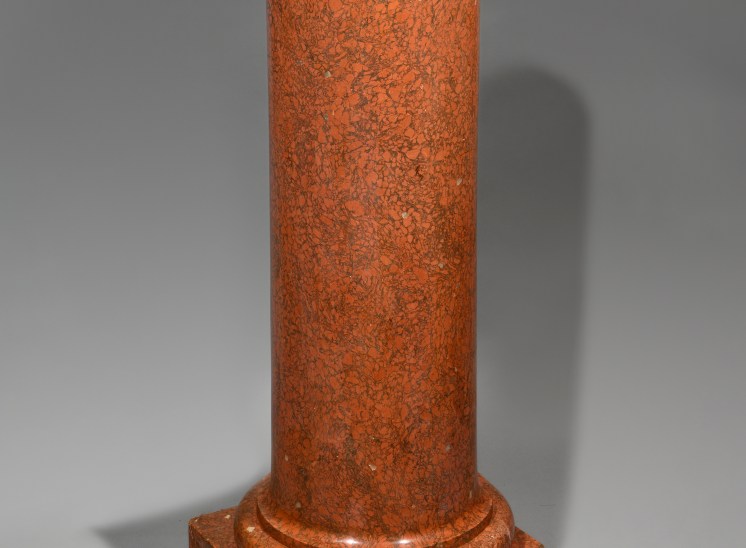
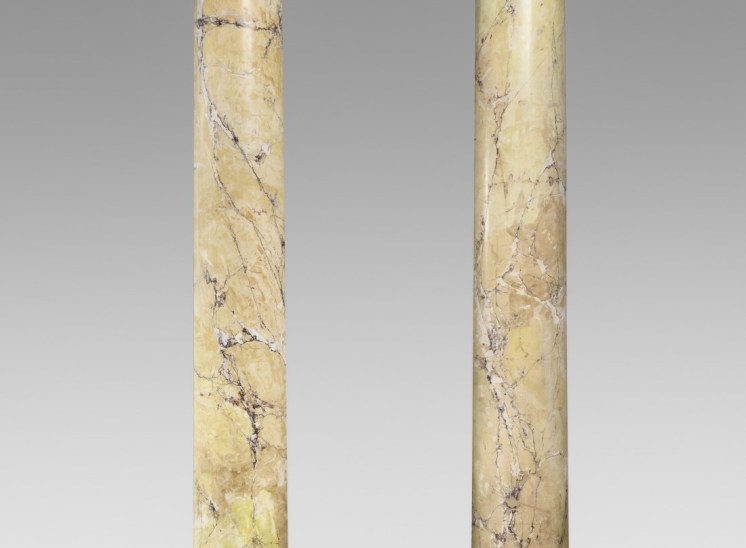
Oak wood, French breccia of Médous.
h. 34,25 in. ; l. 63 in ; w. 30,7 in.
This column table model is an original creation by David Prot, inspired by the portico of the Odéon Theatre in Paris, arguably the most renowned work of architect Charles de Wailly.
Born in 1730, a student of Blondel and winner of the Prix de Rome in 1752, Charles de Wailly holds a prominent place in the pantheon of French neoclassical architects. He designed the Château de Montmusard in 1764, decorated the Spinola Palace in Genoa in 1773, and the Chapel of the Virgin in Saint-Sulpice in 1774; yet his most famous work is undoubtedly the Odéon Theatre in Paris, created alongside Marie-Joseph Peyre in 1779.
The Odéon Theatre is perhaps one of the purest monuments of neoclassical architecture. The architectural historian Nikolaus Pevsner, referring specifically to Wailly as well as Peyre (co-architect of the Odéon alongside Wailly), Ledoux, Brongniart, and Chalgrin — describes it as: “characterized by strictly cubic forms, without pavilion roofs or even any visible roof […] with porticos topped by straight lines, without pediments […] and a preference for Tuscan and Doric orders over more elegant ones.” Further on, he adds : “The desire to create something virile, austere, and virtuous is evident in most of these architects' works.”
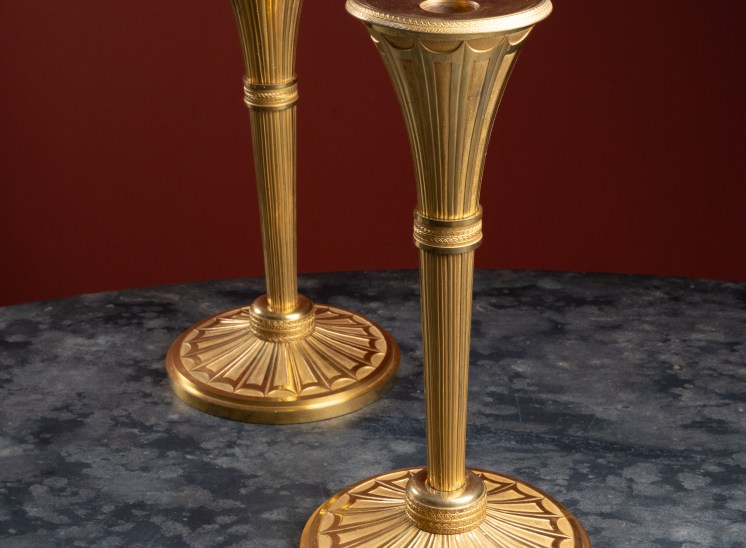
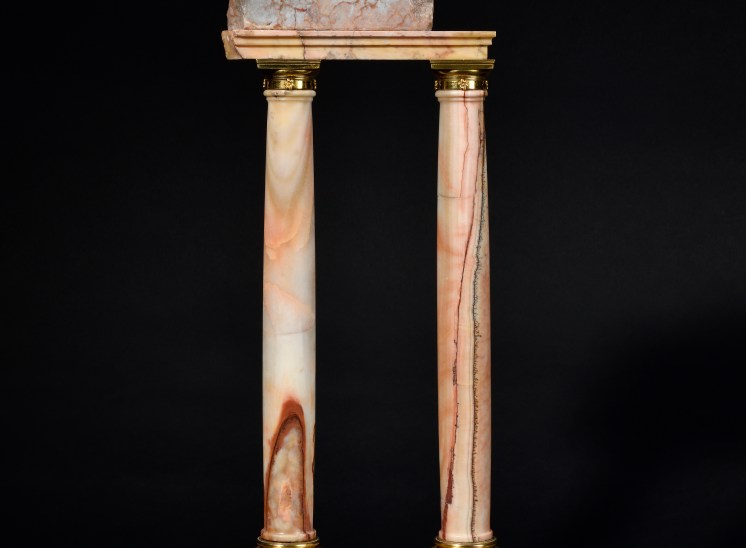
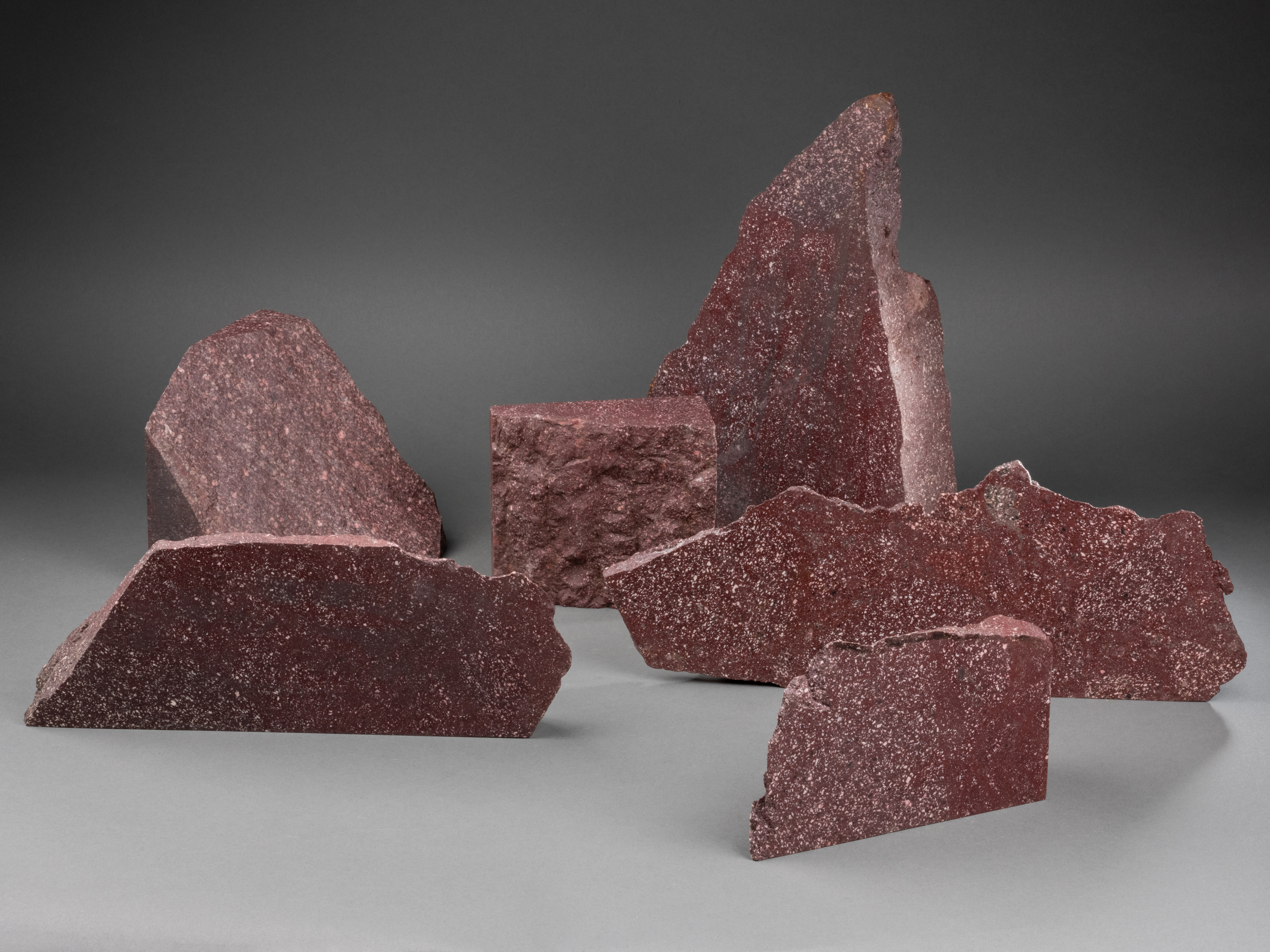
This table is paired with an exceptionally rare marble top, made of brèche de Médous, a Pyrenean breccia. Its quarry, long closed, was active in the early 19th century ; the brèche de Médous can still be found inside the Church of La Madeleine in Paris.