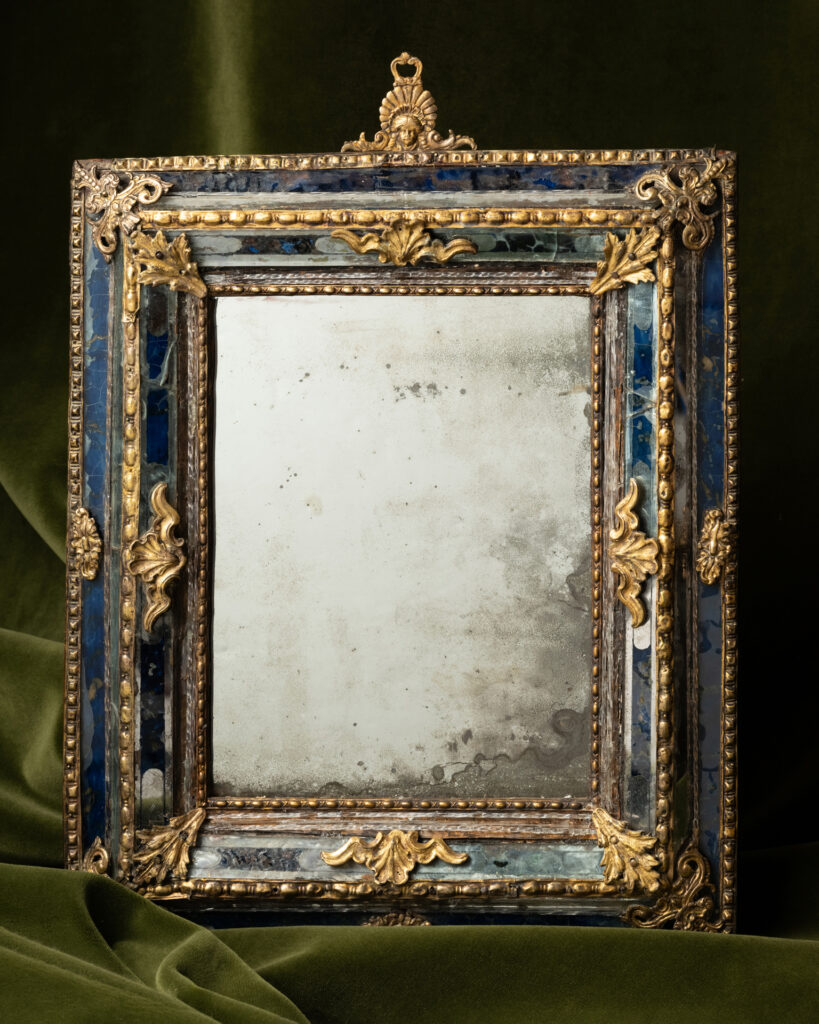
View of the Temple of Vesta in Tivoli, attributed to Franz Kaisermann and Bartolomeo Pinelli
View of the Temple of Vesta in Tivoli, attributed to Franz Kaisermann and Bartolomeo Pinelli
Watercolor
Rome
ca. 1795
h. 56 cm ; l. 77 cm (22 x 30.3 in.)
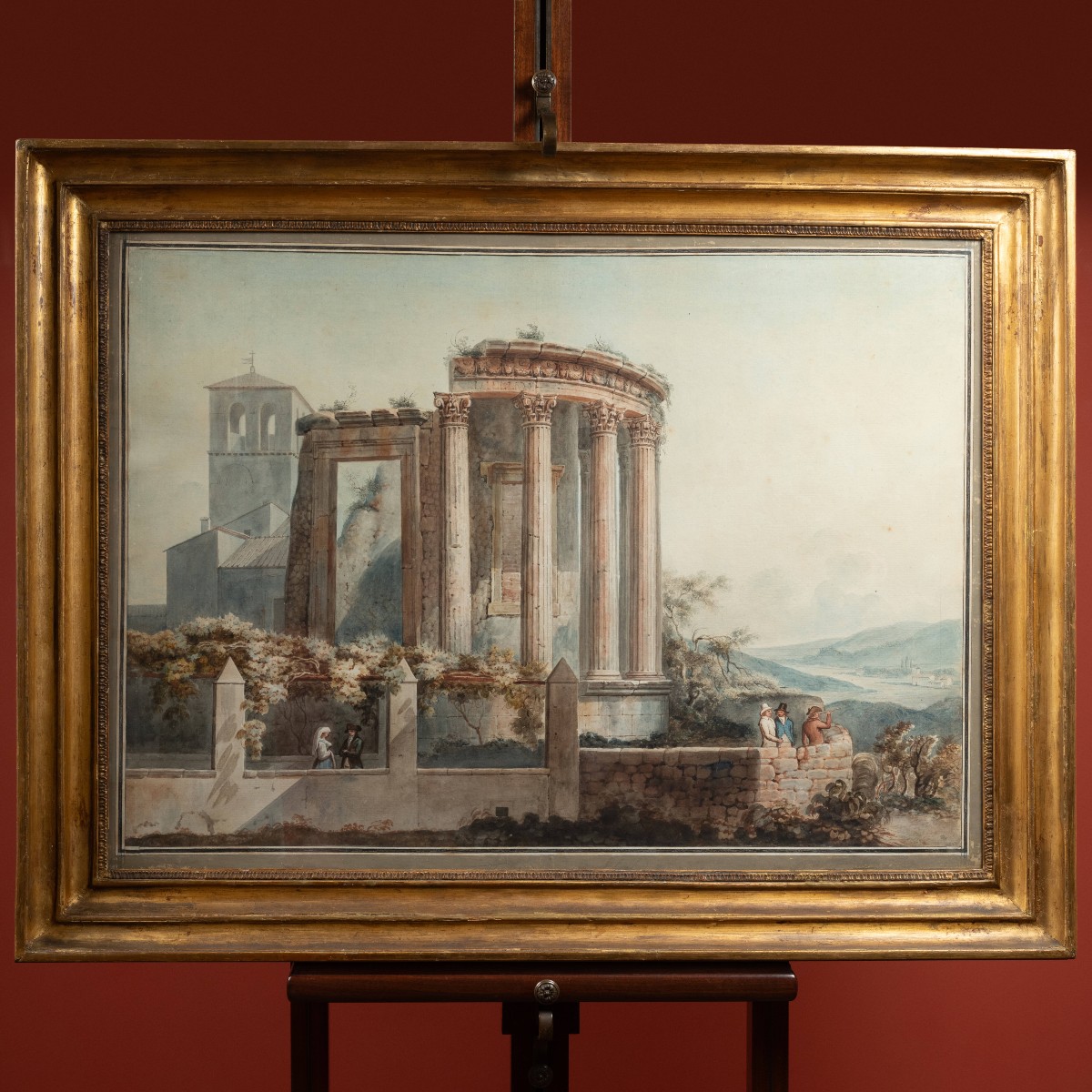
This watercolor depicting the Temple of Vesta in Tivoli, surrounded by figures in late 18th-century costumes, is part of a series of at least fifteen dispersed watercolors, though known through gouache copies preserved at the National Library of Spain and cataloged by Thomas Ashby. Another view from the same set, showing a different part of the Temple of Vesta, surfaced at a sale in 2011, bearing the number 5 on the reverse, which corresponds to gouache number 13 by Thomas Ashby.
These gouaches, presented at the exhibition Palabras de viajeros. El viaje literario y su aportación a la cultura europea (‘Words of Travelers. The Literary Journey and Its Contribution to European Culture’), held at the National Library of Spain in 2023, were dated ca. 1790, likely based on topographical criteria, but were attributed only to an anonymous Italian. Behind this anonymous Italian, in truth, likely lies a duo of artists : Franz Kaisermann and Bartolomeo Pinelli.
Born in Switzerland in 1765, Franz Kaisermann was arguably the most famous assistant of Louis Ducros1, whom he joined in Rome in 1783 before entering the clientele of Camillo and Pauline Borghese, who commissioned significant watercolors from him. Under their patronage, he gained great renown among the grand tourists passing through Rome. He collaborated with the Roman painter and draftsman Bartolomeo Pinelli, a master at depicting contemporary figures engaged in vignettes and bambochades. It was with Bartolomeo Pinelli that Franz Kaisermann published, in 1827, I sette colli di Roma e vedute di Roma, a collection of topographical views of the city of Rome. Pinelli’s vedute, along with the watercolors and washes created with Kaisermann, tend to humanize Roman ruins, portrayed amidst grand tourists or Italian locals, often of modest origins.
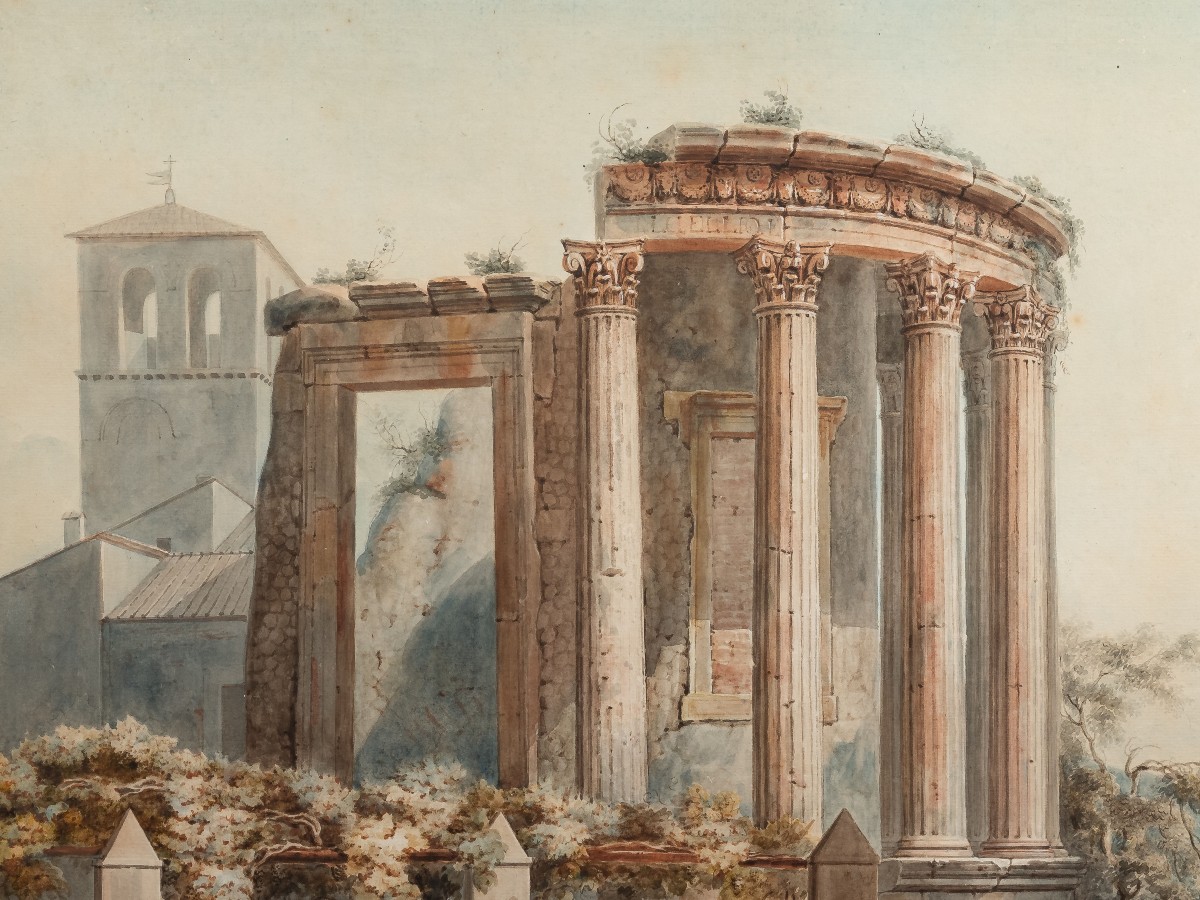
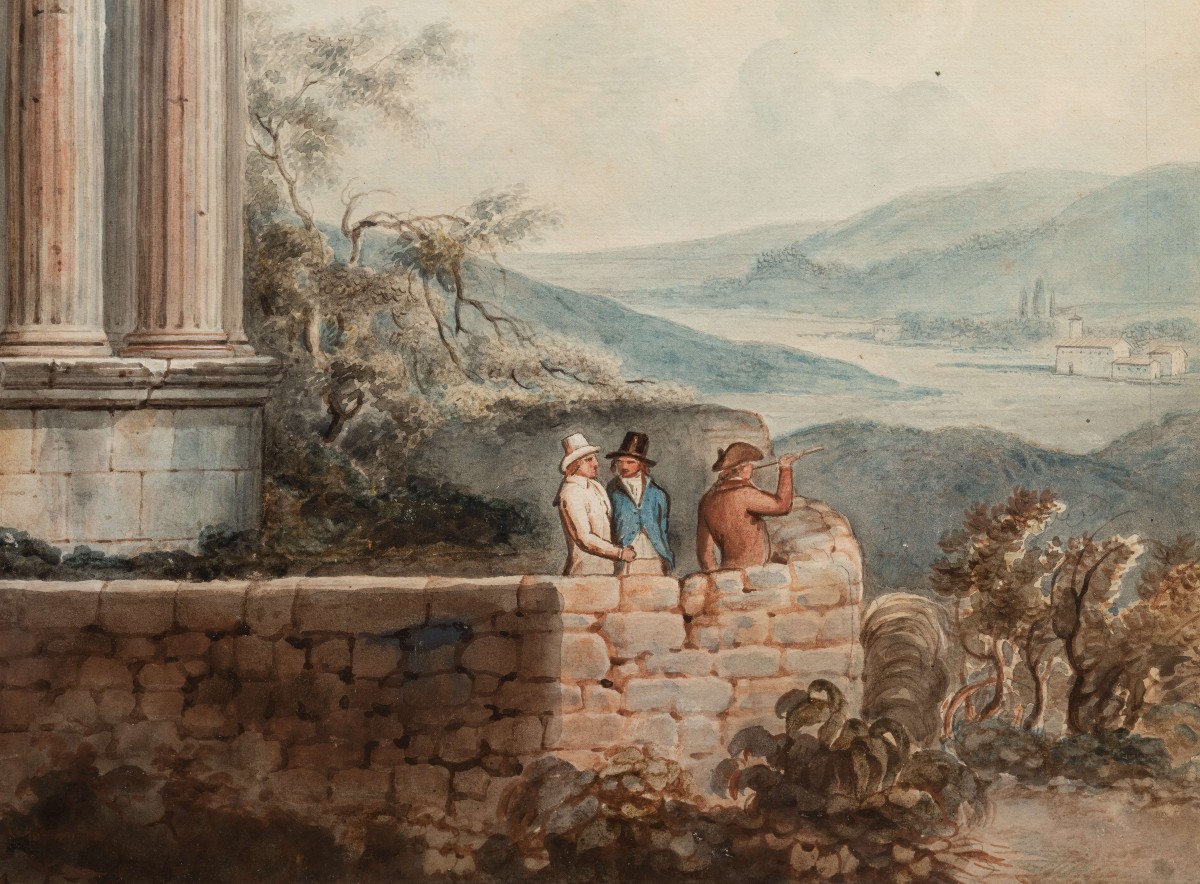
The attribution to Franz Kaisermann and Bartolomeo Pinelli rests on all these elements : the coloring, shadows, foliage, as well as the precision of architectural descriptions characteristic of Franz Kaisermann’s style, while the figures appear drawn from Bartolomeo Pinelli’s repertoire. Pinelli frequently sketched or painted the human figures in Kaisermann’s views, the latter being more skilled in landscapes and architecture. The characters of Kaisermann and Pinelli, recognizable by their simple features and, above all, their costumes, move like figurines from veduta to veduta. The small group to the right of the Temple of Vesta, consisting of several men wearing hats and one in a tricorn holding a telescope in his right hand, reappears in a black ink study signed by Franz Kaisermann, sold at Thierry de Maigret in 2013.
Literature
See John Gage, Colour in Turner. Poetry and Truth, London, 1969, Emmanuel Bénézit, Dictionnaire des peintres, sculpteurs, dessinateurs et graveurs, vol. 6, Paris, 1976 and Jane Turner, The Grove Dictionary of Art, vol. 24, London, 1996.
Related works
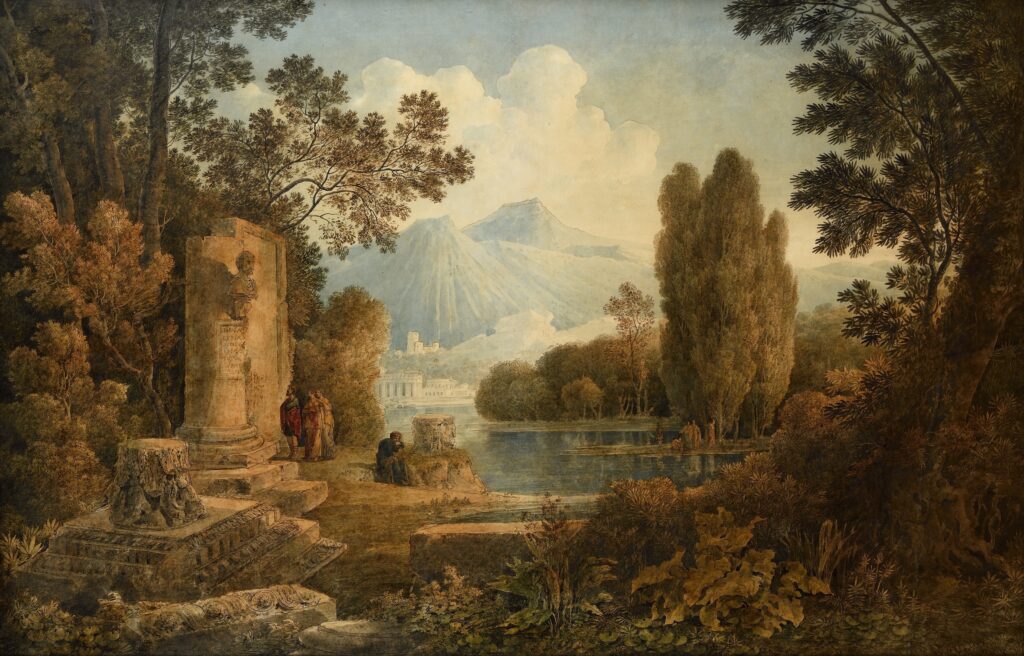
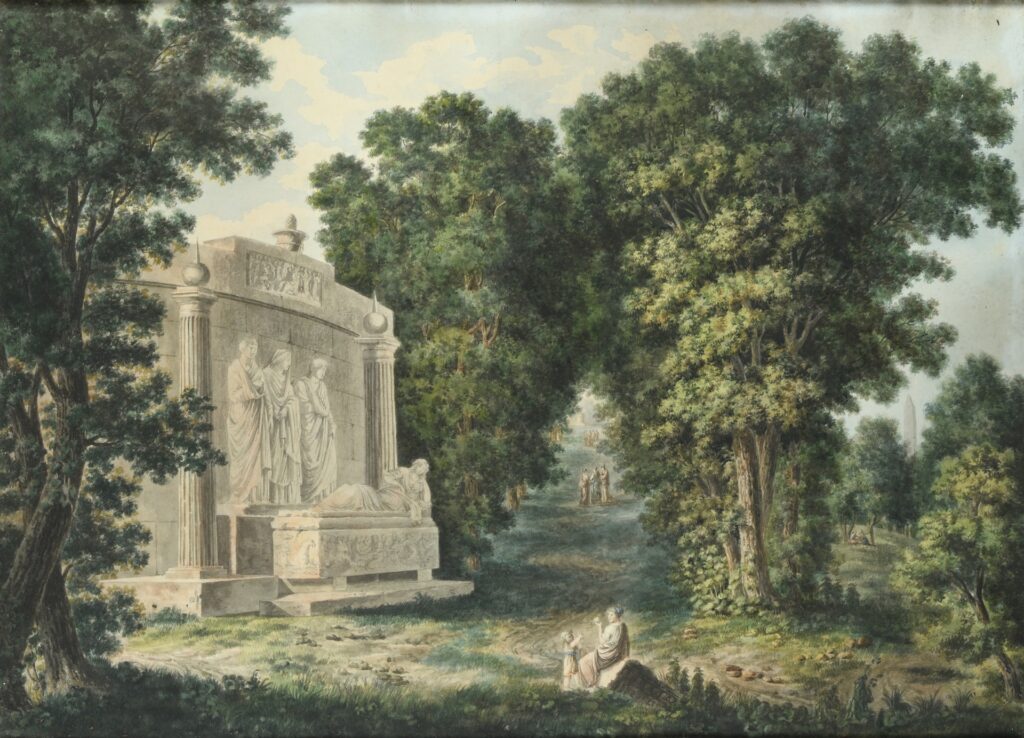
- The attribution to Franz Kaisermann and Bartolomeo Pinelli rests on all these elements : the coloring, shadows, foliage, as well as the precision of architectural descriptions characteristic of Franz Kaisermann’s style, while the figures appear drawn from Bartolomeo Pinelli’s repertoire. Pinelli frequently sketched or painted the human figures in Kaisermann’s views, the latter being more skilled in landscapes and architecture. The characters of Kaisermann and Pinelli, recognizable by their simple features and, above all, their costumes, move like figurines from veduta to veduta. The small group to the right of the Temple of Vesta, consisting of several men wearing hats and one in a tricorn holding a telescope in his right hand, reappears in a black ink study signed by Franz Kaisermann, sold at Thierry de Maigret in 2013. ↩︎