A Russian Empire Cut Crystal Twelve-Light Chandelier
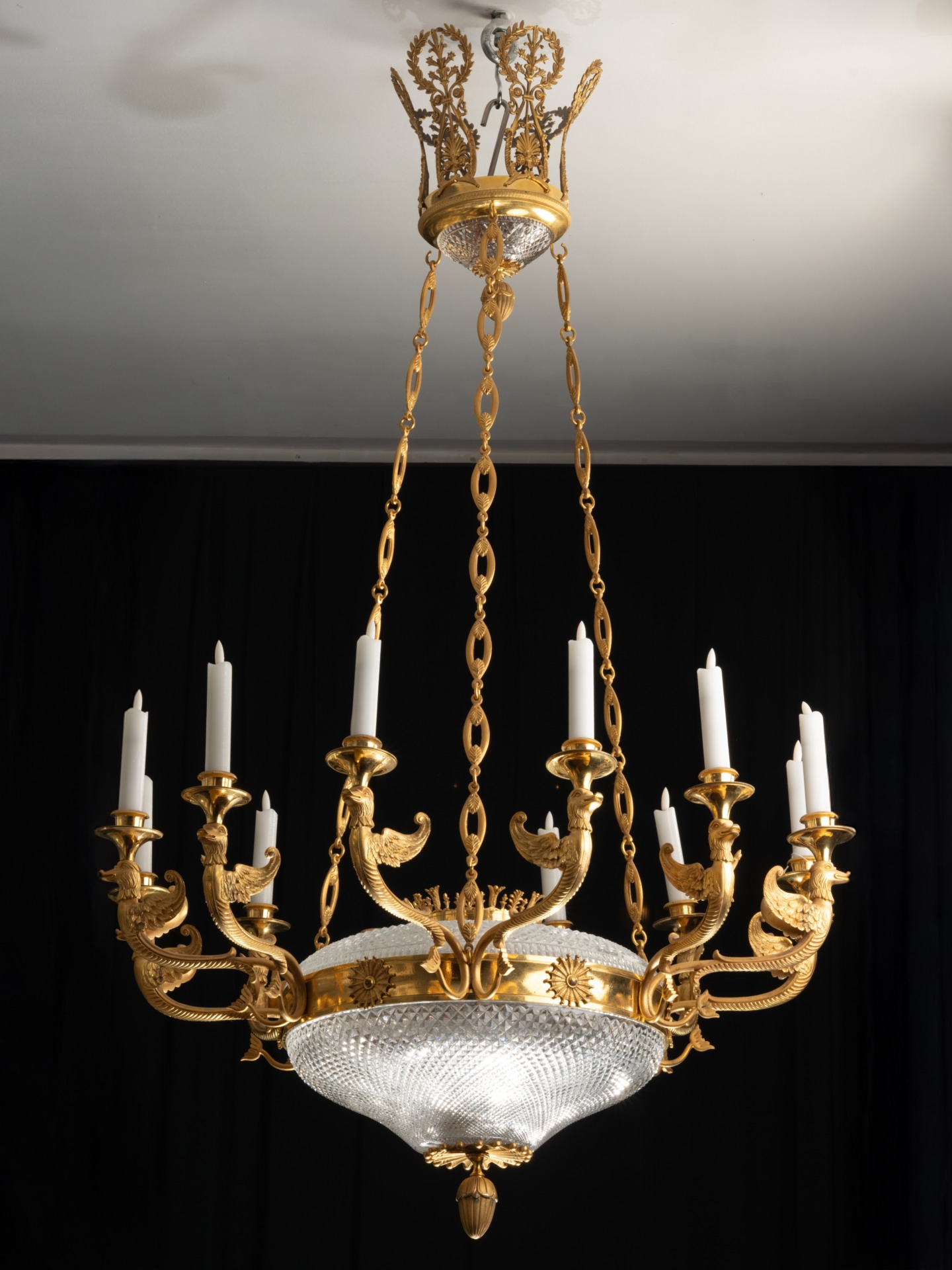
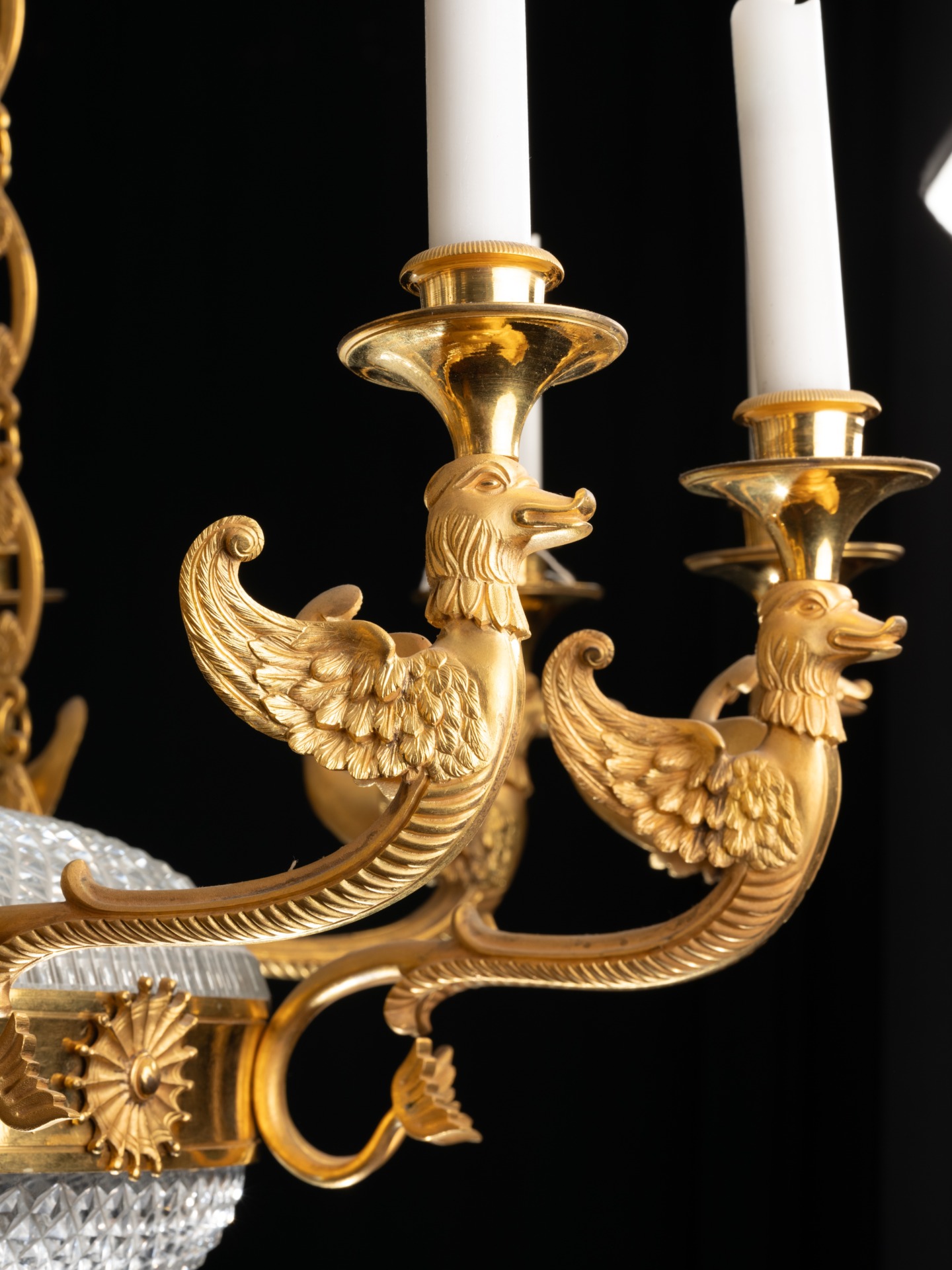
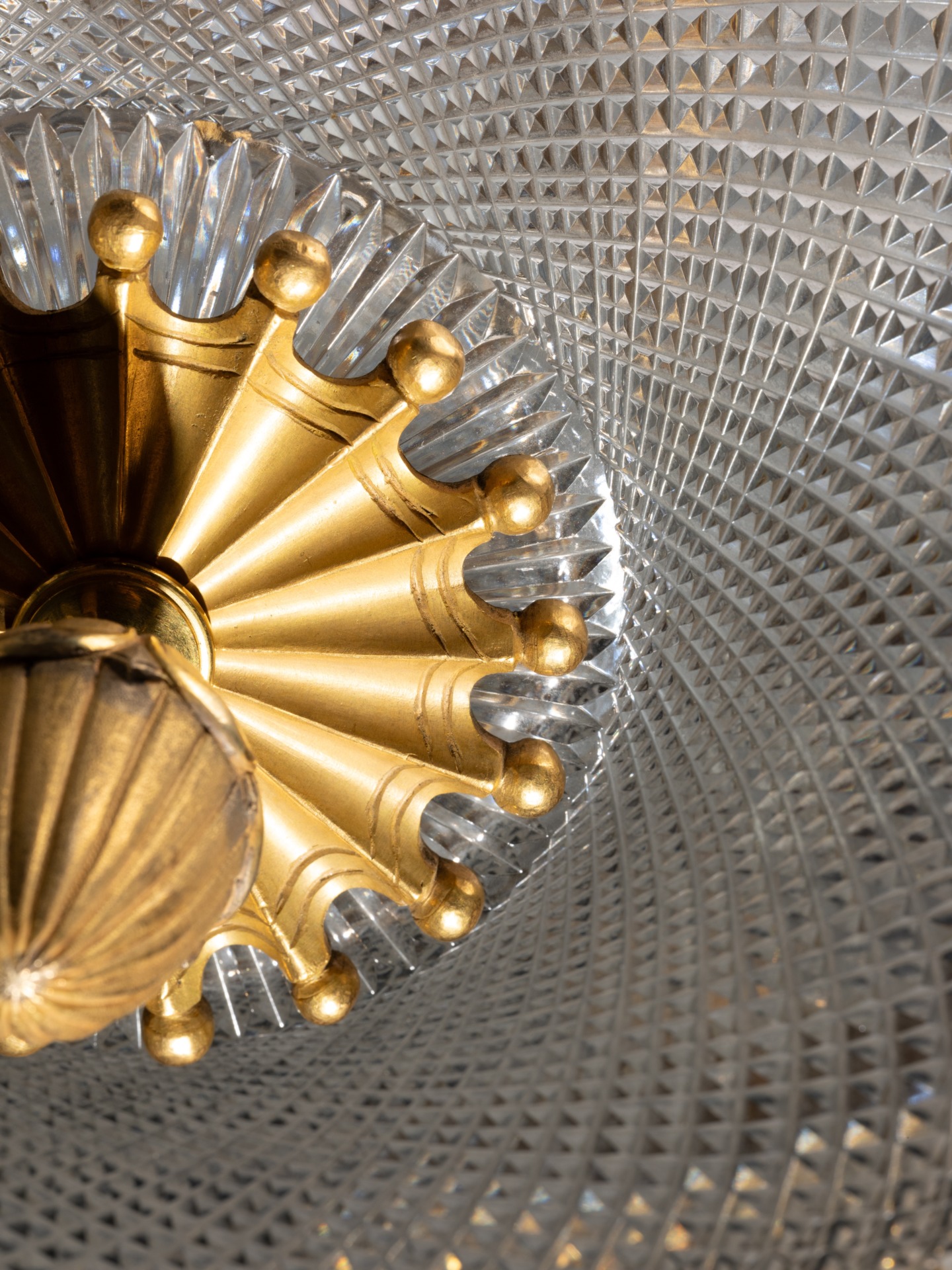
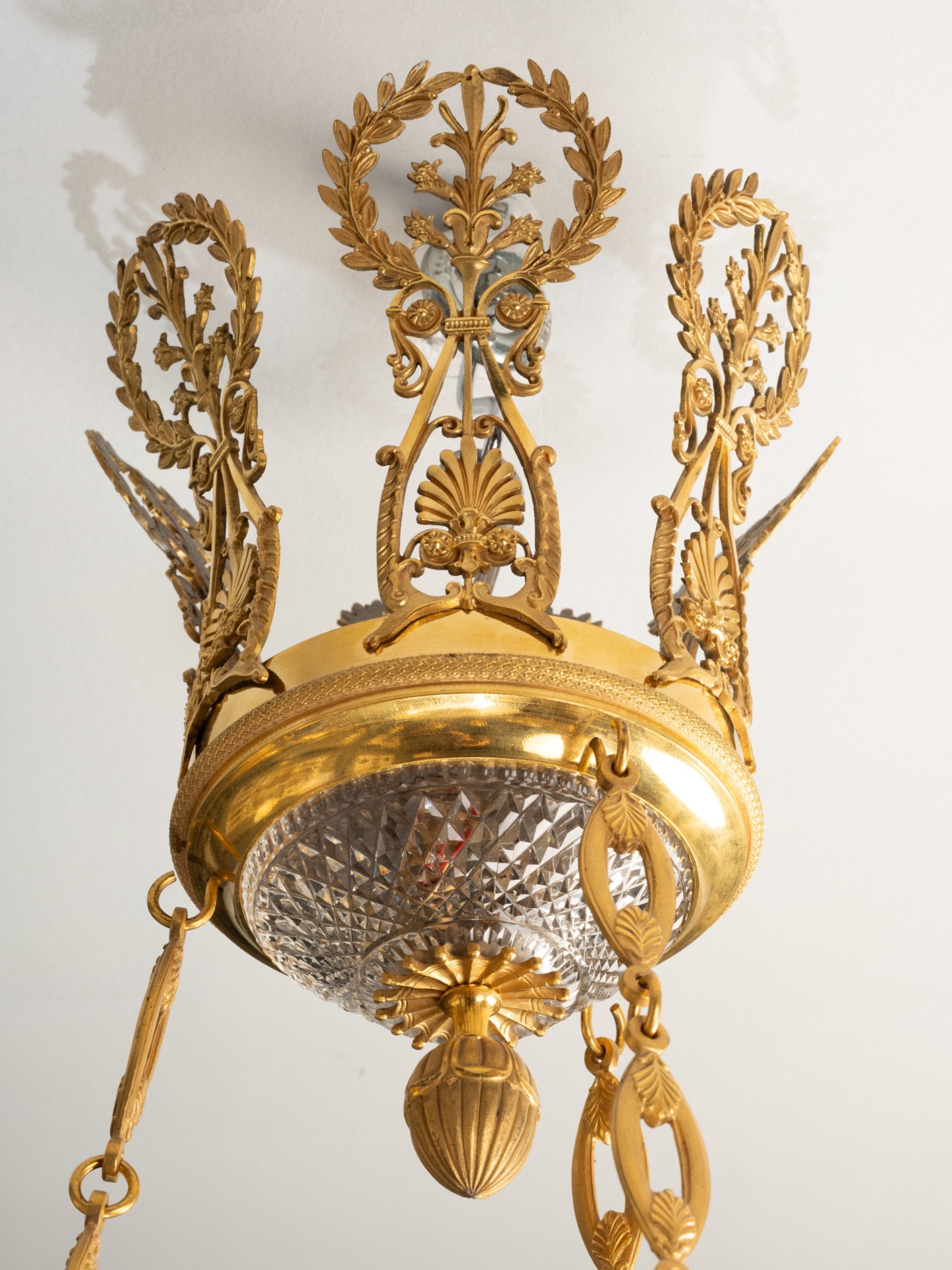
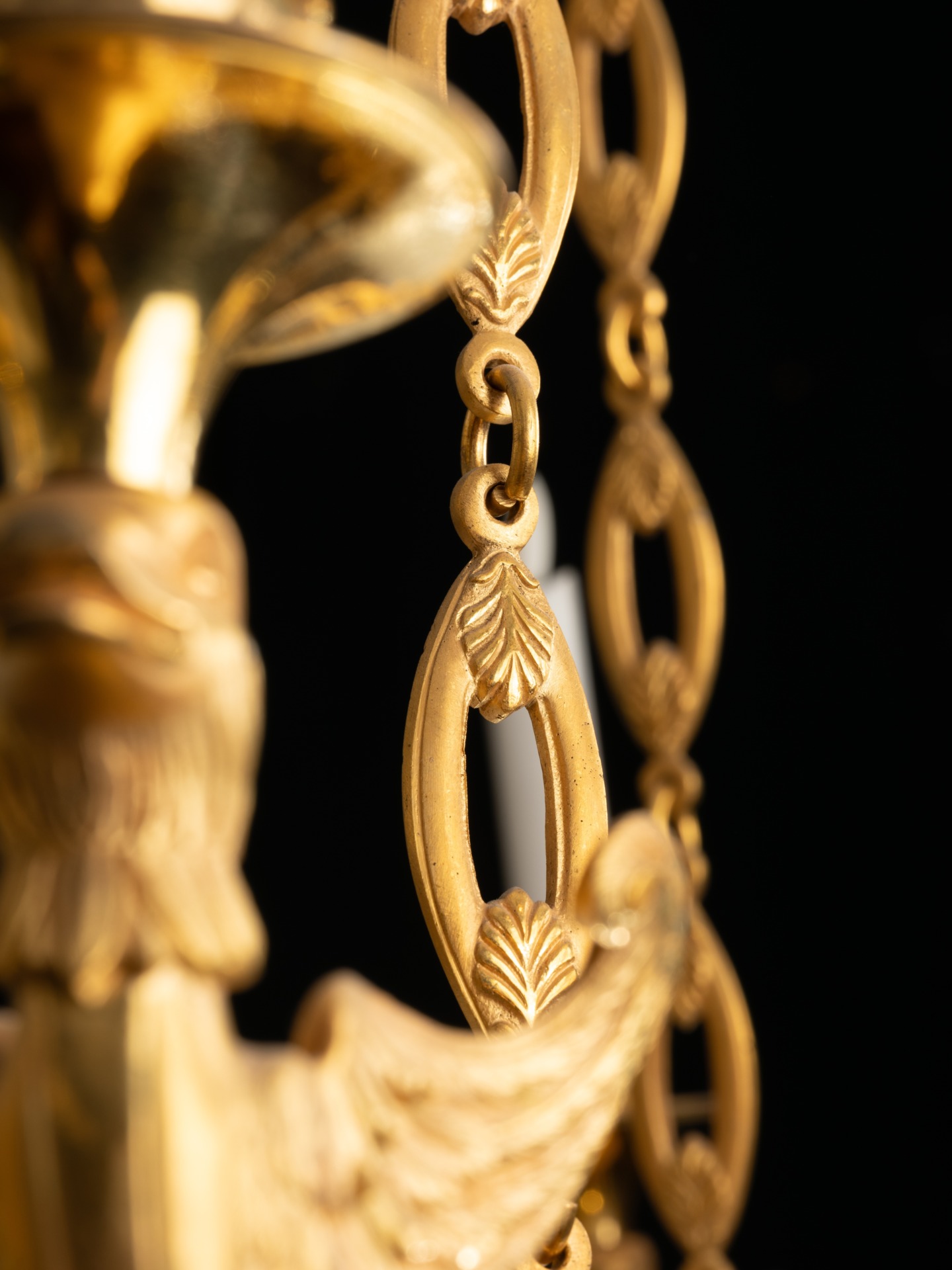
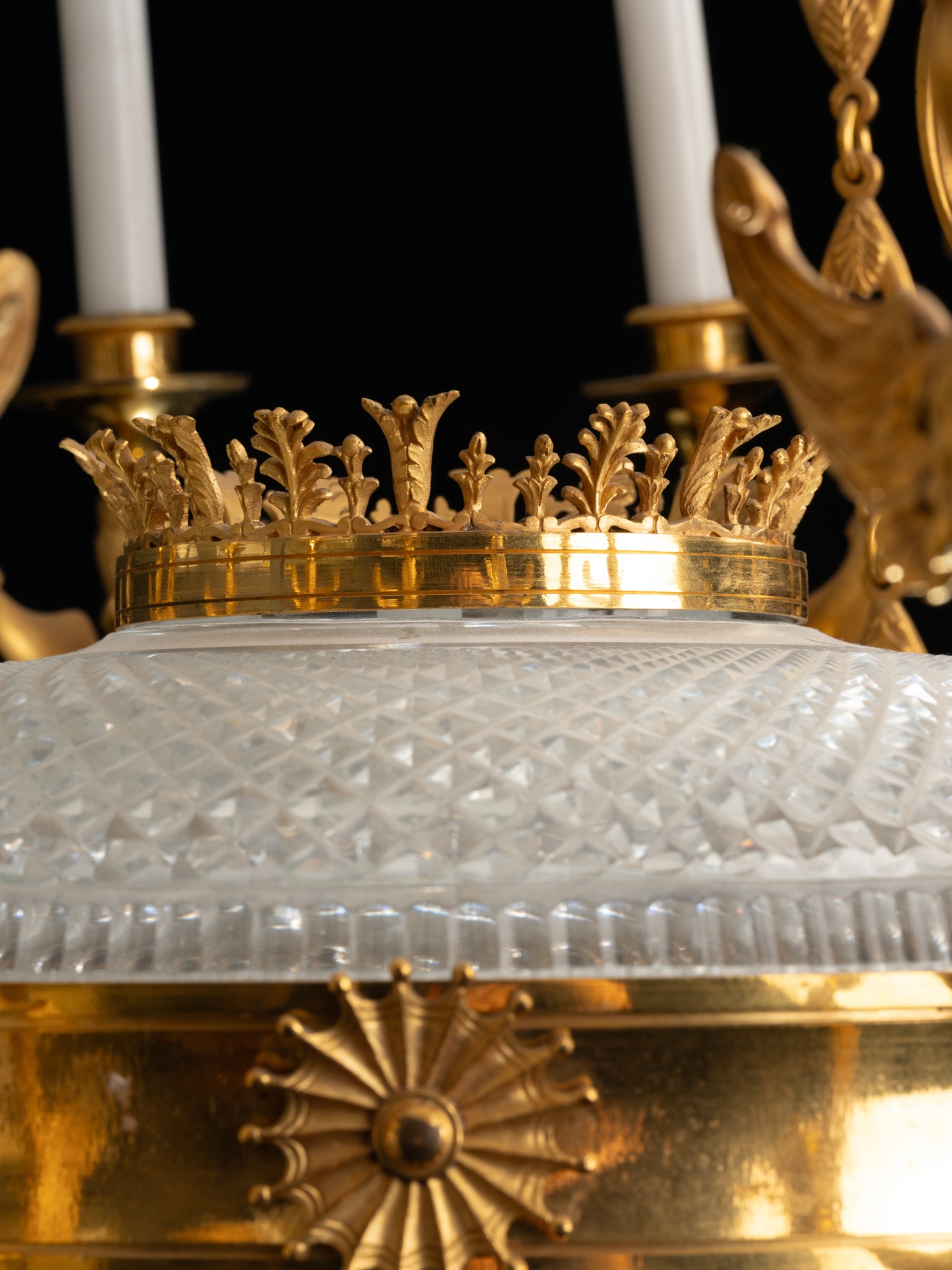
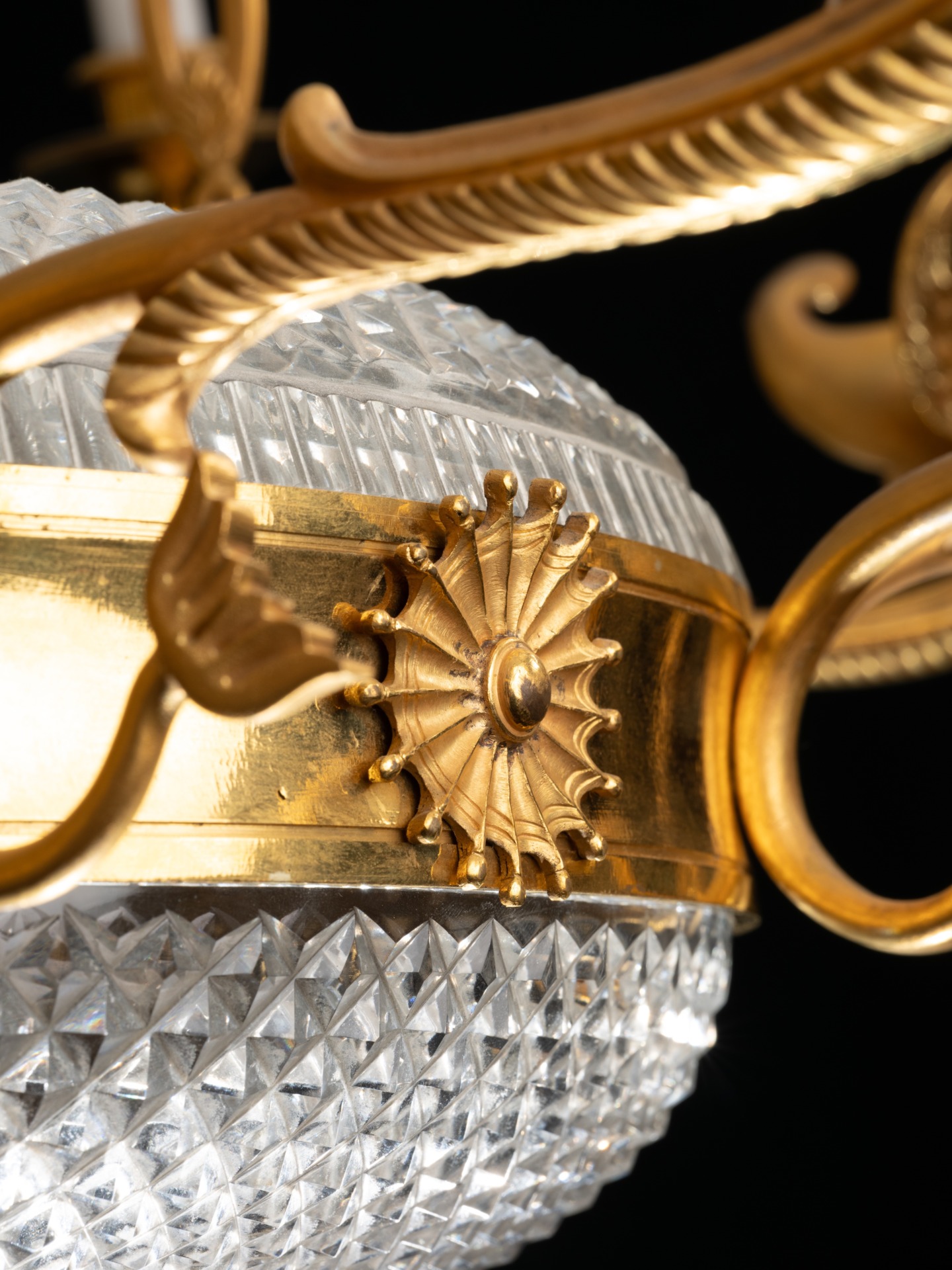
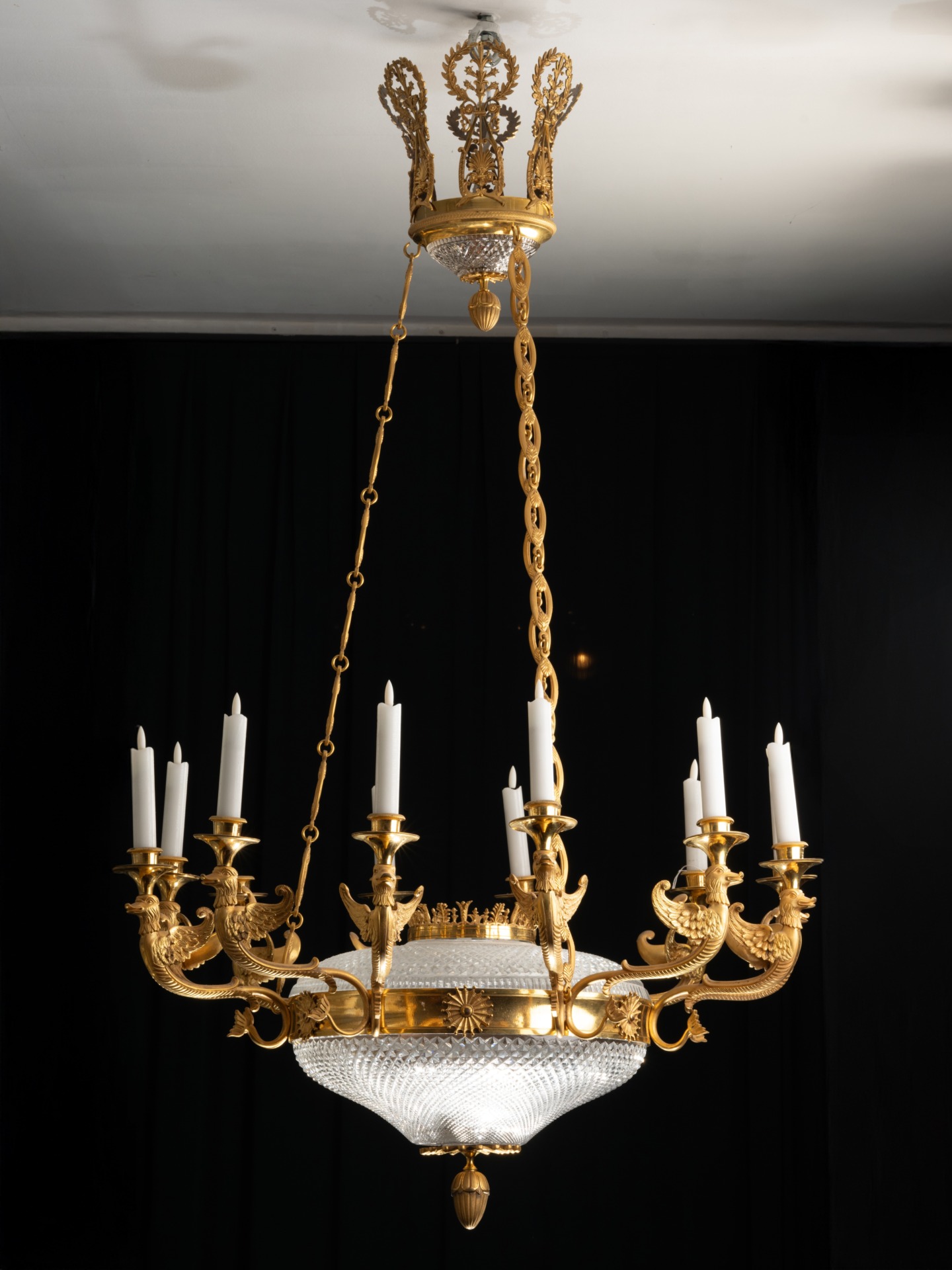
A Russian twelve-light chandelier, in mercury gilt-bronze and cut crystal, surmounted by a crown of scrolls, foliage, anthemia, and laurels finished with a cut-crystal pendant with diamond cut patterns and a pinecone finial, supporting, by three gilt-bronze chains chased with palms, a covered crystal core in the same diamond cut crystal and decorated with bronze rosettes, from which twelve arms spring in the form of swan protomai on whose heads are screwed the drip pans and candleholders. The lower part of the crystal core ends in a gracefully gable terminated with a bronze rosette and a chased pinecone finial. No missing elements. Neither drilled nor fitted for electrification. The crystal body is featured with a bronze cover, concealed beneath a small foliage crown, allowing for an addition as a central shaft.
Similar chandeliers are documented by Sychev in The Russian Chandeliers. 1760–1830. The corona of the present chandelier is indeed remarkably close to that of a chandelier at Tsarskoye Selo attributed to Alexandre Guérin, a French bronzier active in St Petersburg in the early years of the nineteenth century.1 Sychev also documents elements of a chandelier from the Oldenburg villa, dated to the 1820s, whose scrolling light arms with protomes are likewise very close to those of the present chandelier. Guérin is also the author of a chandelier of the same type, in the form of a hanging bowl suspended from a similar corona by gilt-bronze chains, with bobèches held by swan protomes terminating in scrolls.
Literature
Similar chandeliers are documented by Igor Sychev, The Russian Chandeliers. 1760-1830, Saint Petersburg, 2003. For comparable examples of cut crystal by the Saint Petersburg Manufacture, see Asharina et al., Russian Glass of the 17th-20th Centuries, New York, 1990.
Related works
- Sychev, 2003, p. 122 sq. ↩︎