A Pair of Four-Light Russian Candelabra
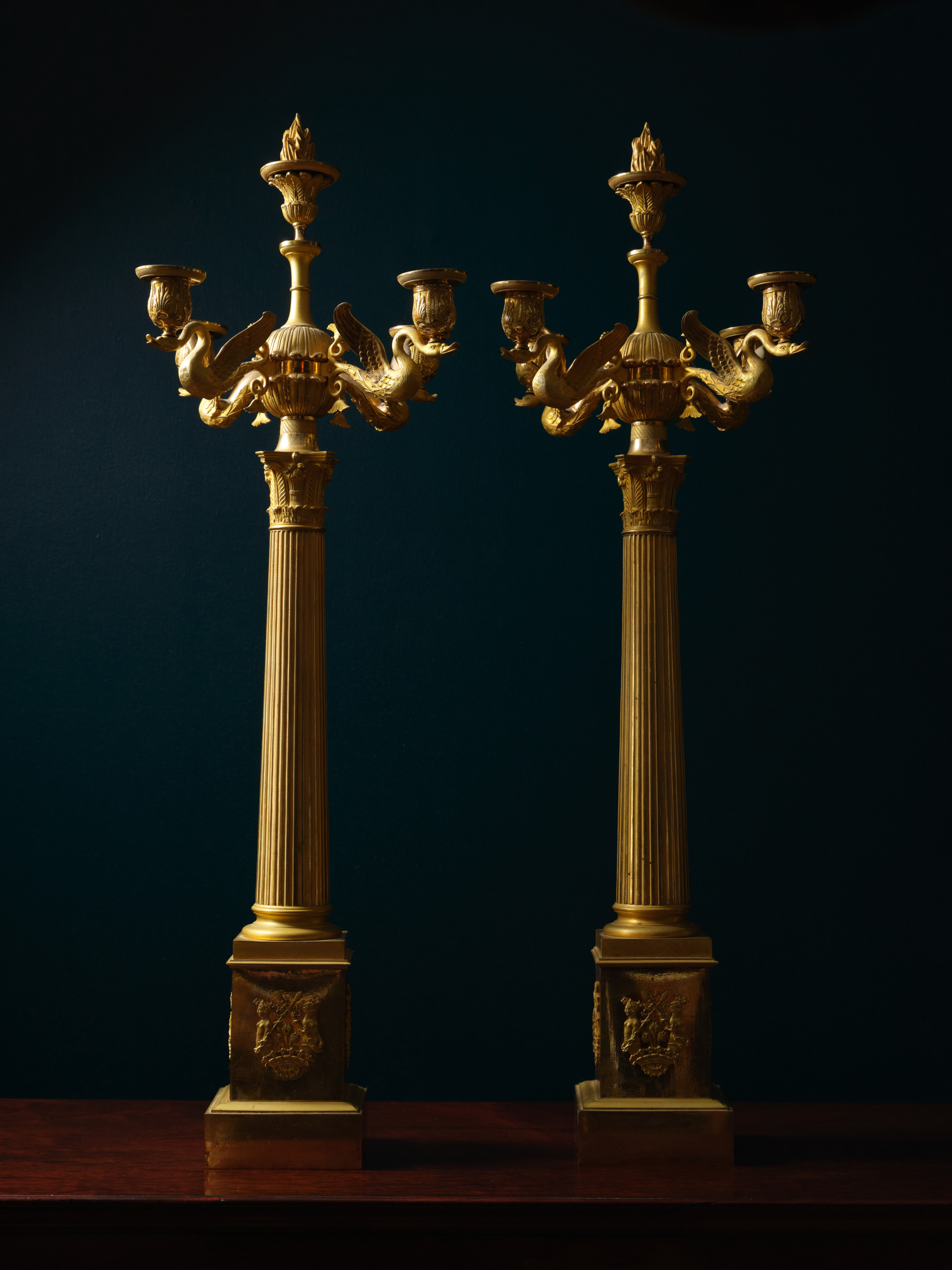
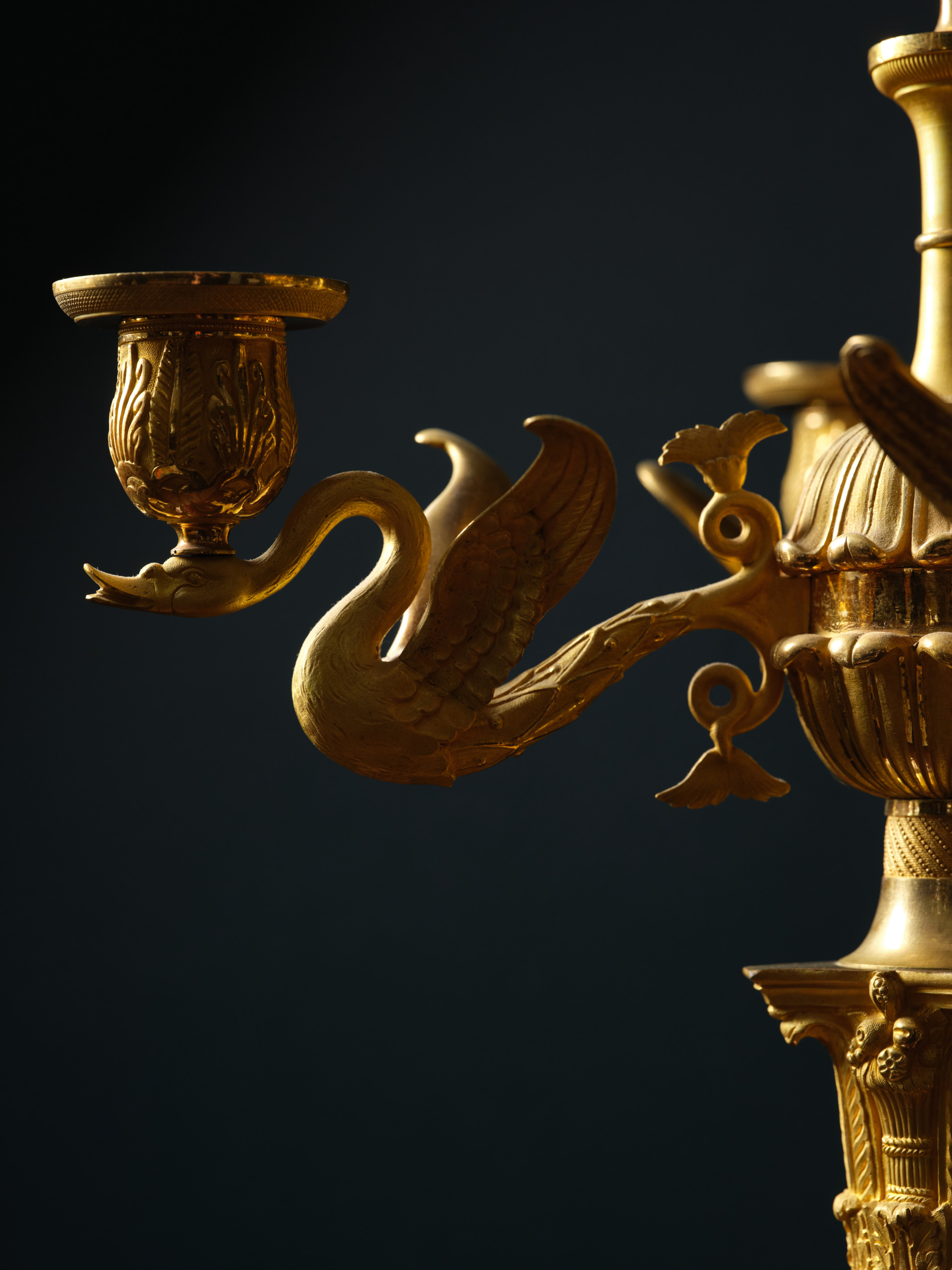
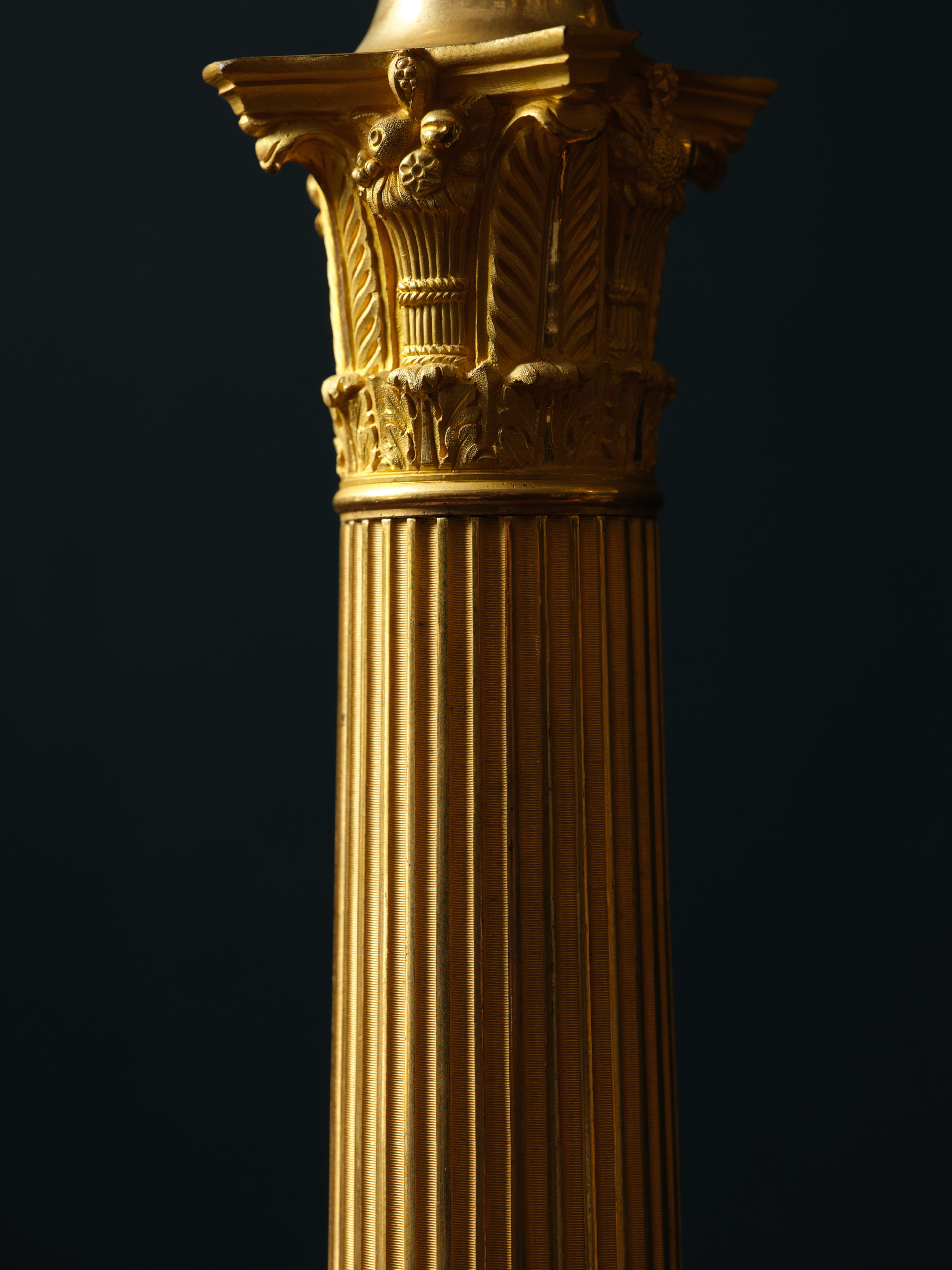
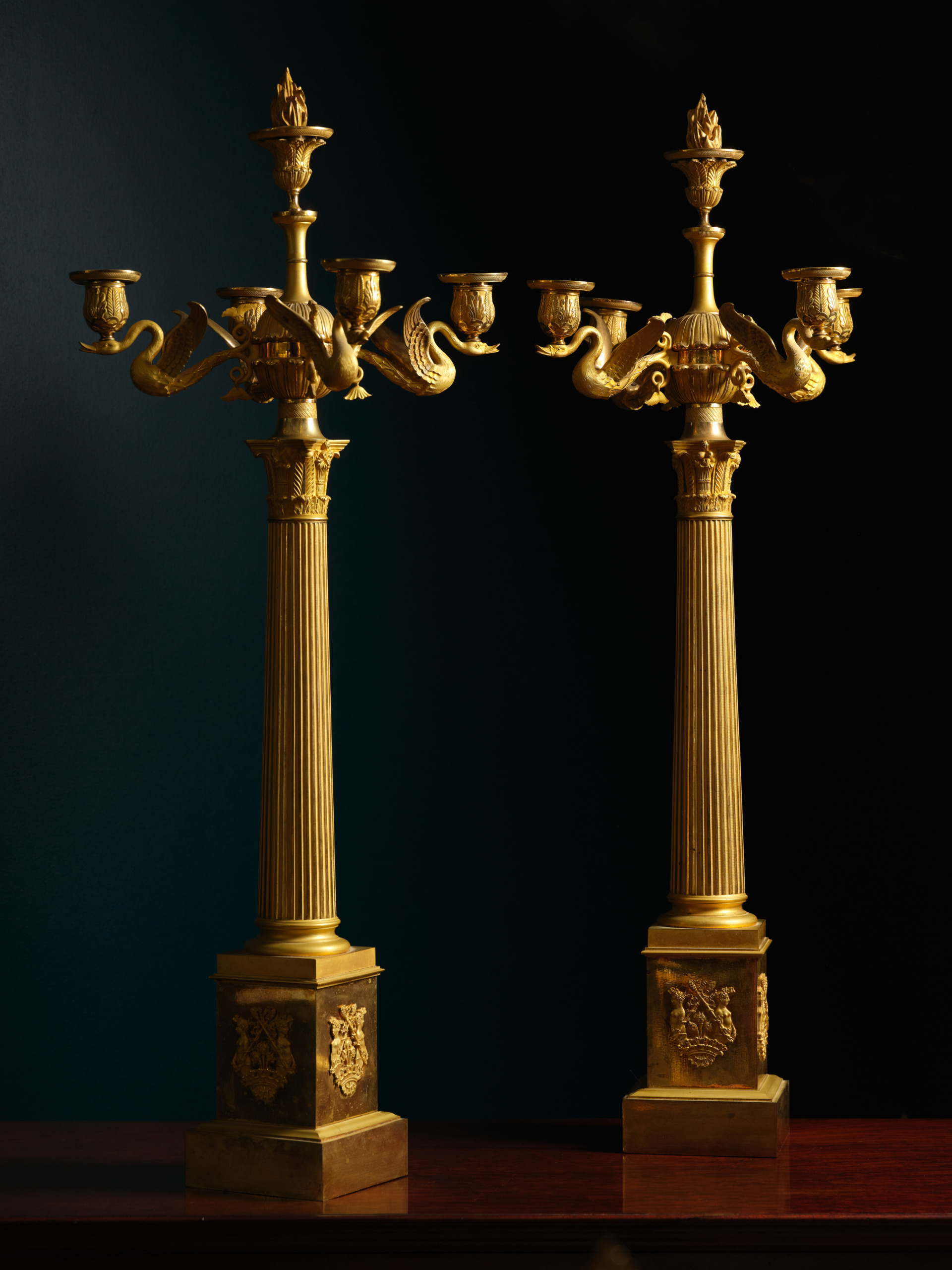
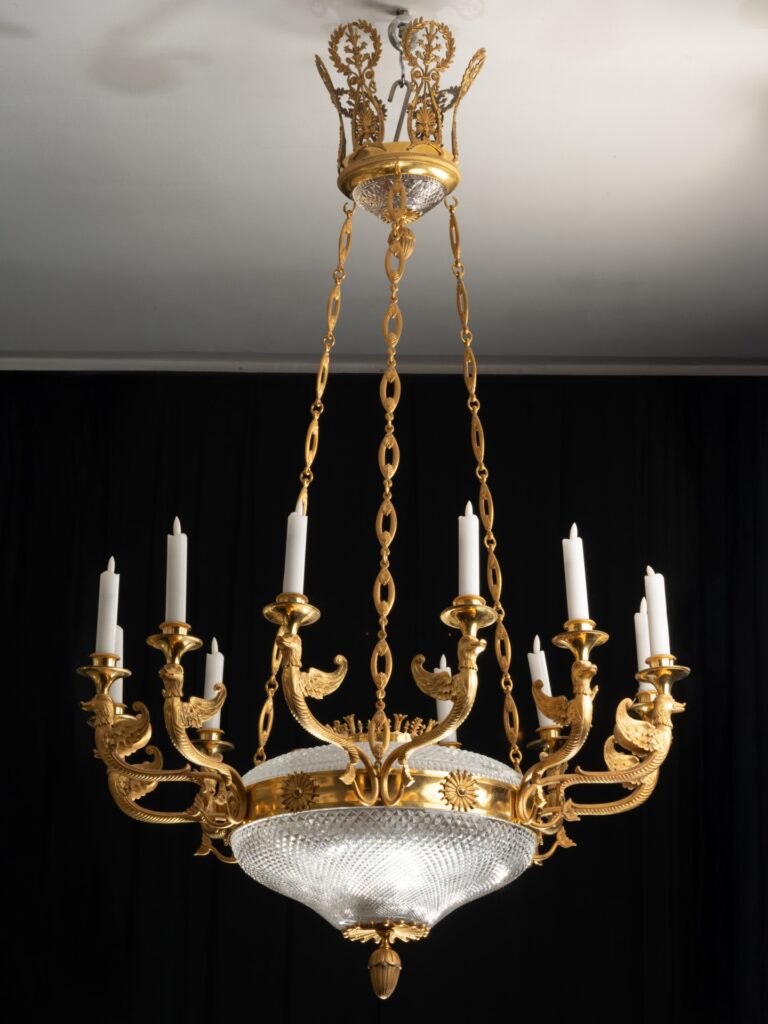
The four candle-branches of these candelabra, each a swan whose double fishtail curls into flattened scrolls — a motif much used in the chandeliers of early nineteenth-century St Petersburg — suggest the Russian origin of this pair of candelabra of a form moreover favoured by Petersburgean bronziers of the first third of the century, who, in Sychev’s words, ‘knew and made magnificent use of the latest Parisian models’,1 and who here adapted a formula in which Pierre-Philippe Thomire, their presumed point of reference, had particularly distinguished himself.
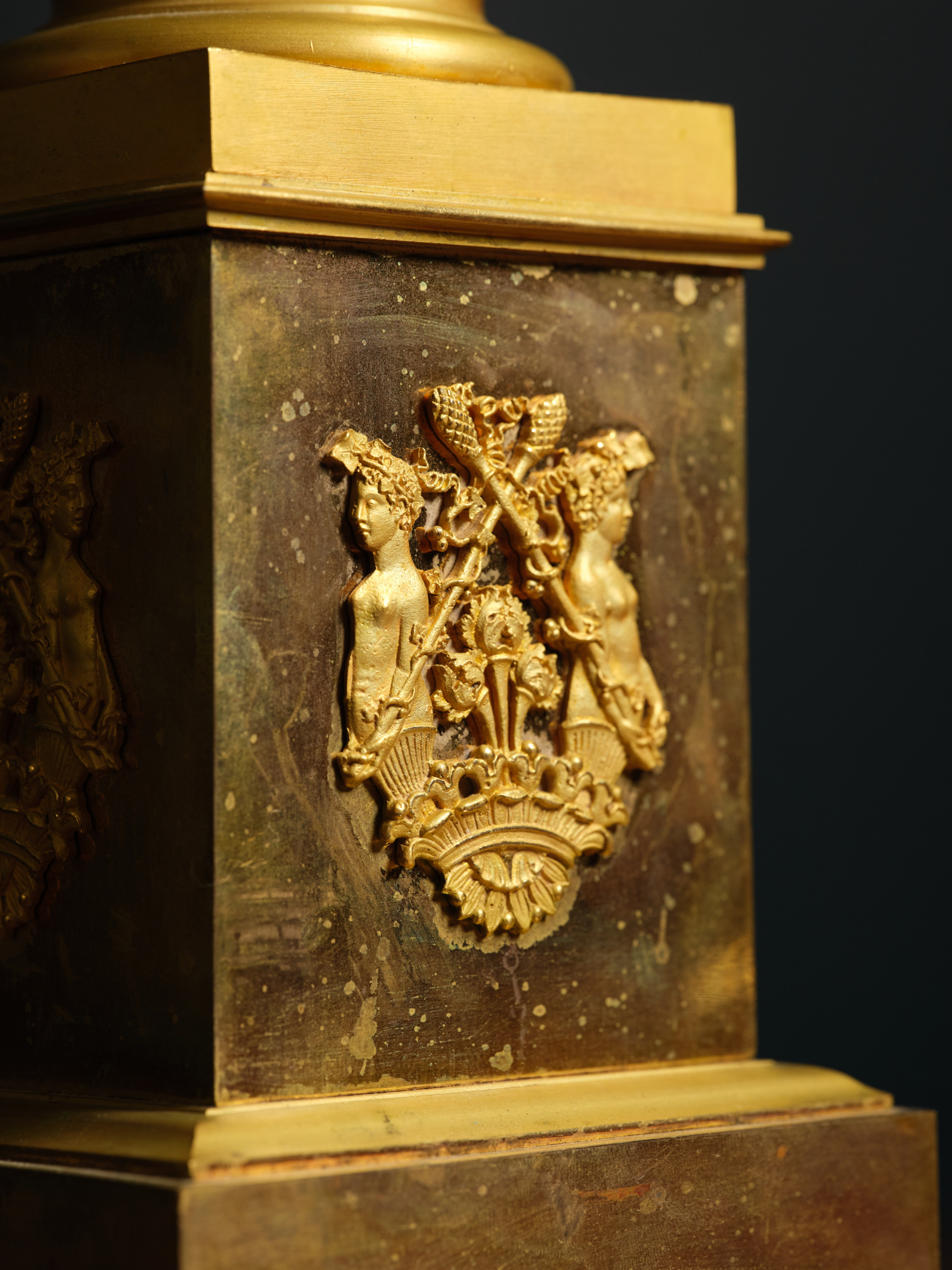
Here, however, the chasing rivals that of the Parisian bronziers under the Empire, and could almost pass for French, so great is the finesse of execution not only of the rare motif of confronted Bacchic hermaphrodite protomes applied to the quadrangular bases, but also of the horizontally striated grounds of the flutes, the Corinthian capitals, where acanthus mingles with lotus leaves and several overflowing baskets of fruit, and the confronted water-leaves, their veins burnished, that adorn the ball from which the fish-tailed swan chimeras spring — beaks half open, knobs prominent, plumage suggested by tracer-work on the breast. Even so, the almost compulsive use of the roulette2 in the grounds of the flutes, on the small scotia, with its pattern of beading and twisted striations characteristic of Russian bronzes, and on the nozzles, truly betrays the native hand of the candelabra.
Literature
Igor Sychev, The Russian Chandeliers. 1760-1830, Saint Petersburg, 2003.