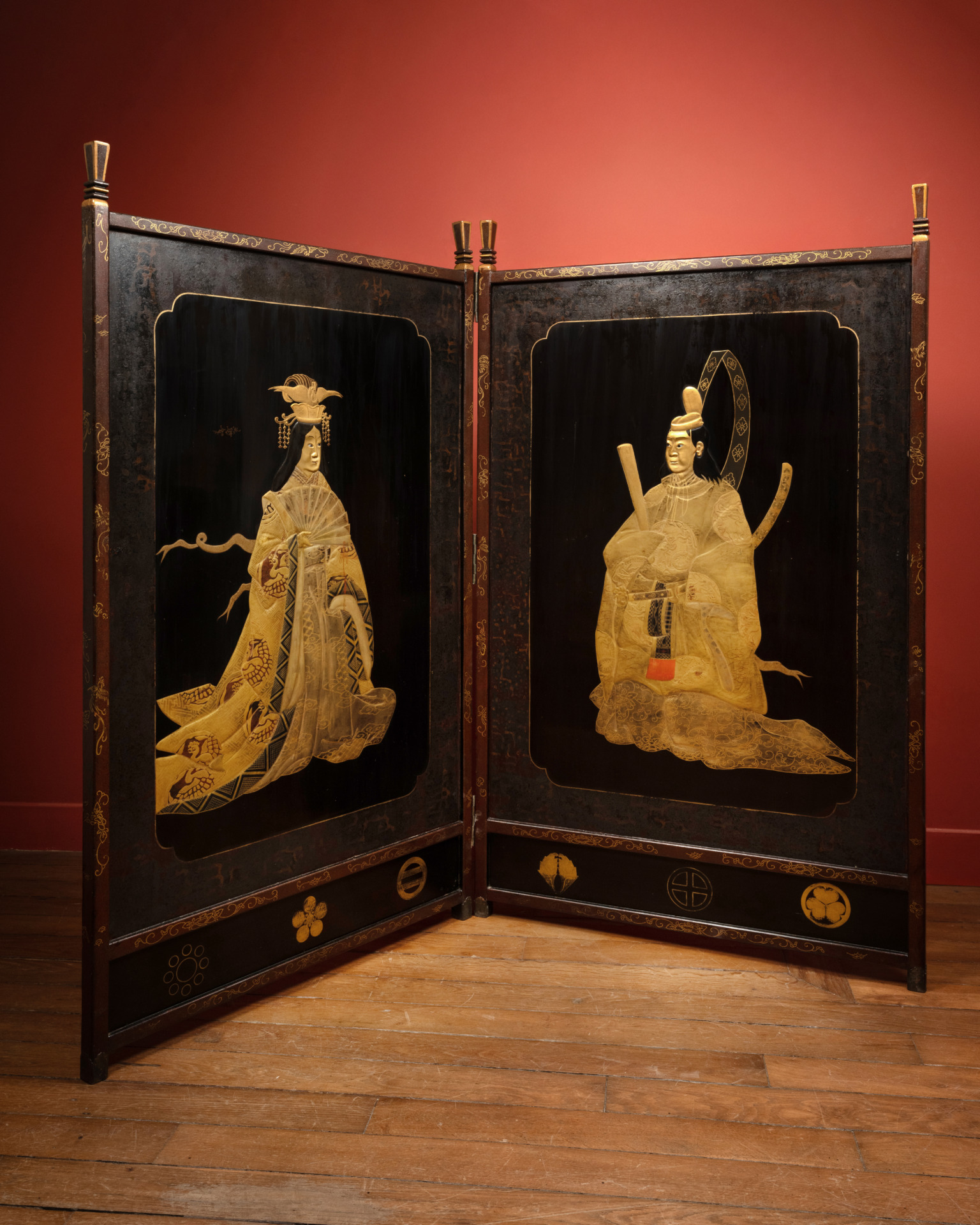
A Two-Panel Meiji-period Screen in Honor of the Wedding of Toshitsune and Tamahime
A Two-Panel Meiji-period Screen in Honor of the Wedding of Toshitsune and Tamahime
Wood, black lacquer, gold Meiji period 130 x 76 cm (51 x 30 in., per panel)
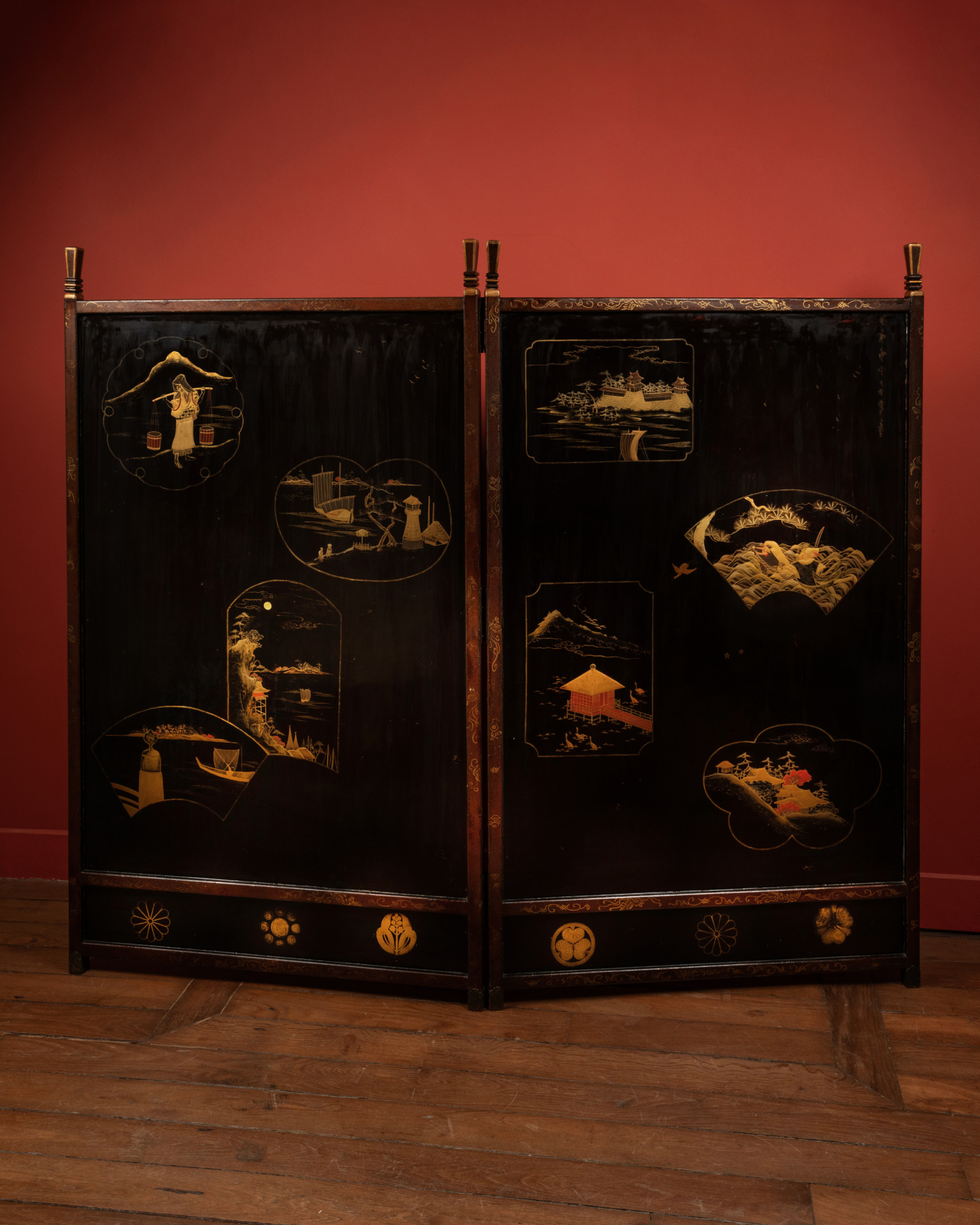
This two-panel screen, or byôbu (屏風), is decorated, on one side, with scenes and landscapes inspired by the hiramaki-e (平蒔絵) lacquered lids of suzuribako (硯箱) or tabikushibako (旅櫛箱), the writing or makeup boxes of the Edo period, particularly those of Kanyōsai.
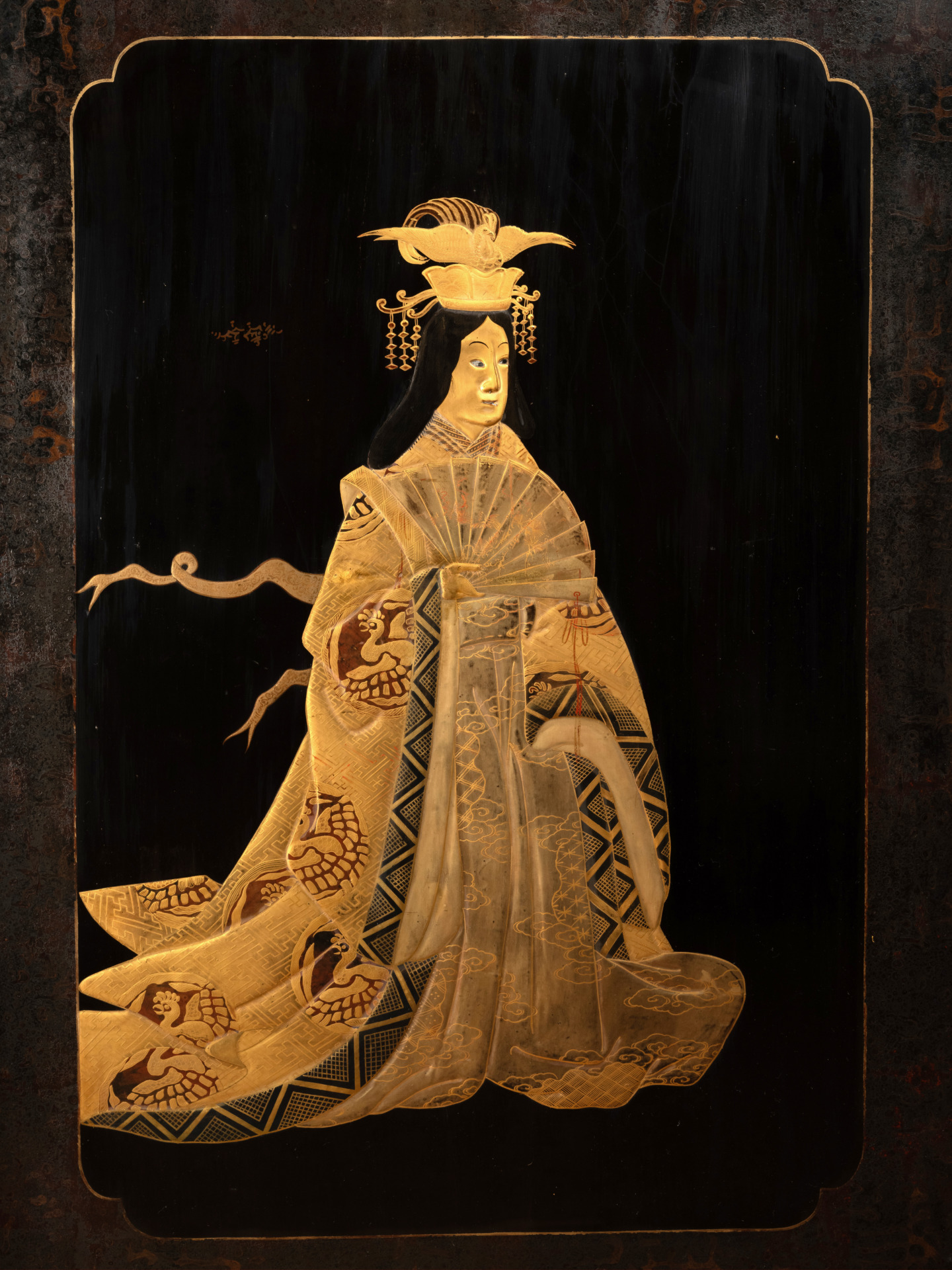
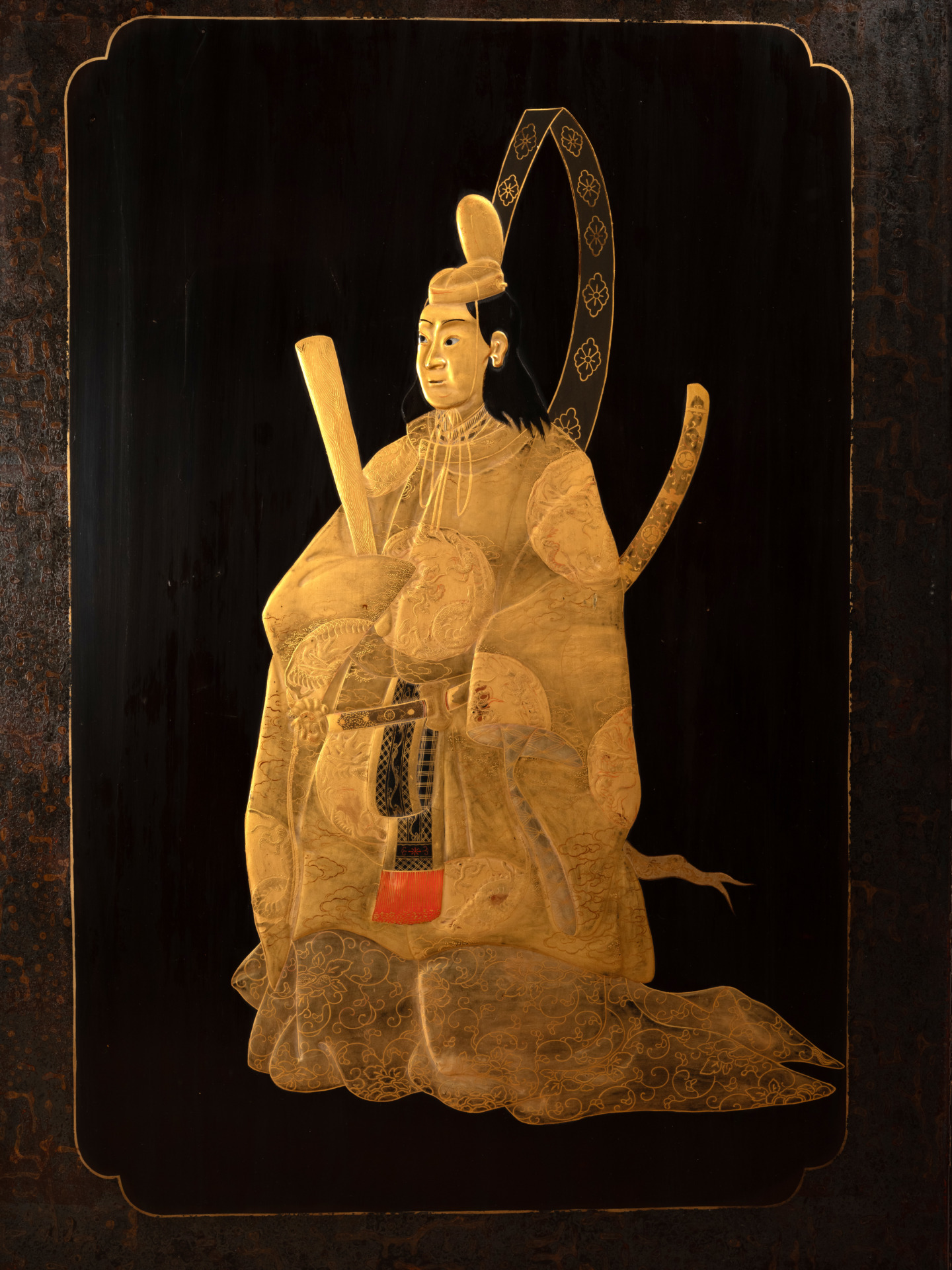
The interior of the screen, on the other hand, features two large figures in takamaki-e (高蒔絵), a lacquer technique with a higher relief than hiramaki-e. The costume and gestures of these characters, particularly the folded command fan held by the male figure, indicate a high rank in Japanese nobility. The combination of heraldic symbols (mon 紋), confirming this rank, signifies an alliance between the Kuyo, Maeda, Ashikaga, Shimazu, and Tokugawa clans. These heraldic signs collectively seem to reference the 1603 marriage of Maeda Toshitsune and Tamahime, daughter of Hidetada Tokugawa.
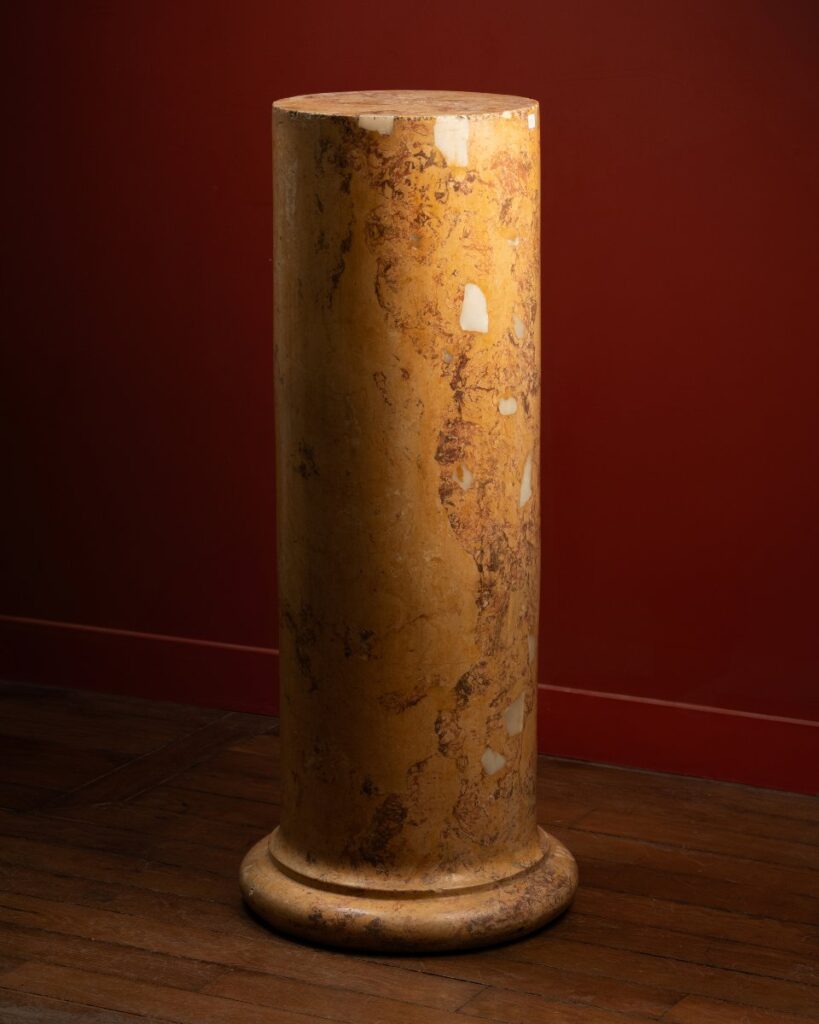
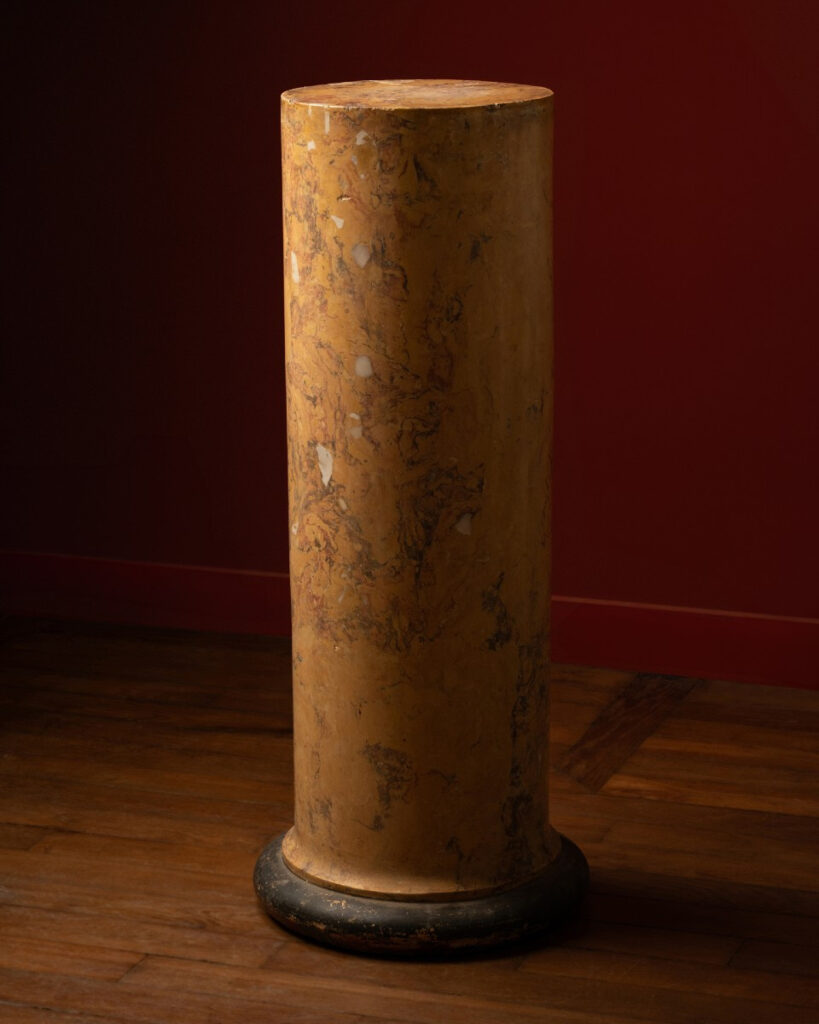
A Pair of Fluted, giallo antico-like Scagliola Columns
A Pair of Fluted, giallo antico-like Scagliola Columns
Scagliola Italy 19th century h. 110 cm (43.3 in.)
These two columns, due to their age and wear, look like remnents of ancient ruins, and might even more come across as magnified versions of the miniature Roman ruins of Domenico Padiglione held at Sir John Soane’s Museum in London, or of the Greek temples marble models of Carlo Albacini held at the Capodimonte.
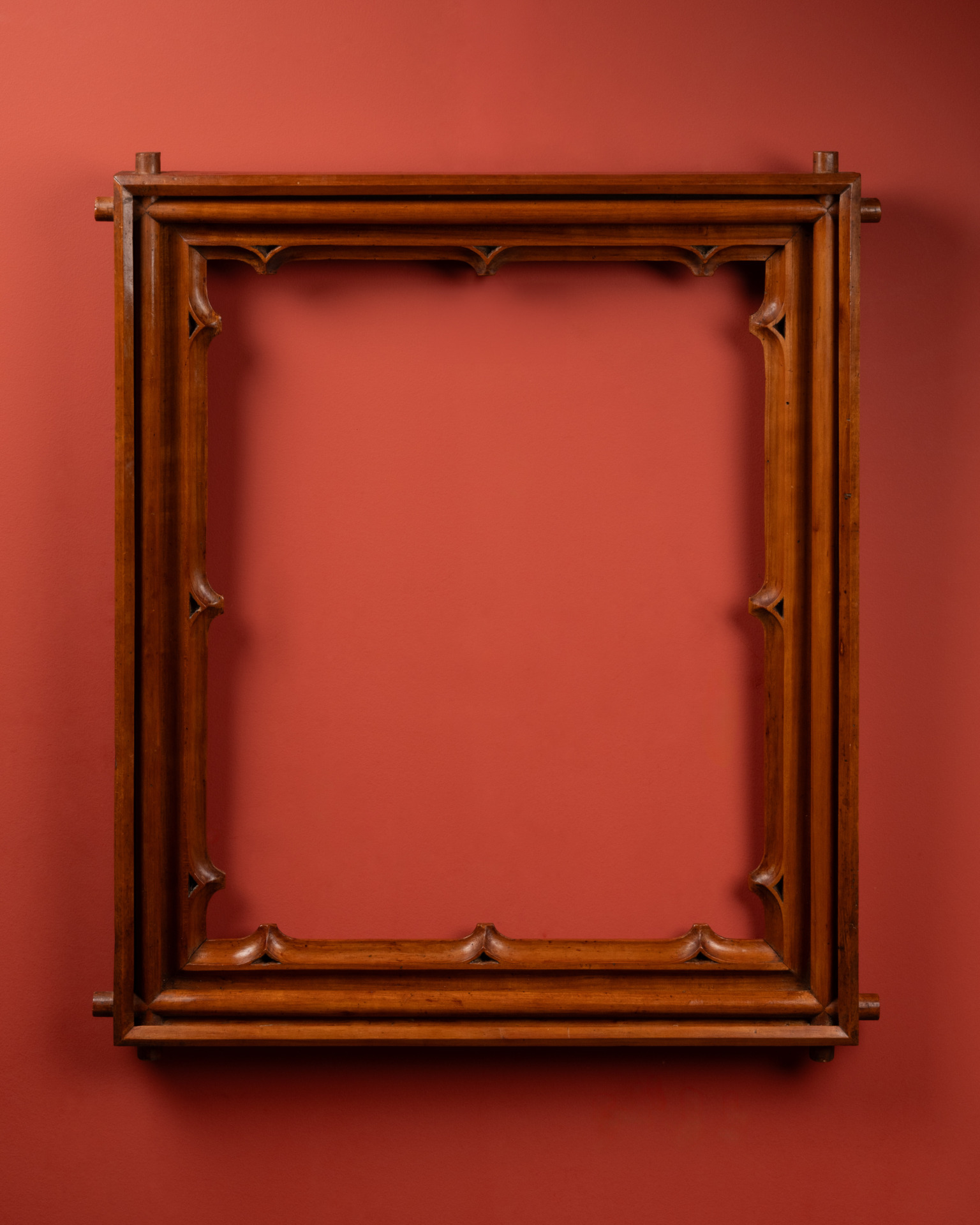
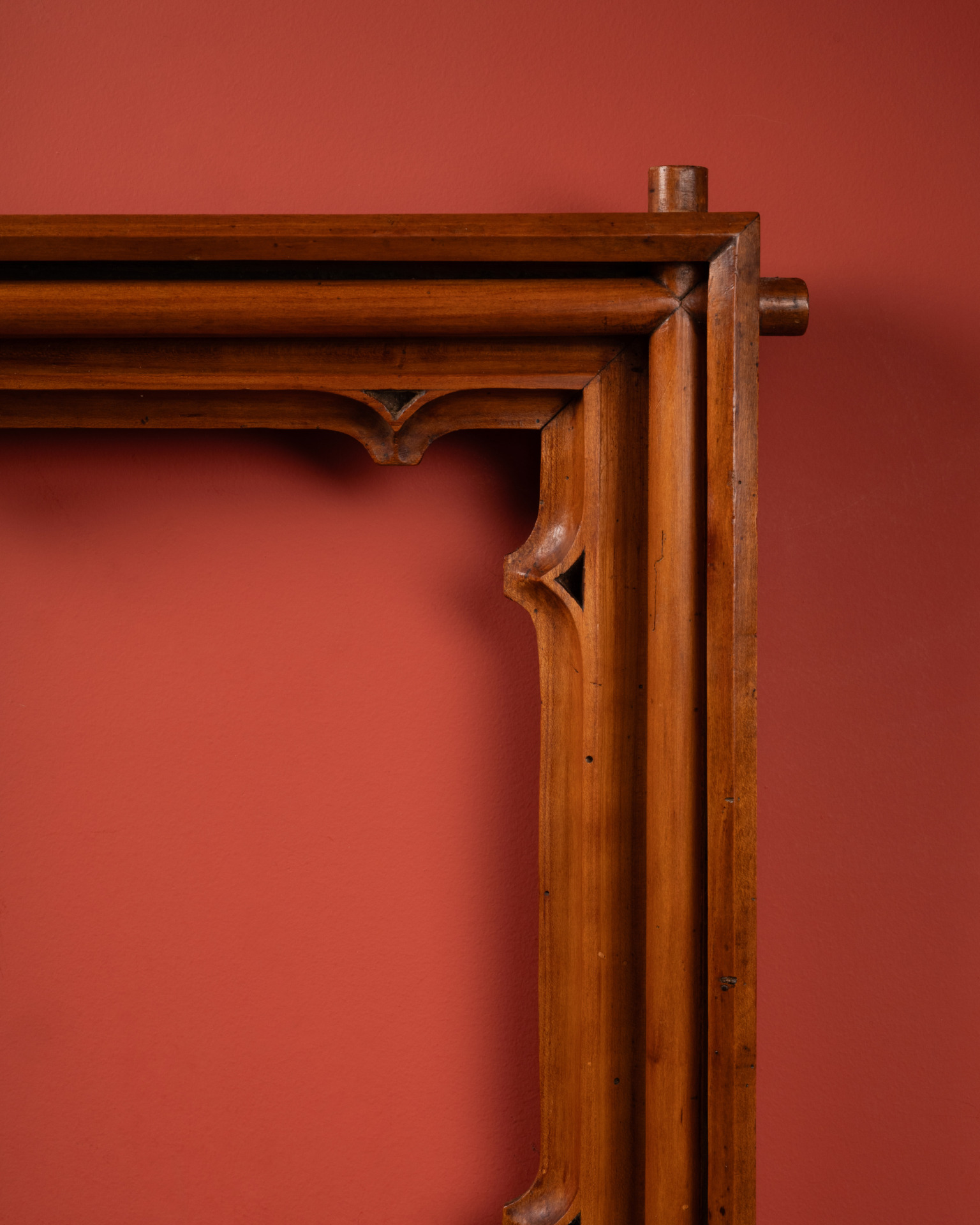
A Neo-Gothic picture frame Pine wood Middle of the 19th century 60 x 52 cm (23.6 x 20.4 in.)
A Neo-Gothic, pine wood picture frame ornated with architectural ‘redents’ imitating Gothic window mullions.
Similar picture frames, inspired by Gothic architecture, were designed for many Romantic and Nazarene paintings towards the middle of the nineteenth century. Paul Mitchell and Merrell Holberton (authors of A History of European Picture Frames) mention a frame with similar characteristics custom made for a Visitation by Ernst Deger. The frame of this painting, exhibited in Düsseldorf, features similar compartments inspired by Gothic architecture. They also mention a frame designed for Austrian Nazarene painter Joseph Führich’s The Road to Emmaus, with ‘inner and outer ribs intersect at the corners’.
Literature
See Eugène-Emmanuel Viollet-le-Duc, Dictionnaire raisonné de l’architecture française du XIe au XVIe siècle, Paris, 1858, Henry Heydenryk, The Art and History of Frames, New York, 1993 and Paul Mitchell and Merrell Holberton, A History of European Picture Frames, London, 1996.
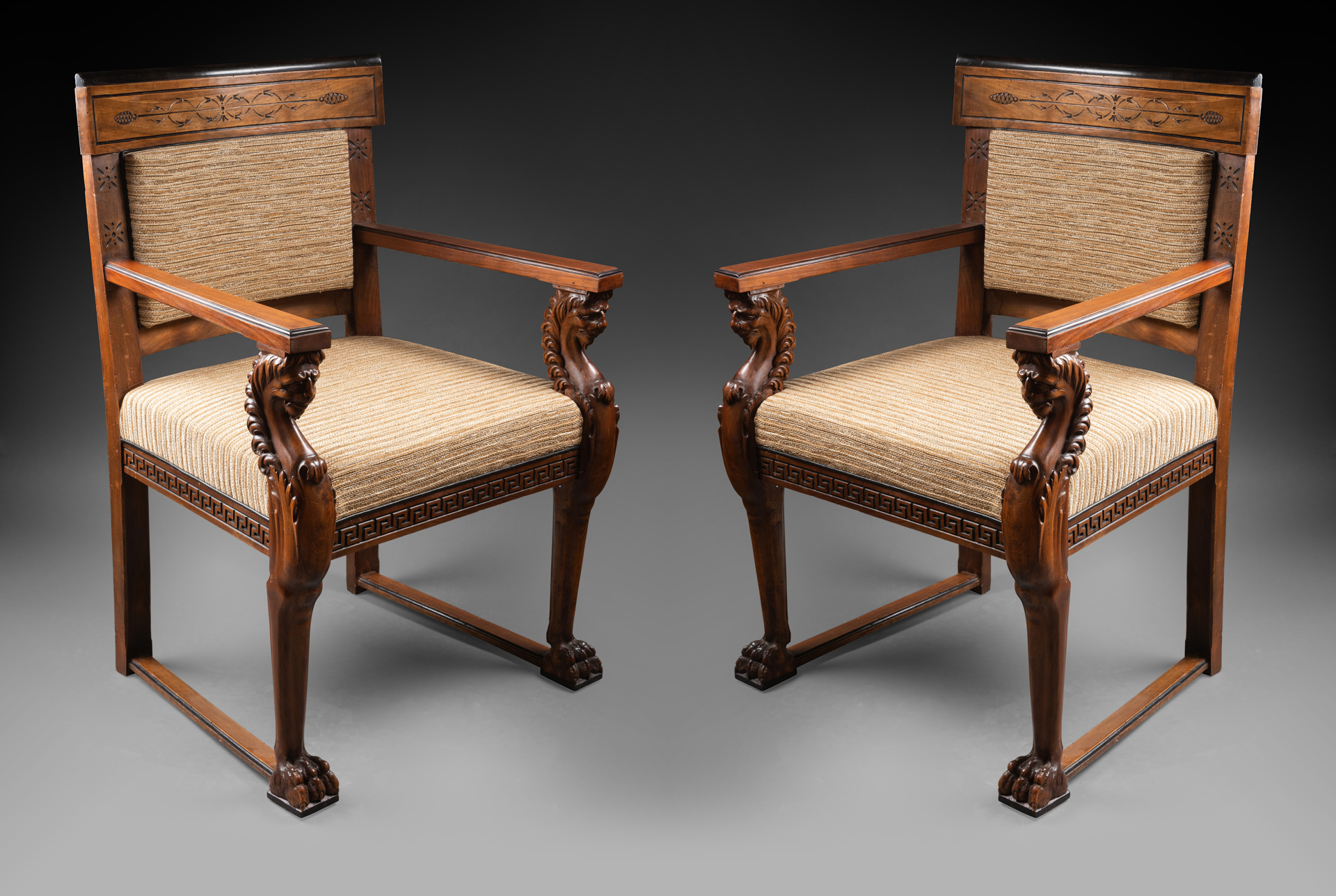
Pair of Italian armchairs – 19th century
Pair of armchairs.
Carved walnut and modern upholstery. Italy, neoclassical period. H. 93 – D. 60 – W. 62 cm.
This pair of armchairs has chimera-headed armrests extended into claw feet. The waist is decorated with a frieze of greeks and the arch is decorated with a frieze of pine cones at the ends. The armrests and the back feet remain sober.