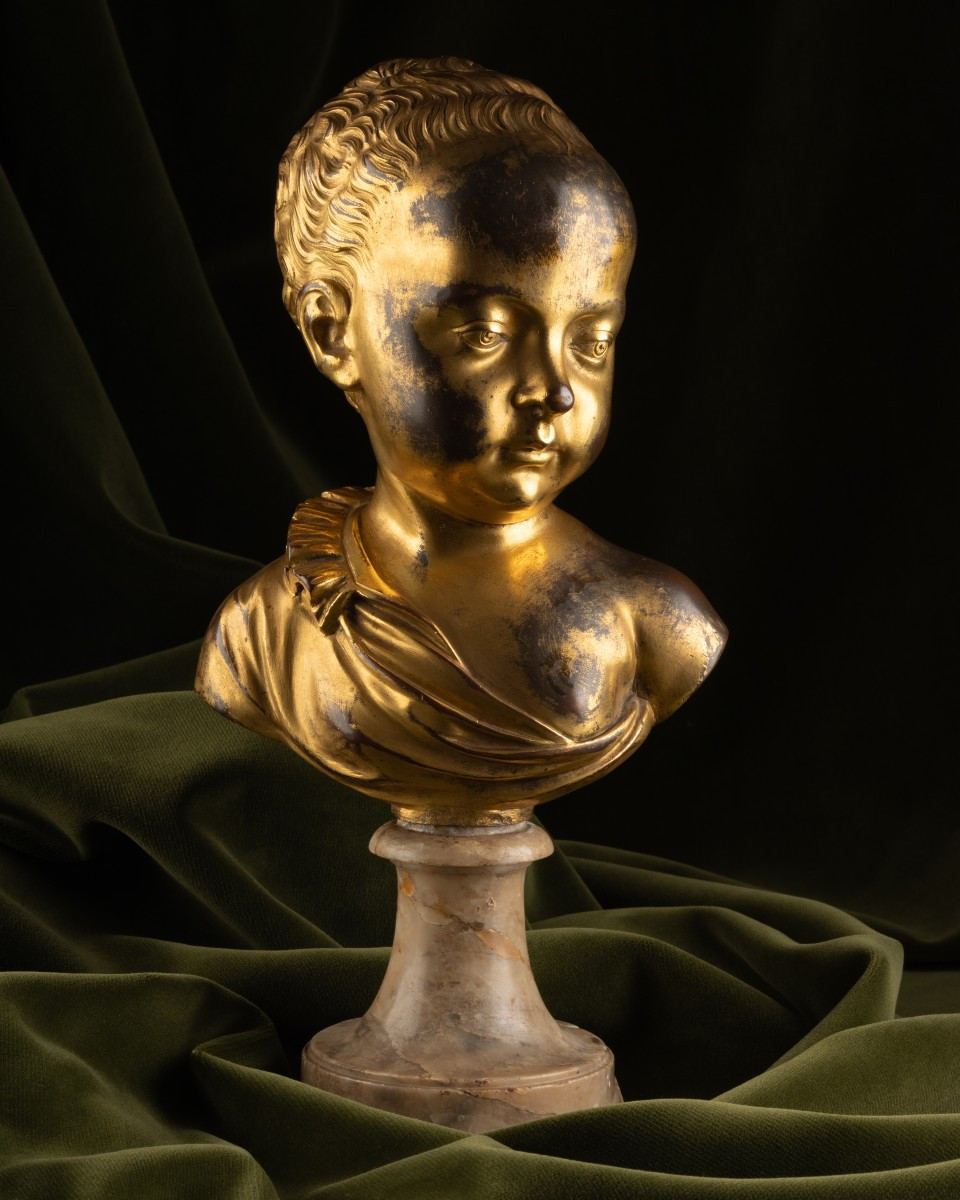
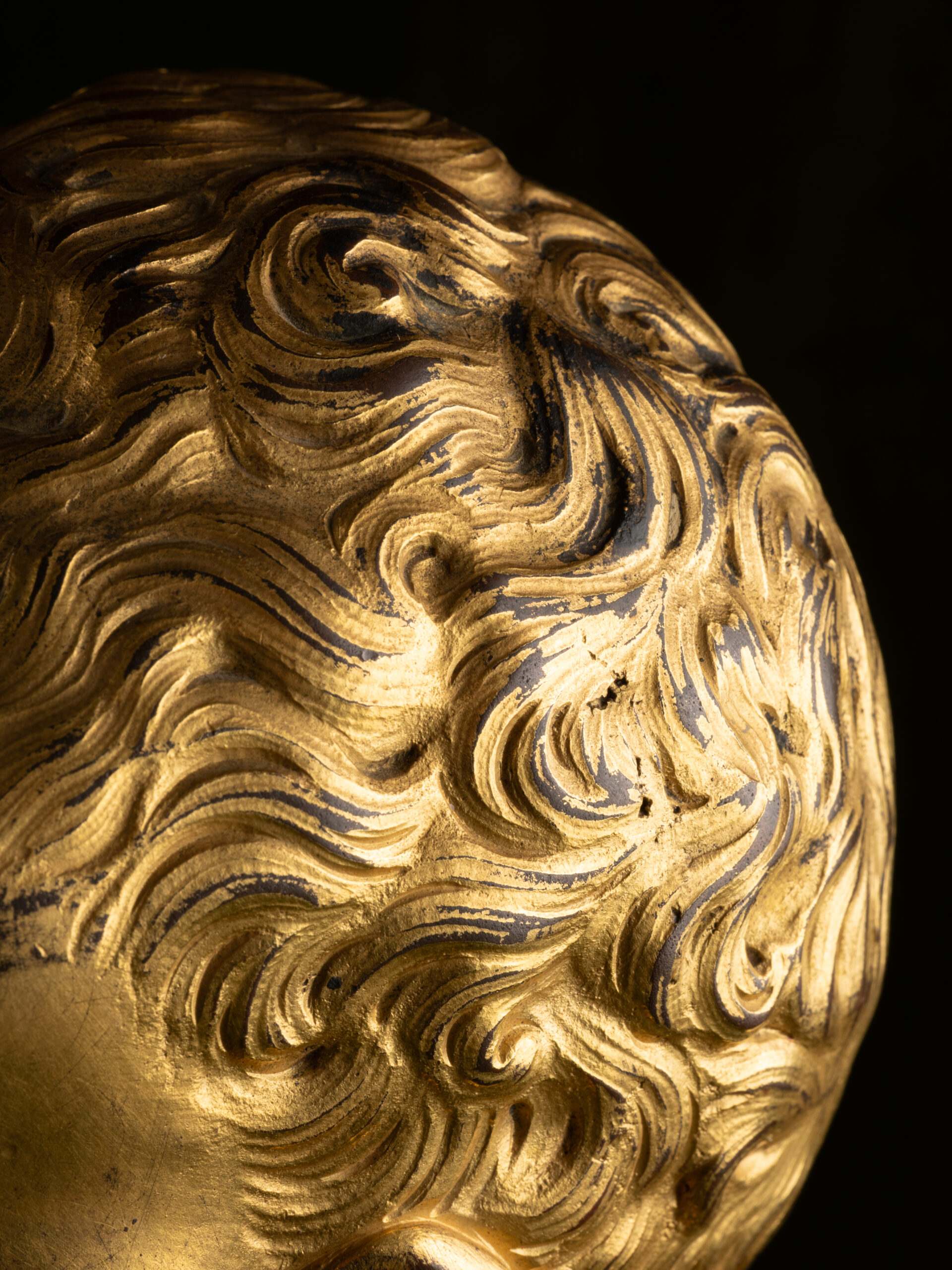
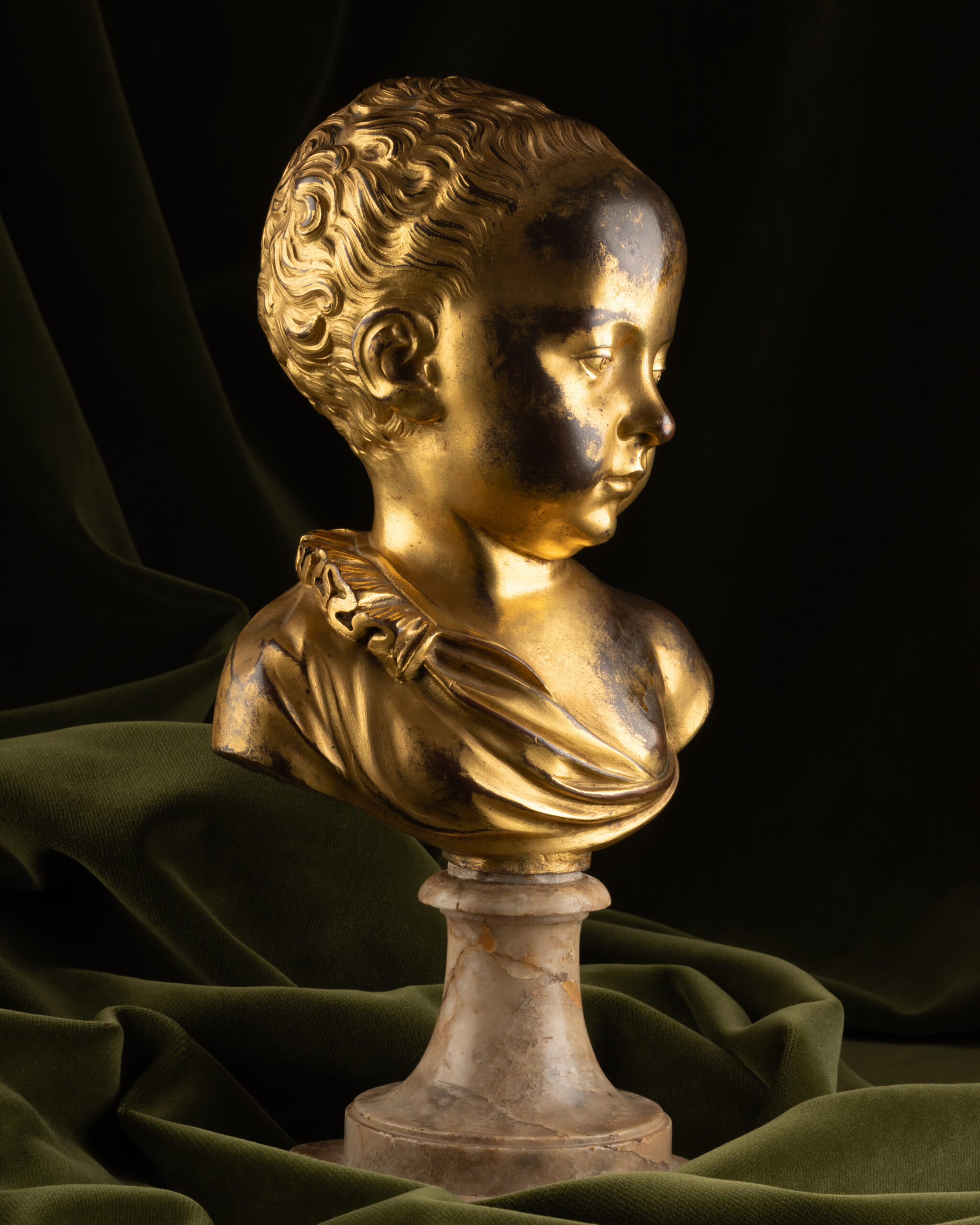
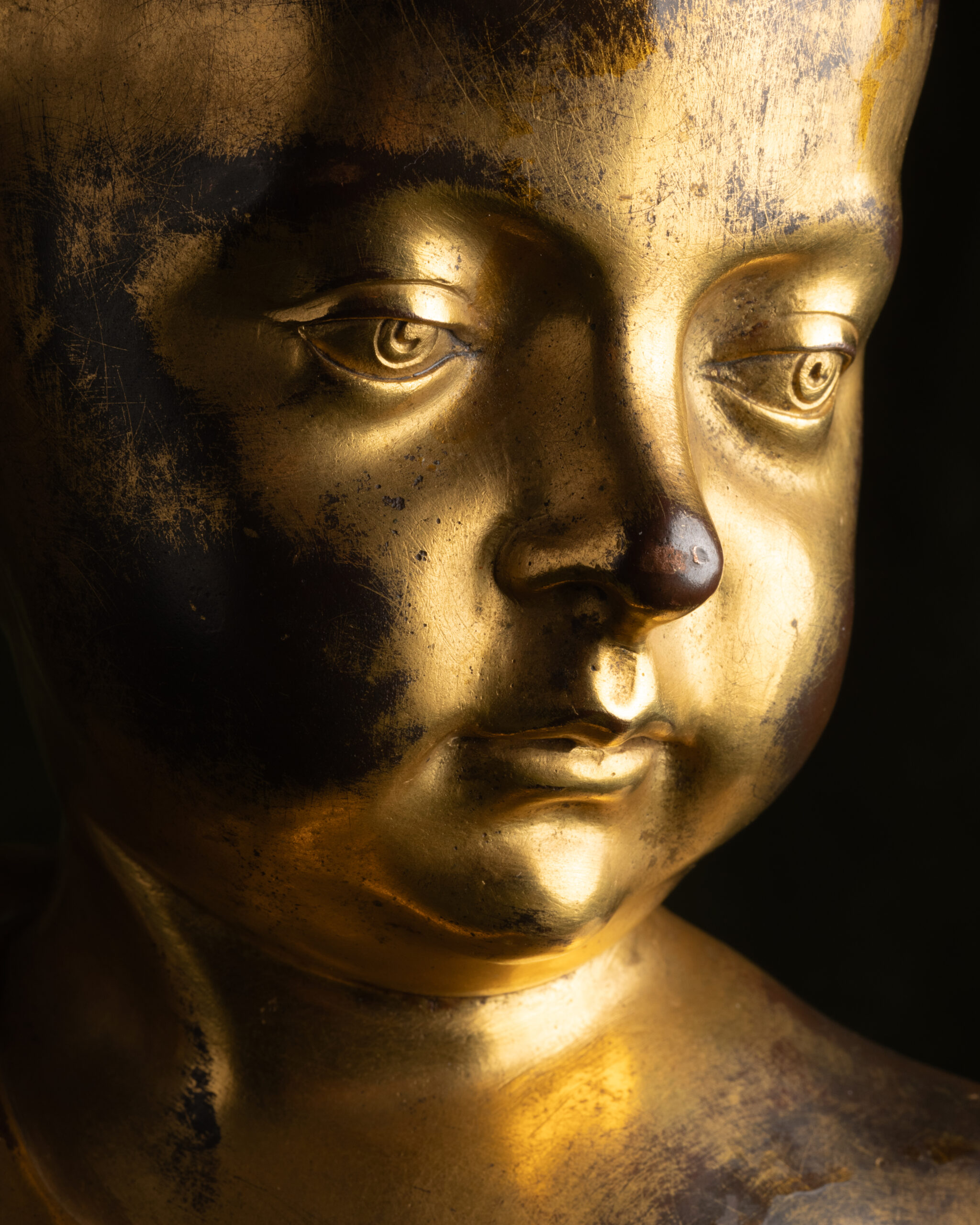
Gilt Bronze ‘bust Of A Child Prince’ After Germain Pilon
Bust of a Child after Germain Pilon.
Gilt bronze, alabaster France Late 17th century h. 33.5 cm (13,2 in.)
A similar gilt bronze bust was exhibited in 1967 at the Château de Laarne during the exhibition “Bronzes de la Renaissance de Donatello à François Duquesnoy” (Renaissance Bronzes from Donatello to François Duquesnoy). This latter piece traditionally came from the Russian Imperial collections, and had, in all likelihood, been acquired by the art historian and collector Henry-René d’Allemagne during the numerous dispersals of private Russian collections after the October Revolution. Because it was a cast of a Bust of a Child in marble preserved at the Louvre and attributed since the end of the 19th century to Germain Pilon or his workshop, this gilt bronze version had at the time been dated to the late 16th century, Germain Pilon having died in 1590.
Although the present bronze is certainly by the same hand as that of Henri-René d’Allemagne, it seems unlikely that this hand is that of Germain Pilon or a student from his workshop, as no gilt bronze bust from that time is known and attributed to either Germain Pilon or his workshop. It is true that the Wallace Collection in London possesses a bronze cast of the bust of Charles IX preserved at the Louvre. This bust, in marble and alabaster, dated 1568, appears in the post-mortem inventory of Catherine de’ Medici, and no one other than Germain Pilon seems to have been capable of sculpting such a portrait. The Wallace Collection bronze, traditionally from the collections of the Duchess of Berry, seems to attest to the early existence of bronzes cast after the sculpted portraits by Germain Pilon — royal portraits, or thought to be so, whose originals had been gathered by Cardinal de Richelieu only four decades after Germain Pilon’s death, in the context of his “Galerie des illustres” at the Palais Cardinal, which became the Palais Royal in 1643.
The very program of the Galerie des Illustres allows for addressing the delicate question of the subject’s identity in this bust. Titled Bust of Henri IV as a child during the 1967 exhibition, it had initially been designated as a portrait of Henri III by Barbet de Jouy in 1873, for the reason that the subject presents some similarities with a toddler sketched in a late 16th-century red chalk drawing, preserved at the Bibliothèque Nationale and bearing a notation, probably later, designating this child as Henri III. The problem of the dating, attribution, and identification of the subject of this bust was summarized by the historian Louis Gonse in an aside of an eulogy for Germain Pilon and this bust:
“He knew how to question the troubled soul of his models, just as he knew, on occasion, how to render with infinite skill the fleeting graces of childhood. If it is, as has been believed, a portrait of Henri III as a child, the little Louvre bust would be from the master’s youth. It seems to me to be of too accomplished an art not to belong, like the other busts, to his last period. Moreover, it is very difficult to identify the features of a model of that age. Doubts have even been raised about the attribution of this bust to Pilon. Some people wanted to attribute it to François Duquesnoy, but it is certainly from the 16th century and in the manner of Pilon, who here rivals the Florentines, those consecrated interpreters of putti.”
It is noteworthy that it did not occur to either Barbet de Jouy or the commissioners of the 1967 exhibition that the dates of Germain Pilon’s activity, on the one hand, and the evident age of the child portrayed, on the other, are incompatible with the birth dates of these kings: no work by Germain Pilon is known before his participation in the work on the tomb of François I in 1558; as for Henri III and Henri IV, they were born in 1551 and 1553 respectively. The Bust of a Child at the Louvre, if this child is indeed the future Henri III, would then be one of the first known works by Germain Pilon, completed before he gained favor with Catherine de’ Medici and became, so to speak, the sculptor of her Court. Furthermore, there already exists a bust of Henri III firmly attributed to Germain Pilon, by the same hand as that of Charles IX, also mentioned in the queen mother’s post-mortem inventory, and further cited in Richelieu’s collections at the Palais Cardinal. Henri III appears in it at maturity, and everything suggests that it dates from the same time as the aforementioned bust of Charles IX, namely the year 1568.
If the child in Germain Pilon’s bust is indeed one of Catherine de’ Medici’s sons, the least improbable hypothesis is that it is Hercule de France, Duke of Alençon, the last son of Henri II and Catherine de’ Medici. This duke, who took the name François de France after the death of his brother King François II at age 16 in 1560, did not leave a significant mark on the history of France. Thus, it is probable that the importance of this bust was caused, in the 17th century as in the 19th and 20th, by a confusion or a presumption, through which this young prince was mistaken for Henri III or Henri IV, Kings of France. The Russian provenance of the bust exhibited in 1967, if proven, could also be explained by such a presumption: Henri III, King of France upon the death of his brother Charles IX in 1574, was also King of Poland in 1573 and Grand Duke of Lithuania.
As for the dating of the present bronze and the one from the Russian Imperial collections, it is noteworthy that they share the same treatment of the iris, in the form of an incised spiral, which is typical of bronze portraits from the second half of the 17th century. A bust, also in gilt bronze, of Louis XIV by or after Coysevox, also preserved in the Wallace Collection in London, and undoubtedly related to a bronze bust of the same king presented by Coysevox at the Salon of 1699, is the closest work, in terms of technique and style, to these two bronzes. Since gilt bronze busts of this type are, on the one hand, remarkably rare in public collections, and the use of an incised spiral as an iris is, on the other hand, characteristic of sculpted portraits from the second half of the 17th century onwards, this parallel supports a later dating than that proposed at the 1967 exhibition, namely the late 17th century and not the late 16th.
Literature
Louis Gonse, La Sculpture française depuis le XIVe siècle, Paris, 1895; Émile Molinier, “Un buste d’enfant du XVIe siècle,” in Monuments et mémoires de la Fondation Eugène Piot, vol. 6, no. 1, 1899; Jean Babelon, Germain Pilon, Paris, 1927; Charles Terrasse, Germain Pilon, Paris, 1930; Henry-René d’Allemagne, La maison d’un vieux collectionneur, vol. II, Paris, 1948; Bronzes de la Renaissance de Donatello à François Duquesnoy, Brussels, 1967; Pierre Chevallier, Henri III, roi shakespearien, Paris, 1985; Jean-René Gaborit, Geneviève Bresc-Bautier et al., Sculpture française II. Renaissance et Temps Modernes, Paris, 1998; Robert Wenley, French Bronzes in the Wallace Collection, London, 2002; Geneviève Bresc-Bautier, Guilhem Scherf et al., Les Bronzes français de la Renaissance au Siècle des lumières, Paris, 2008.
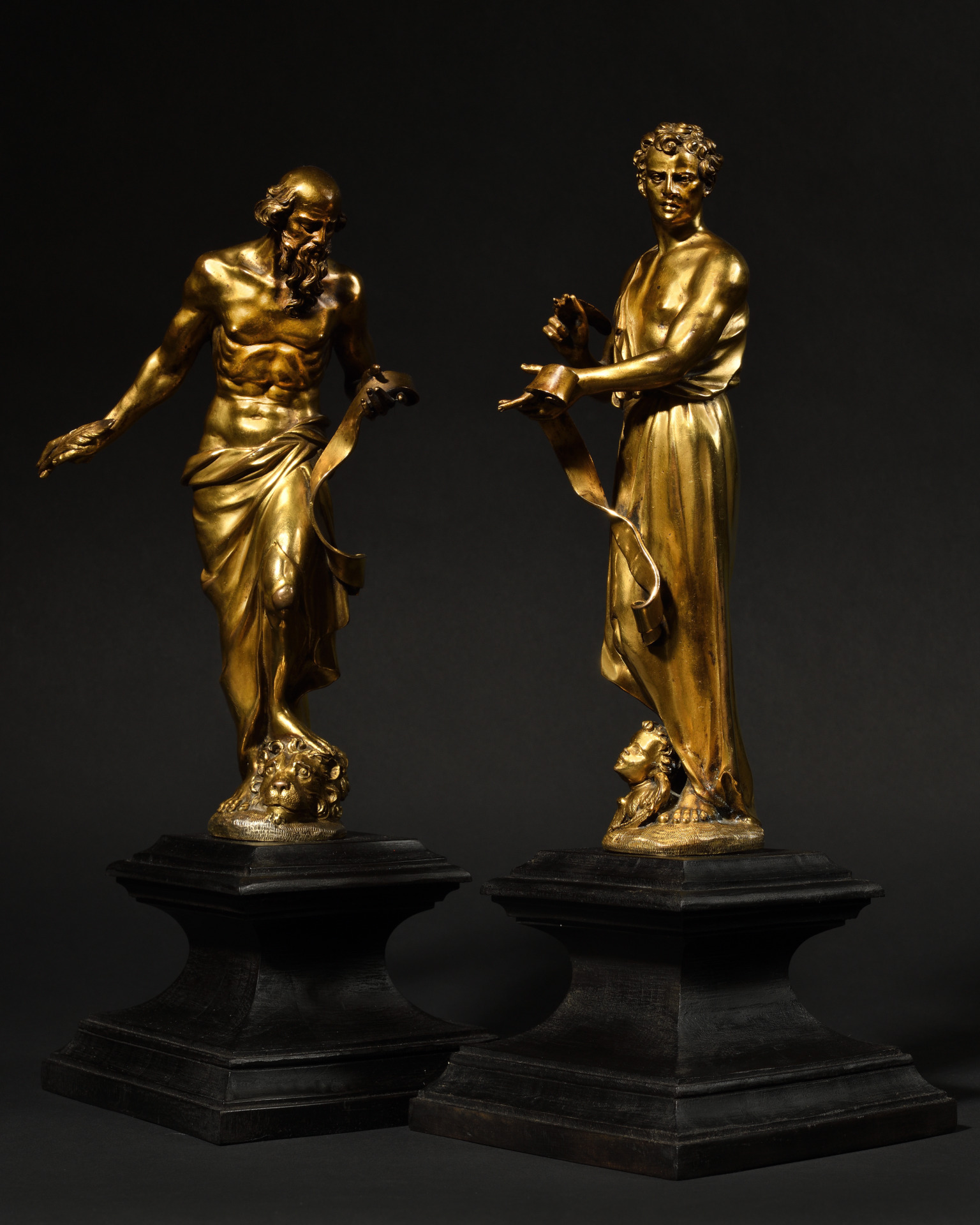
Saint Mark and Saint Matthew, by the Master of Ciechanowiecki
Saint Mark and Saint Matthew, by the Master of Ciechanowiecki
Mercury-gilt bronze, base sealed with silver-soldered copper Northern Italy or Germany 17th century h. 22 cm (8.6 in., without accessories)
Saint Mark: possibly the Camillo Castiglioni collection, then David David-Weill; Saint Mark and Saint Matthew: collection of Jacques Favre de Thierrens.
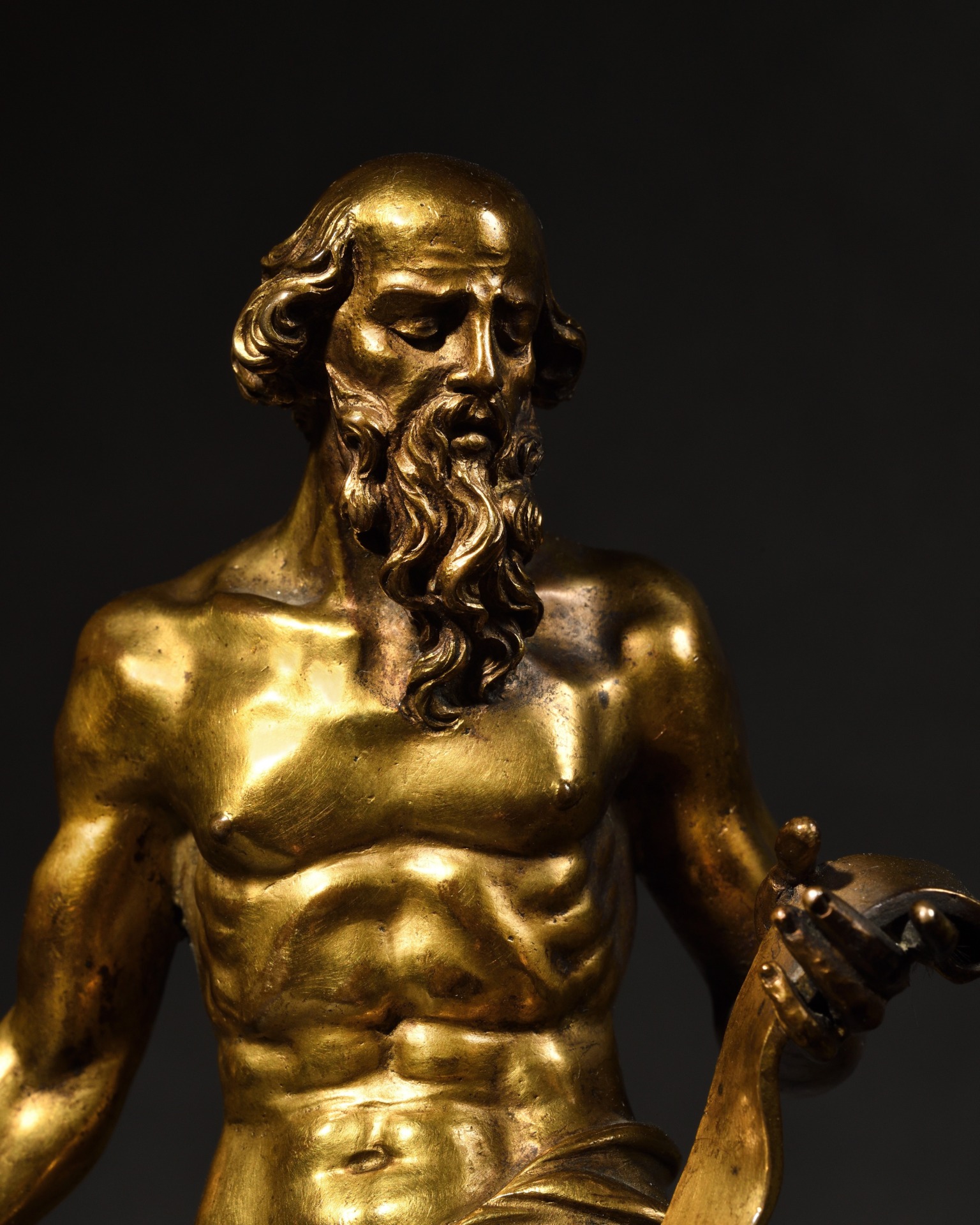
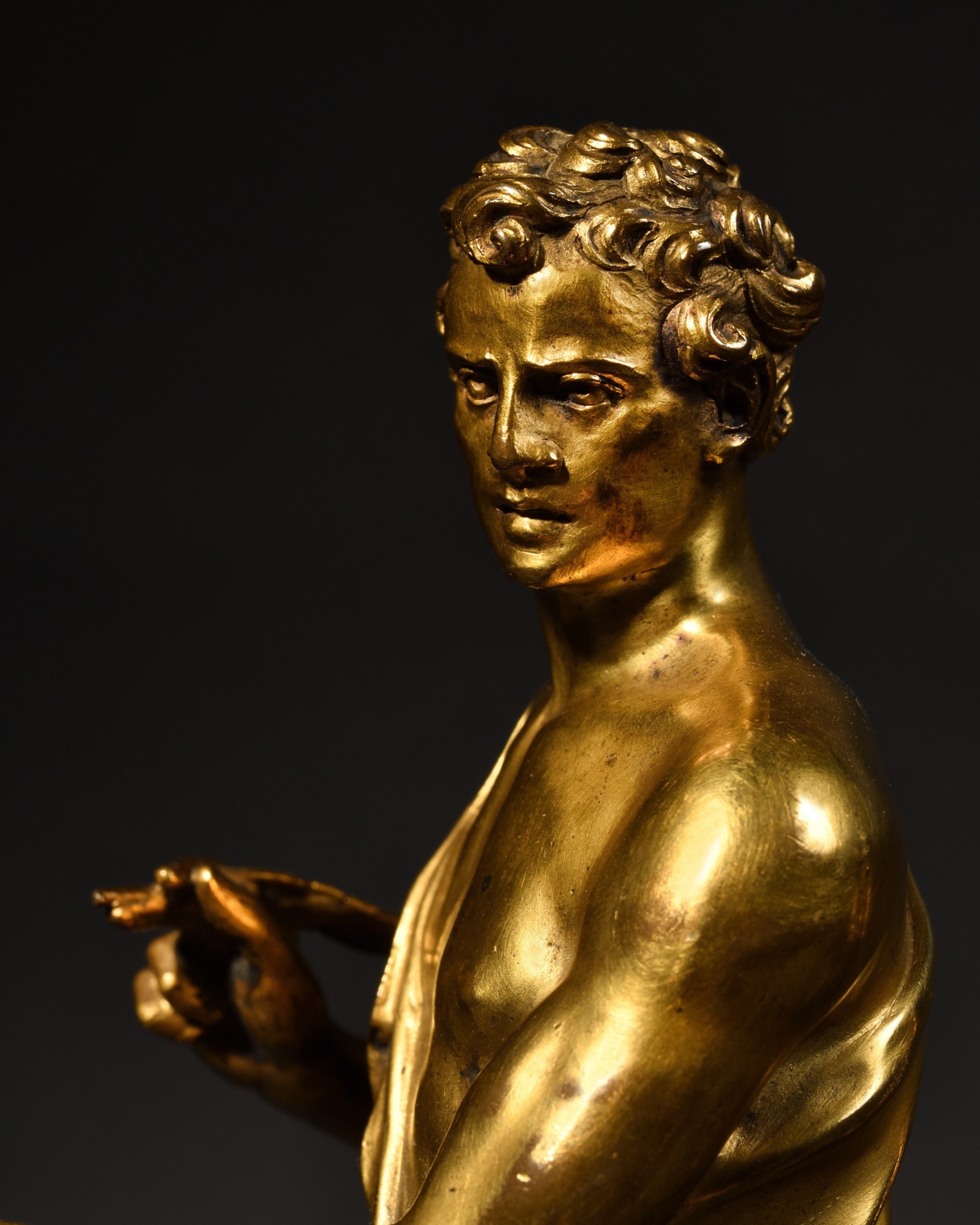
These two gilded bronze sculptures depict two of the Evangelists. They are identifiable by their attributes: the lion for Saint Mark, the winged man for Saint Matthew, and each holds a scroll in one hand and a quill in the other. The extraordinary refinement of the sculpture and the care given to every detail attest to the talent of an artist whose name remains unknown to this day.
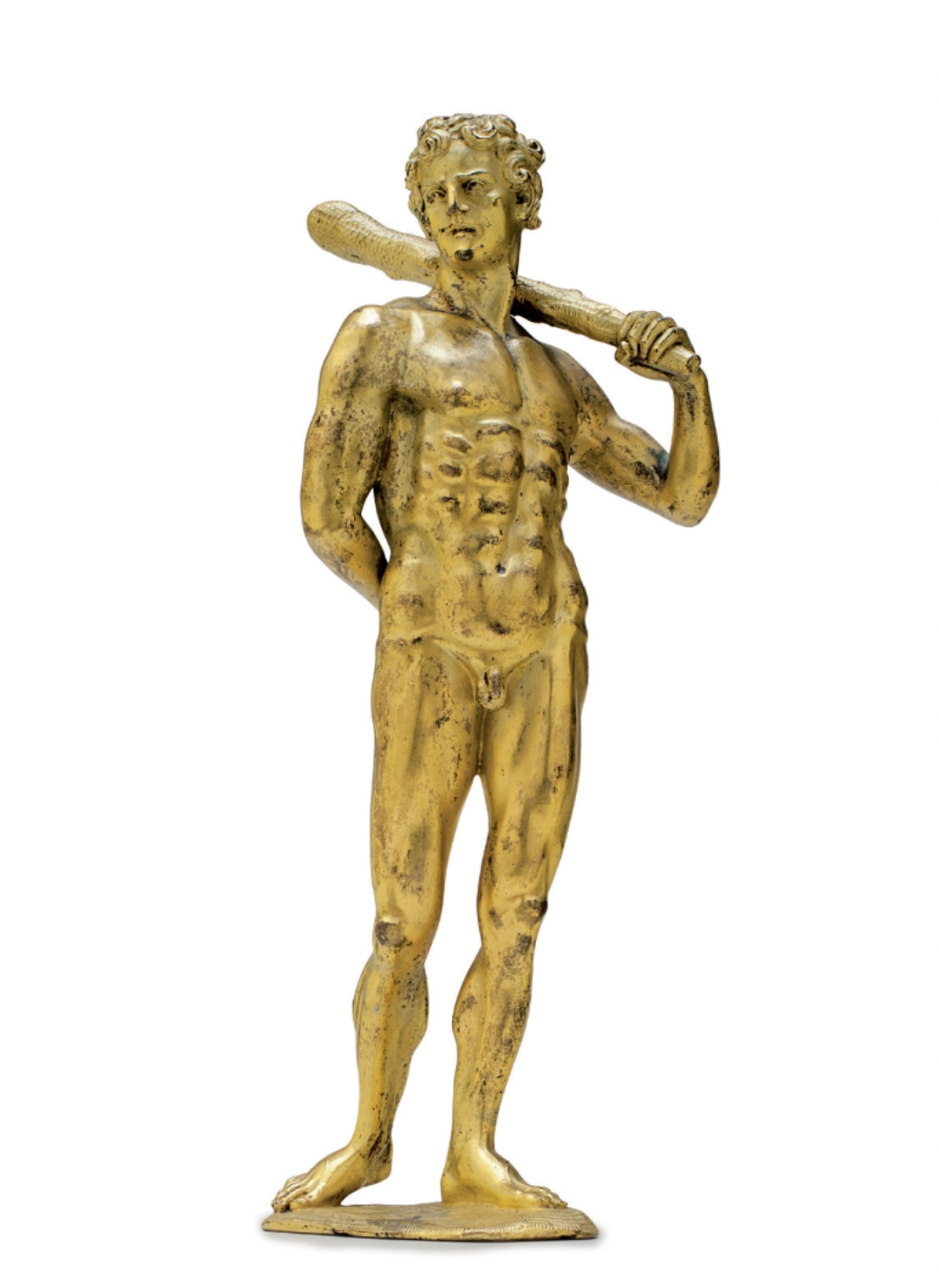
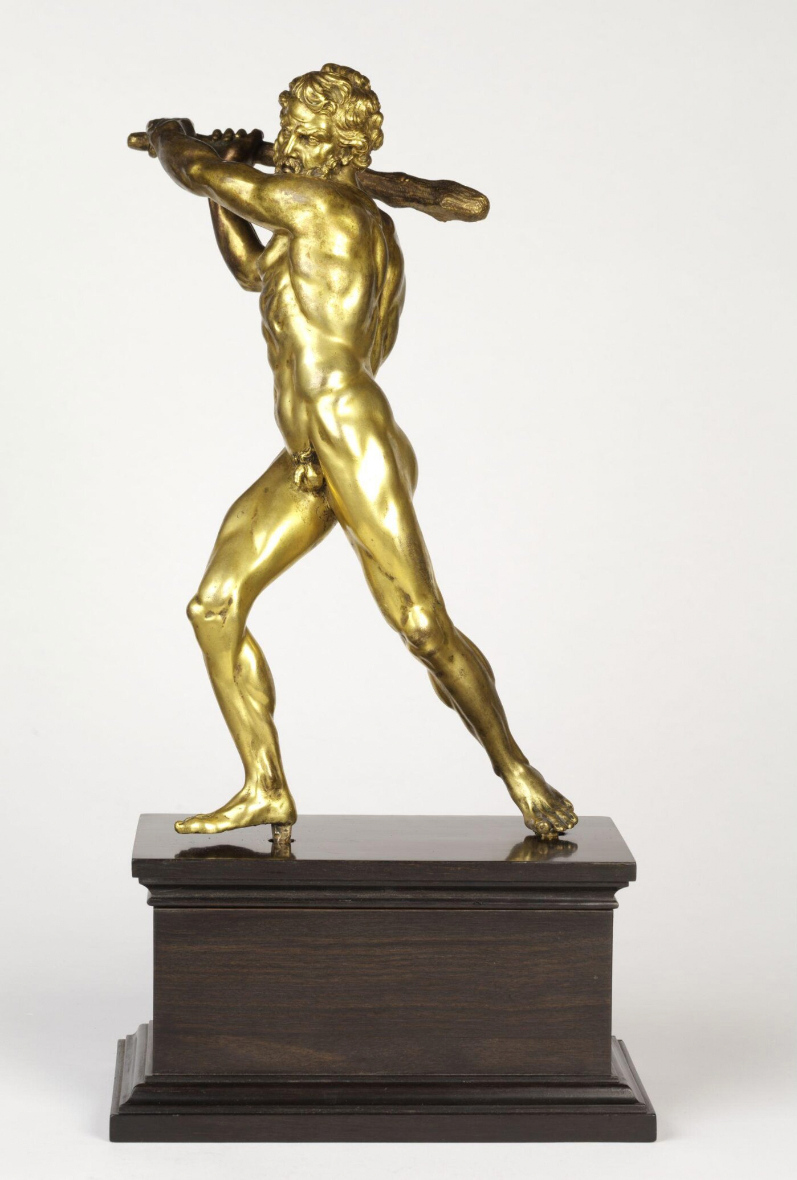
Fig. 1 — Young Hercules, Master of Ciechanowiecki. Christie’s, 4 July 1989, lot 128 — sold for £85,000.
Nevertheless, these two figures can be integrated into the body of works brought to light by Andrew Ciechanowiecki from the 1960s onwards. This patron, gallerist and bronze specialist had identified a group of around forty sculptures that all appeared to have been made by the same hand. The artist behind these works is today known as the “Master of Ciechanowiecki” or the Master of the Fitzwilliam Museum, as part of Ciechanowiecki’s collection had been placed on deposit at that museum for a number of years.
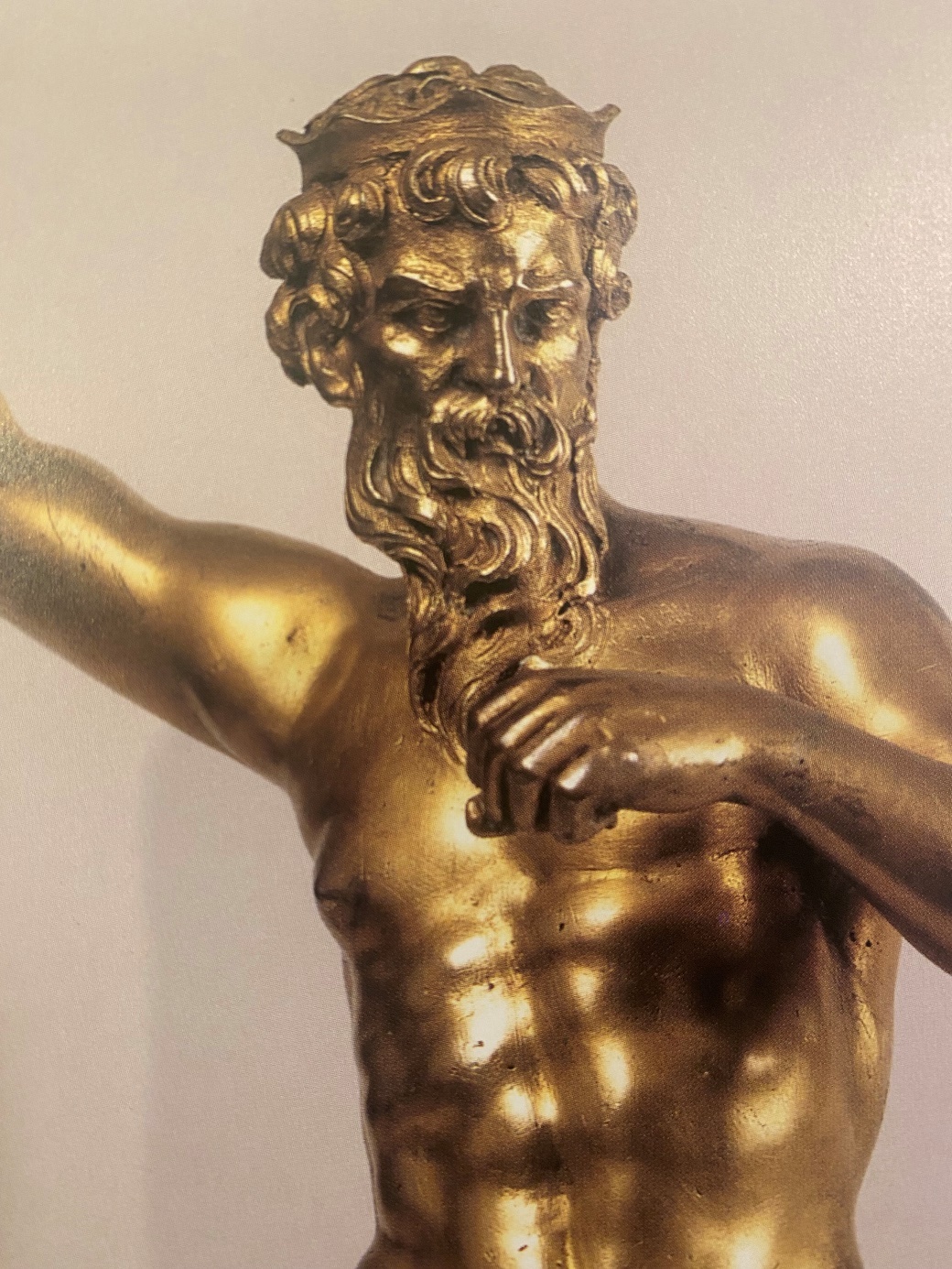
Fig. 2 — Hercules, attributed to the Master of Ciechanowiecki. Victoria and Albert Museum, h. 33.3 cm.
The characteristics shared by these works have been described by several specialists, beginning with Ciechanowiecki himself in his correspondence (Doc. 1). This letter reveals his difficulty in pinpointing a geographical region for these bronzes, so thoroughly do the works appear to synthesise the styles and techniques employed in Italy, Germany, Flanders and France during the 17th century.
Doc. 1 — Lettre de A.S. Ciechanowiecki à K. Lankheit. Extrait de Białonowska, M. (2012). Andrzej Stanisław Ciechanowiecki. Collectionneur, marchand et mécène, Lublin. Pages 79-81.
“In January 1969 A. S. Ciechanowiecki asked Klaus Lankheit: The bronze of which I enclose a photograph has been a headache to me for some time. I had originally seen it in the circle of Hubert Gerhard, then moved towards the idea of an unidentified Flemish master, by whom a group of works could be assembled, including the very pretty bronze in the Huntington collection in San Marino and a gilt group in my own collection […]. This is still my opinion but one or two colleagues have suggested that it may be around 1700 and have again pointed towards Florence. I am not at all convinced by this suggestion […]. In response, Klaus Lankheit confirmed the dating: “Die Figur gehört in die Epoche um 1700. Die Faltengebung könnte in der Tat für Soldani sprechen, inc drängt sich mir das Französische in der Figur sehr Stark auf.” The correspondence shows that at the end of the 1960s, A. S. Ciechanowiecki had a certain number of statuettes in his collection, which allowed him to draw conclusions about their attribution after observing their common features. It is also known that from the very beginning the collector and researchers saw in the works of an unknown master both features of Italian sculpture, mainly Florentine, and South German, French and even Flemish.”
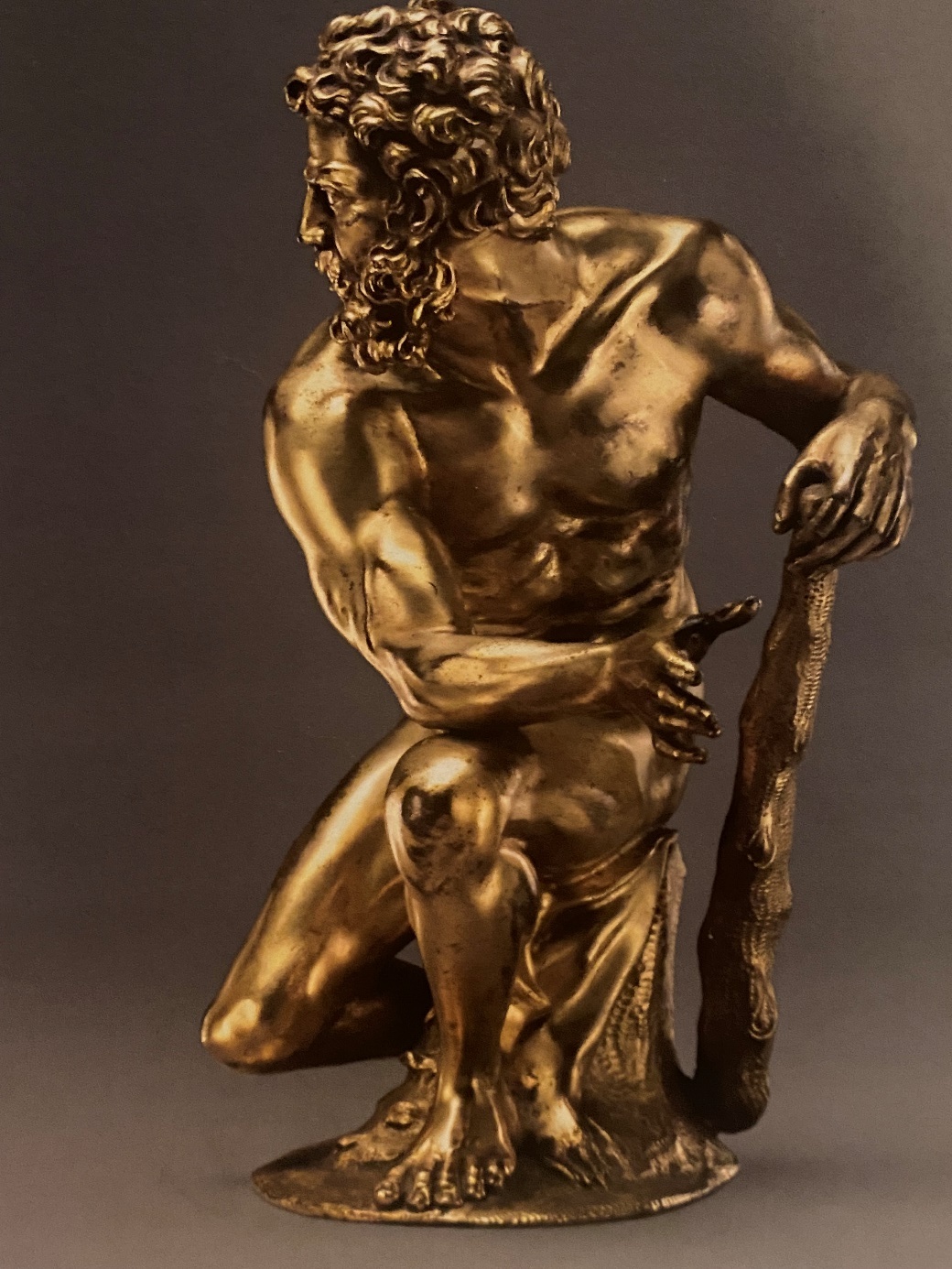
Fig. 3 — Neptune, Master of Ciechanowiecki. Museo Civico Amedeo Lia, La Spezia, h. 22 cm.
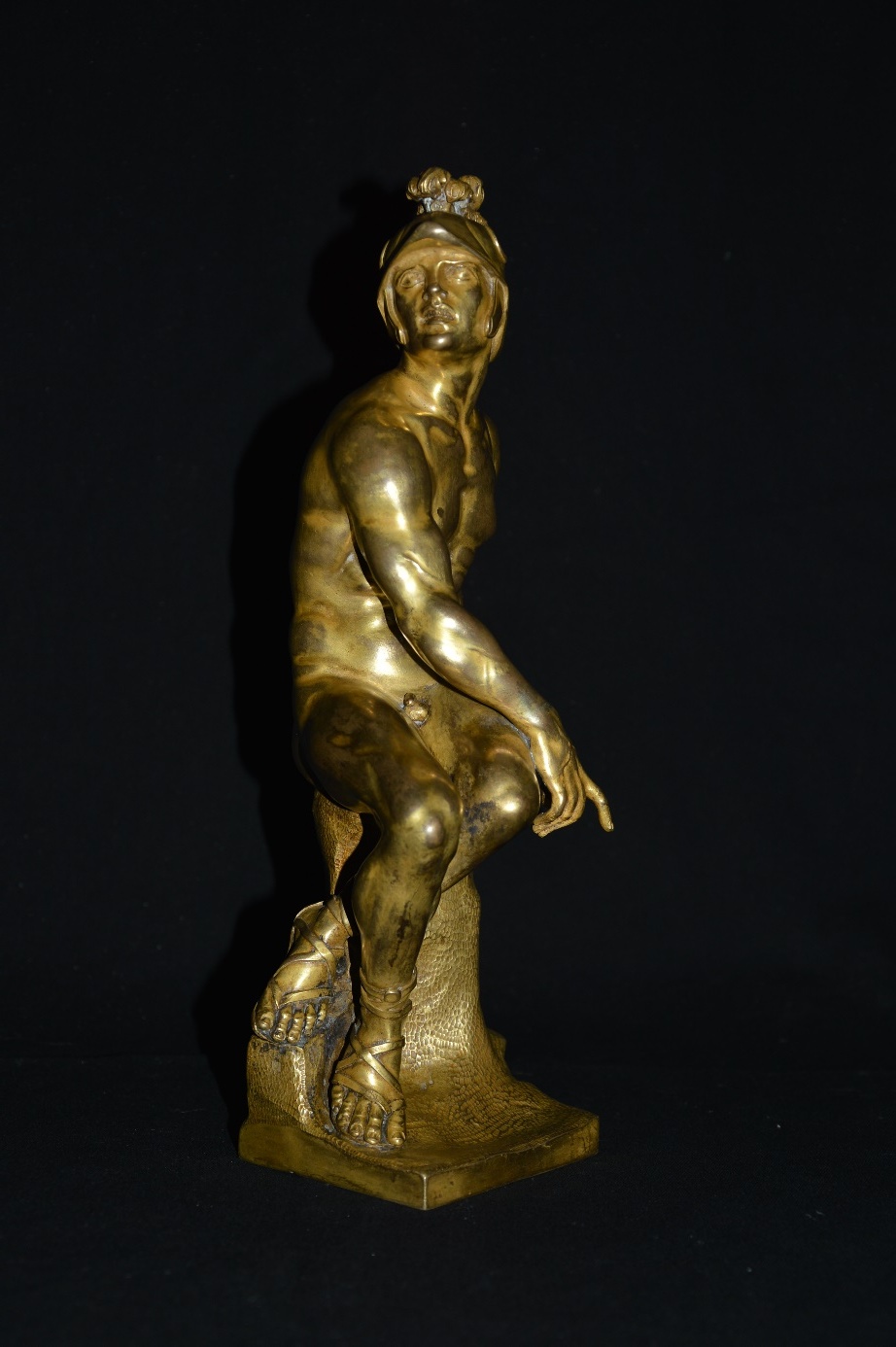
It has thus been possible to isolate a number of shared characteristics that allow one to identify the hand of this master. These include their small size (averaging around twenty centimetres), the frequent use of gilt bronze, an exceptionally fine level of chasing throughout, and a delicacy in the treatment of surfaces that calls to mind the work of a goldsmith. Then there is the hair of the figures, composed of thick, curling locks that fall heavily over the forehead (as in the model of a young Hercules commonly attributed to the Master of Ciechanowiecki, Fig. 1). The barely incised irises, the furrowed, pronounced brows (Fig. 2 and 3), and the high, prominent cheekbones (Figs. 1, 4 and 5). The lean, powerful musculature, which betrays an excellent knowledge of anatomy, is heightened by predominantly frontal and dramatic poses that reflect a distinctly Baroque sensibility. Attention to detail — such as veins and fingernails (Figs. 4 and 5) — combined with the wide variety of chasing techniques employed (notably on the bases of most sculptures) creates contrast between the textures depicted.
Fig. 4 — Seated Hercules, Master of Ciechanowiecki, Italy, Rome, 2nd half of the 16th century, h. 15.2 cm.
The fact that certain elements appear so strikingly similar (the faces of the Hercules, Fig. 1, and our Saint Matthew) and that some sculptures present variations in pose suggests that the artist created separate components that were then assembled onto the main figure: arms, head, hands and accessories were likely cast from individual moulds, allowing the artist to vary the composition without having to create an entirely new model. All of these elements have led the specialists who have grappled with this genuine puzzle to associate the master with an artist active in the first half of the 17th century, who probably worked in Rome or Florence and was influenced by the styles of Giambologna, Bernini and Adriaen de Vries. The techniques employed suggest that the master may have been a German goldsmith trained in Augsburg, a major centre of gilt bronze sculpture at the time. In terms of style, the work shows a strong influence of Italian Mannerism, and more specifically that of an artist who would have worked in Rome during the 17th century.
Fig. 5 — Mars, attributed to the Master of Ciechanowiecki. Private collection.
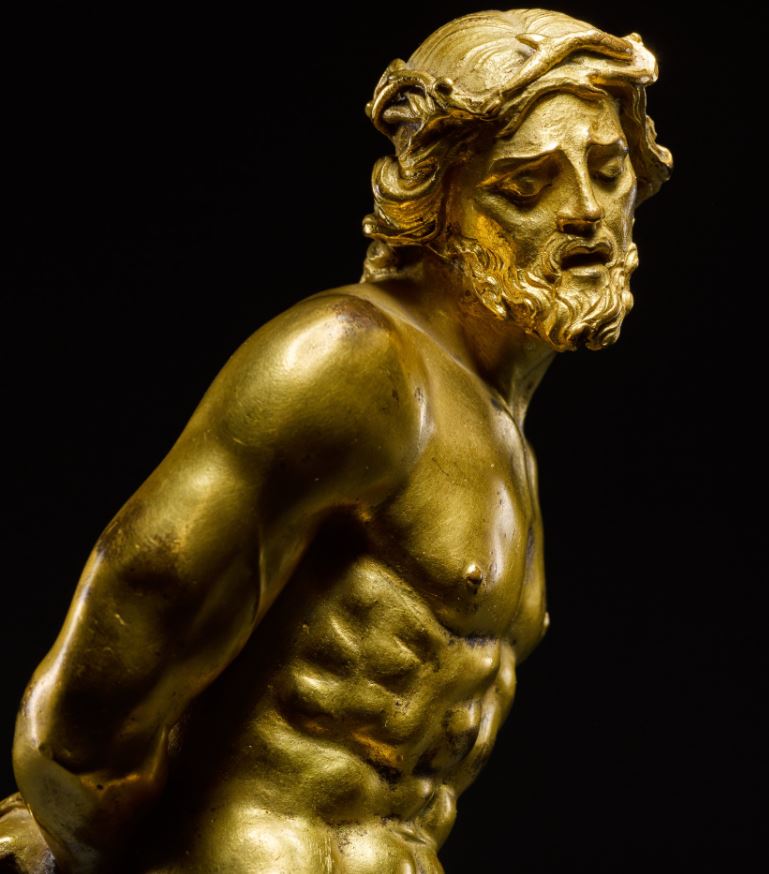
A Christ at the Column (Figs. 6) sold at Sotheby’s London in December 2021 can also be associated with this corpus: it shares similar dimensions with the pieces previously discussed, and its expression, the treatment of the drapery, the handling of the base, and the rendering of the musculature are all comparable. It has been linked to the Italian sculptor Alessandro Algardi, as this model of Christ was traditionally attributed alternately to Algardi and Duquesnoy, with experts never having reached agreement. This example illustrates how significant artistic exchanges between artists of different nationalities were during this period: a model attributed to a Frenchman and an Italian was taken up by the Master of Ciechanowiecki, an artist who was probably German.
Fig. 6 — Christ at the Column, follower of Alessandro Algardi, Italy, Rome or Southern Germany, 17th century, h. 21 cm. Sotheby’s London, 7 December 2021.
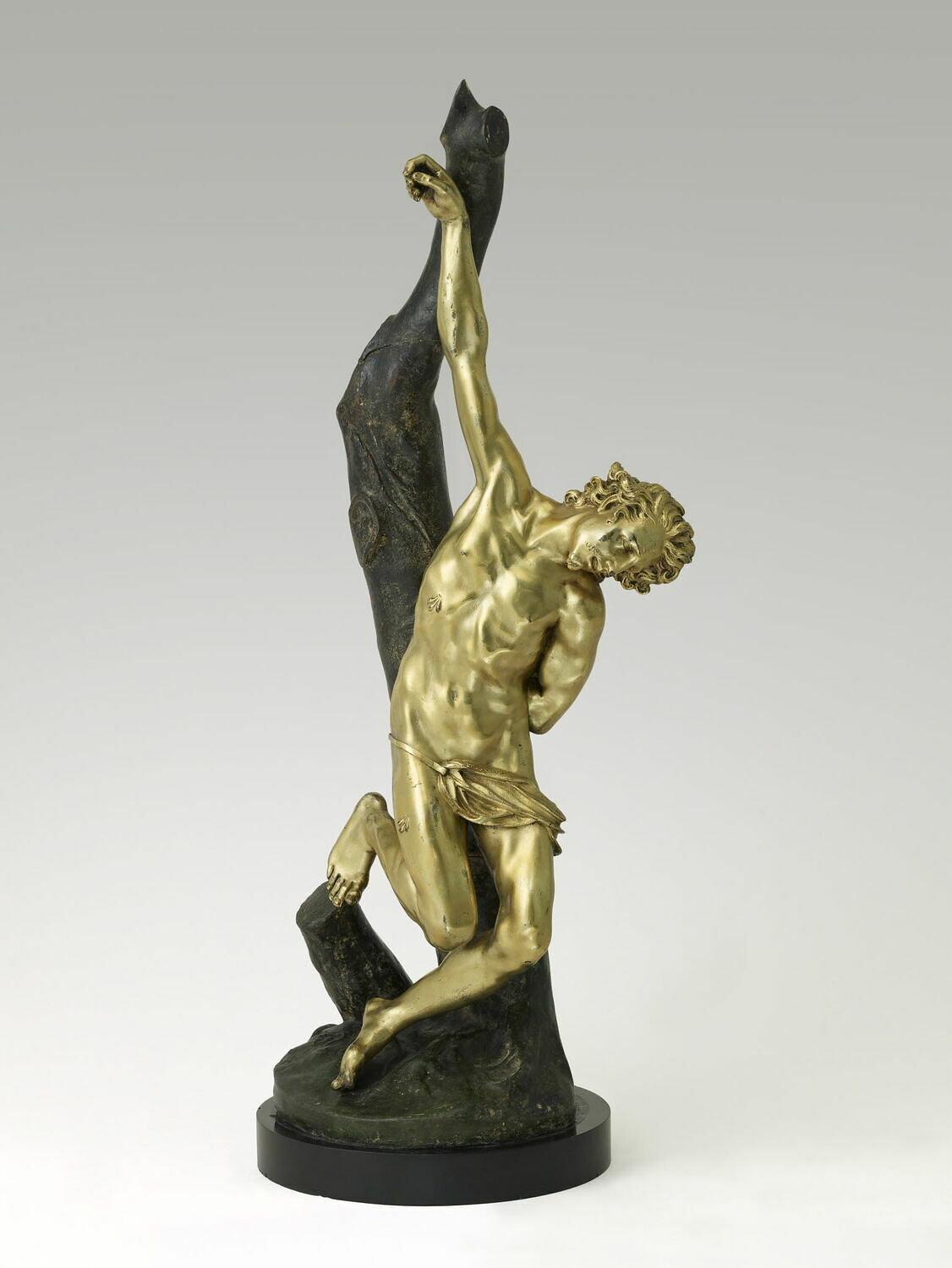
There is a Saint John the Baptist (Fig. 7) in the Louvre that has been attributed to a German artist by the name of Georg Petel, nicknamed the “German Michelangelo.” This work could be associated with the corpus attributed to the Master of Ciechanowiecki. Petel, German by origin, visited Italy and almost certainly France, and built his career in Augsburg in the context of the Counter-Reformation. Furthermore, as a friend of Rubens and Van Dyck, he was acquainted with the sculptures of Giambologna and Bernini. It is possible that the Master of Ciechanowiecki belonged to this artist’s circle.
Fig. 7 — Saint Sebastian, formerly attributed to Georg Petel. Musée du Louvre.
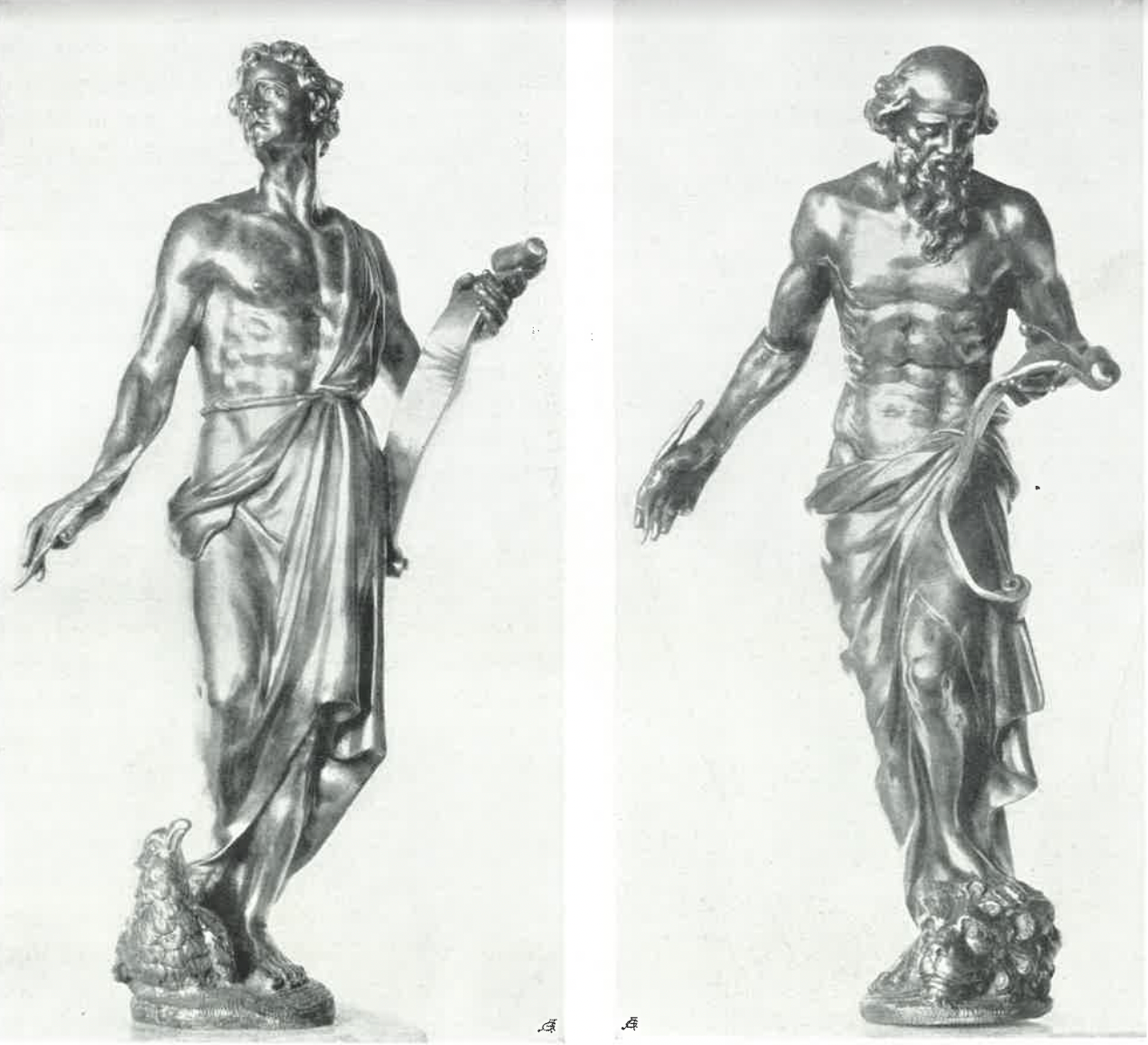
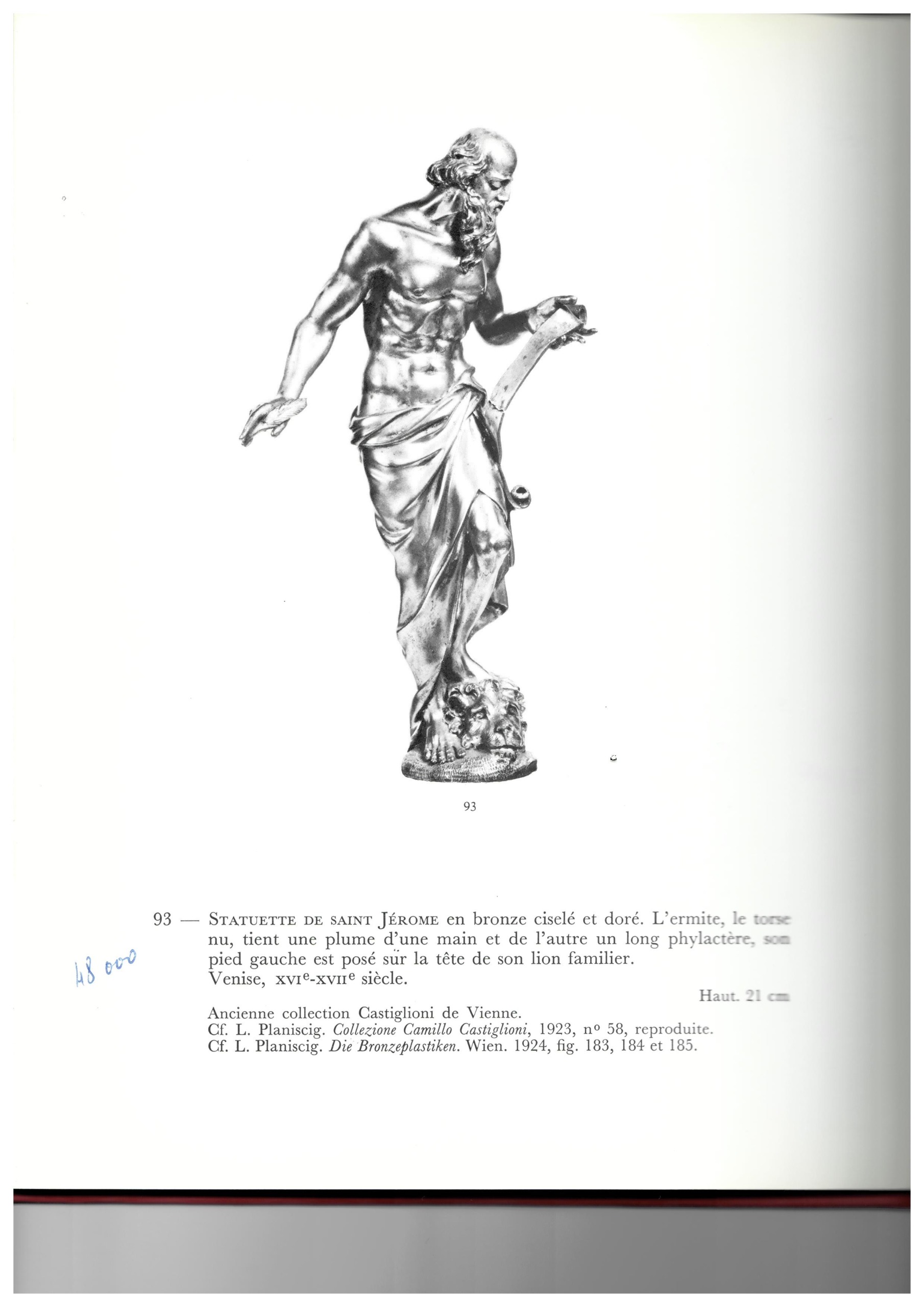
What is in any case certain is that our master’s models were produced in variants, known across different periods and reproduced with varying degrees of success. In the case of our Evangelists, a Saint John and a Saint Mark were sold in 1925 (Fig. 8); they formed part of the prestigious Camillo Castiglioni collection and had been attributed to Tiziano Aspetti by Leo Planiscig. The Saint Mark from the Castiglioni collection subsequently appeared as a Saint Jerome in the David David-Weill collection, sold in Paris on 16 June 1971 (Fig. 8). Another Saint John is known in the collection of the Minneapolis Institute of Art, though that piece is of mediocre quality and considerably later in date, as is a Saint Matthew held by the Royal Palace Museum in Warsaw.
Fig. 8 — Saint John and Saint Mark, attributed to Tiziano Aspetti. Camillo Castiglioni collection, sold in 1925.
In light of all these elements, we can confidently state that this pair of sculptures represents an extremely significant landmark in art history: combining characteristics of both Italian and German sculpture, of Mannerism and the Baroque, these are works of geographical and stylistic transition — witnesses to the extraordinary vitality of the artistic world at the turn of the 17th century, despite the prevailing climate of political turmoil.
Fig. 9 — Lot 93, “Collection D. David-Weill” sale, Ader, Paris, 16 June 1971.
Literature
See Białonowska, M. (2012). Andrzej Stanisław Ciechanowiecki. Collectionneur, marchand et mécène, Lublin, pp. 79-81; Warren, J., Bewer, F. G., Cosentino, L., & Dorment, R. (2010). Beauty & Power: Renaissance and Baroque Bronzes from the Peter Marino Collection, Wallace Collection, p. 54; Avery, C. (1998). Sculture, bronzetti, placchette, medaglie, Museo Civico Amedeo Lia, La Spezia, n. 97; Planiscig, L. (1921). Venezianische Bildhauer der Renaissance, Schroll, p. 591; sale catalogue, Collection D. David-Weill, Ader, Paris, 16 June 1971, lot 93.