A hiramaki-e lacquer ewer
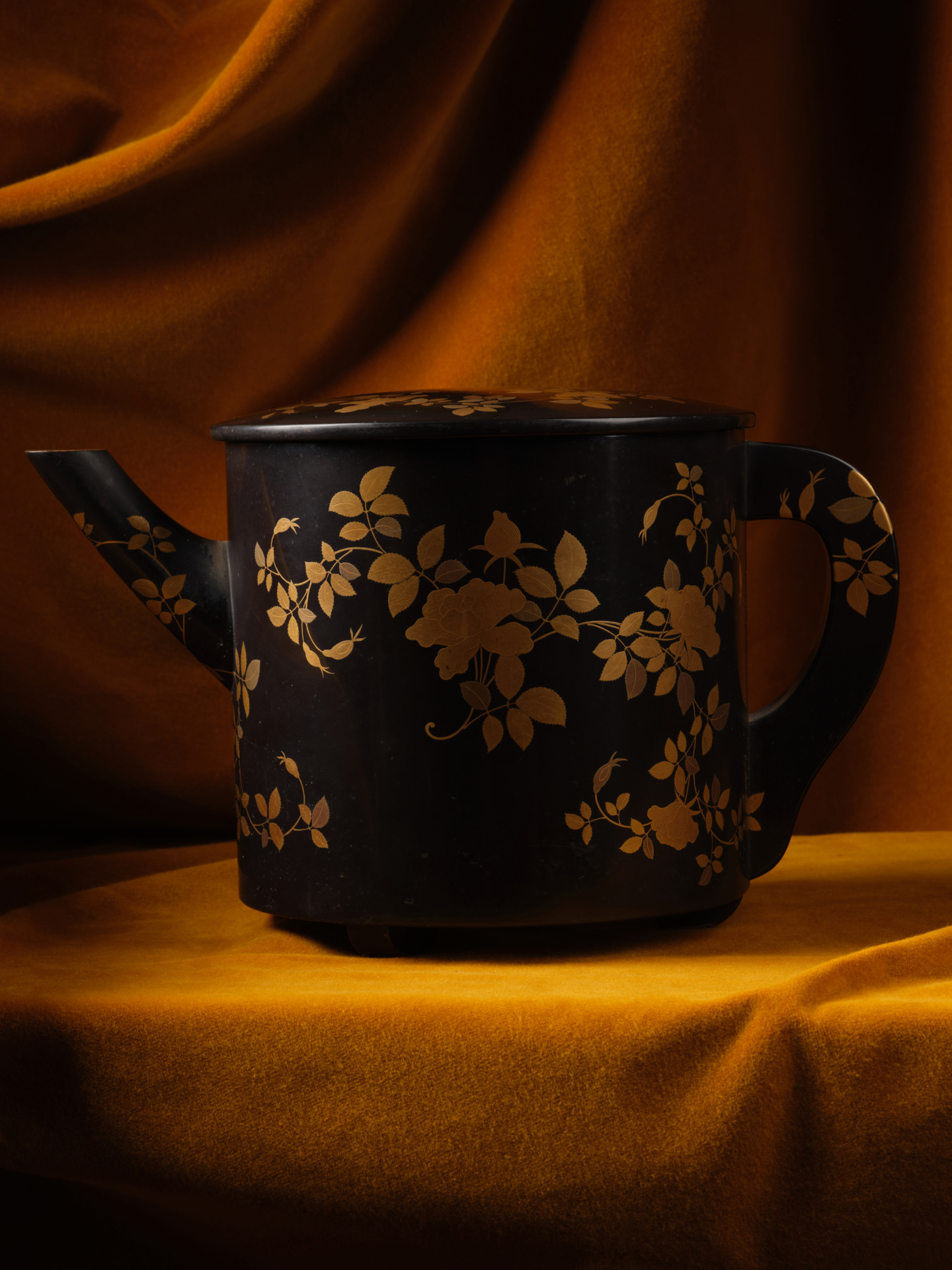
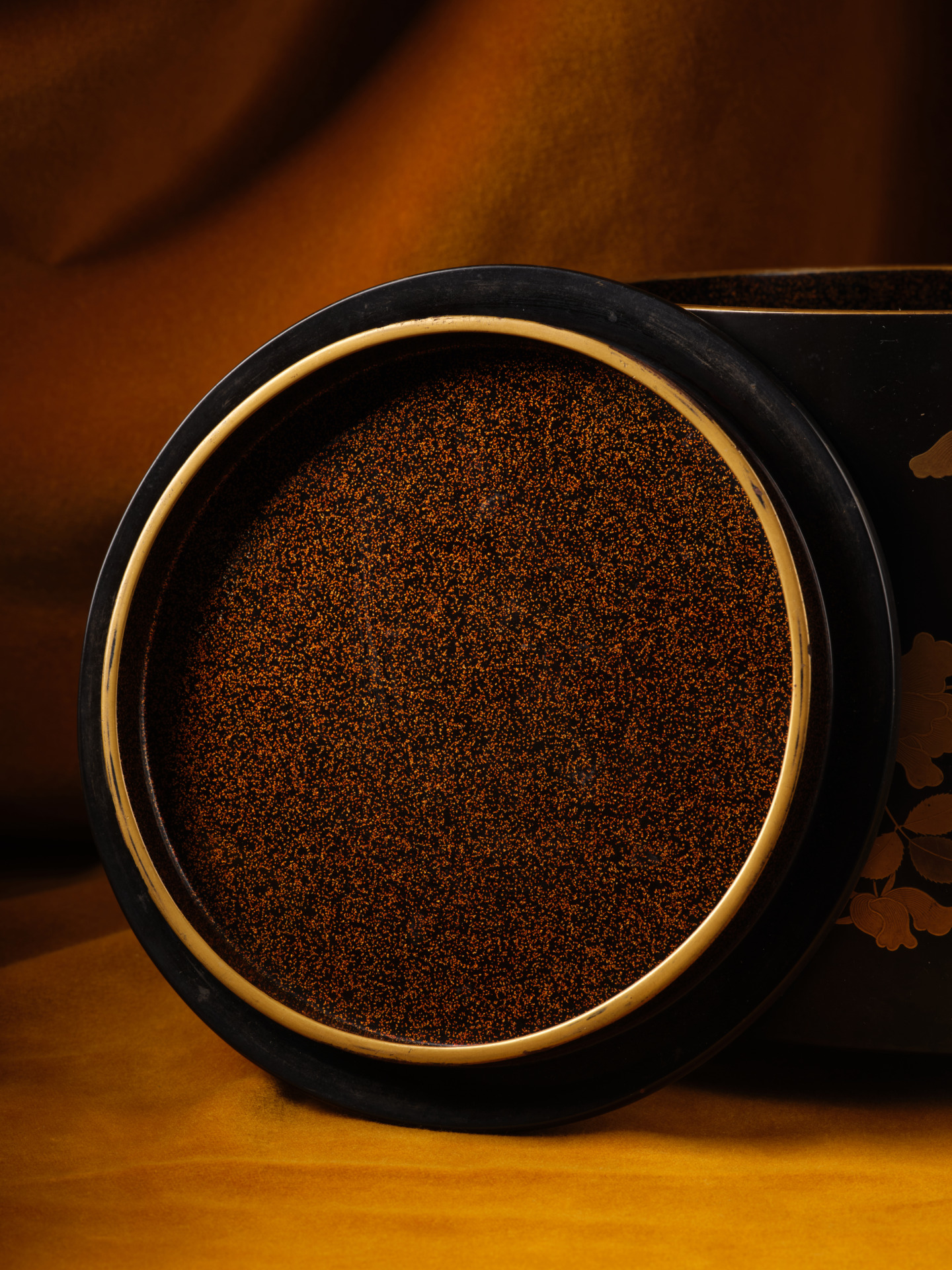
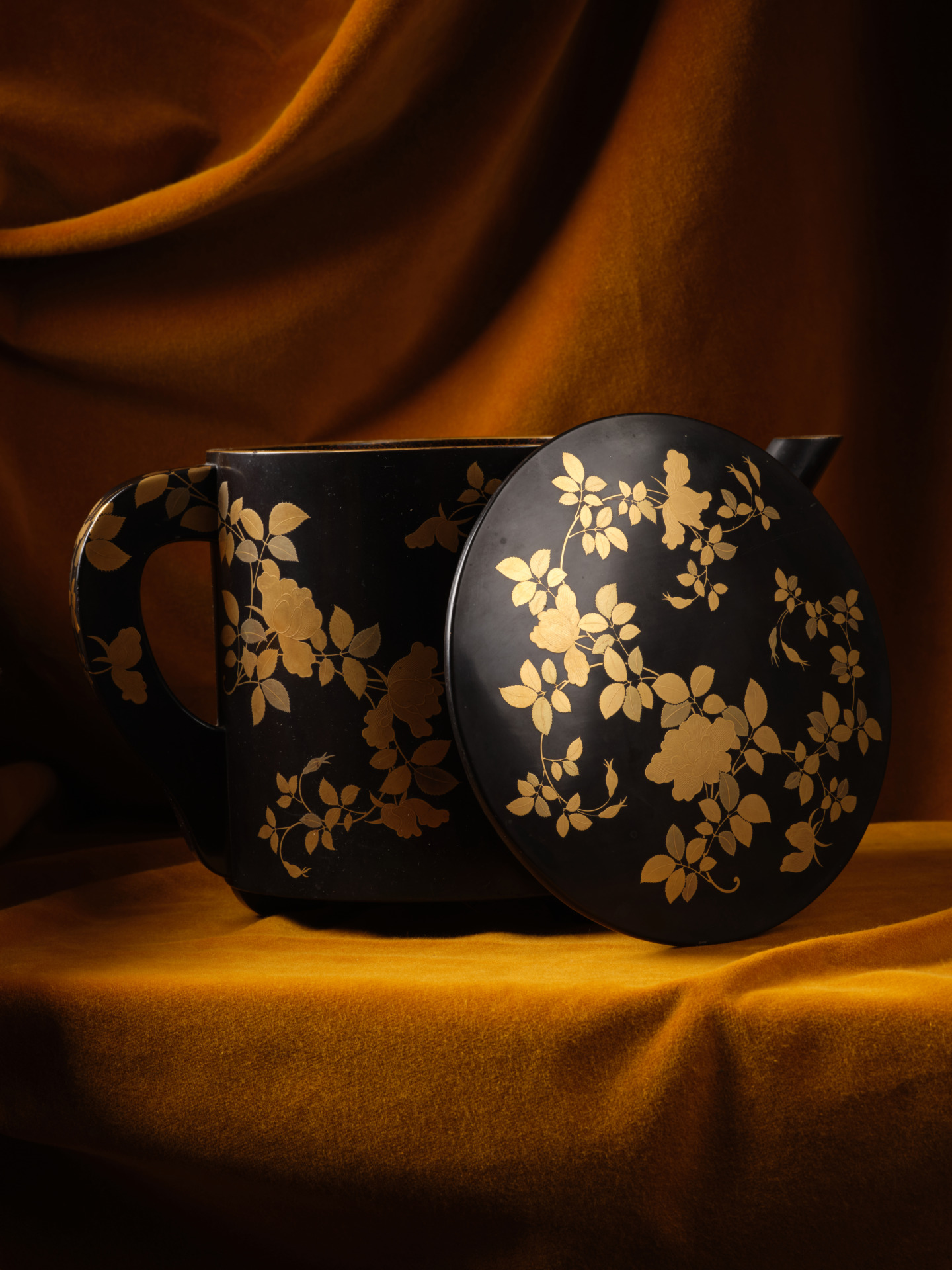
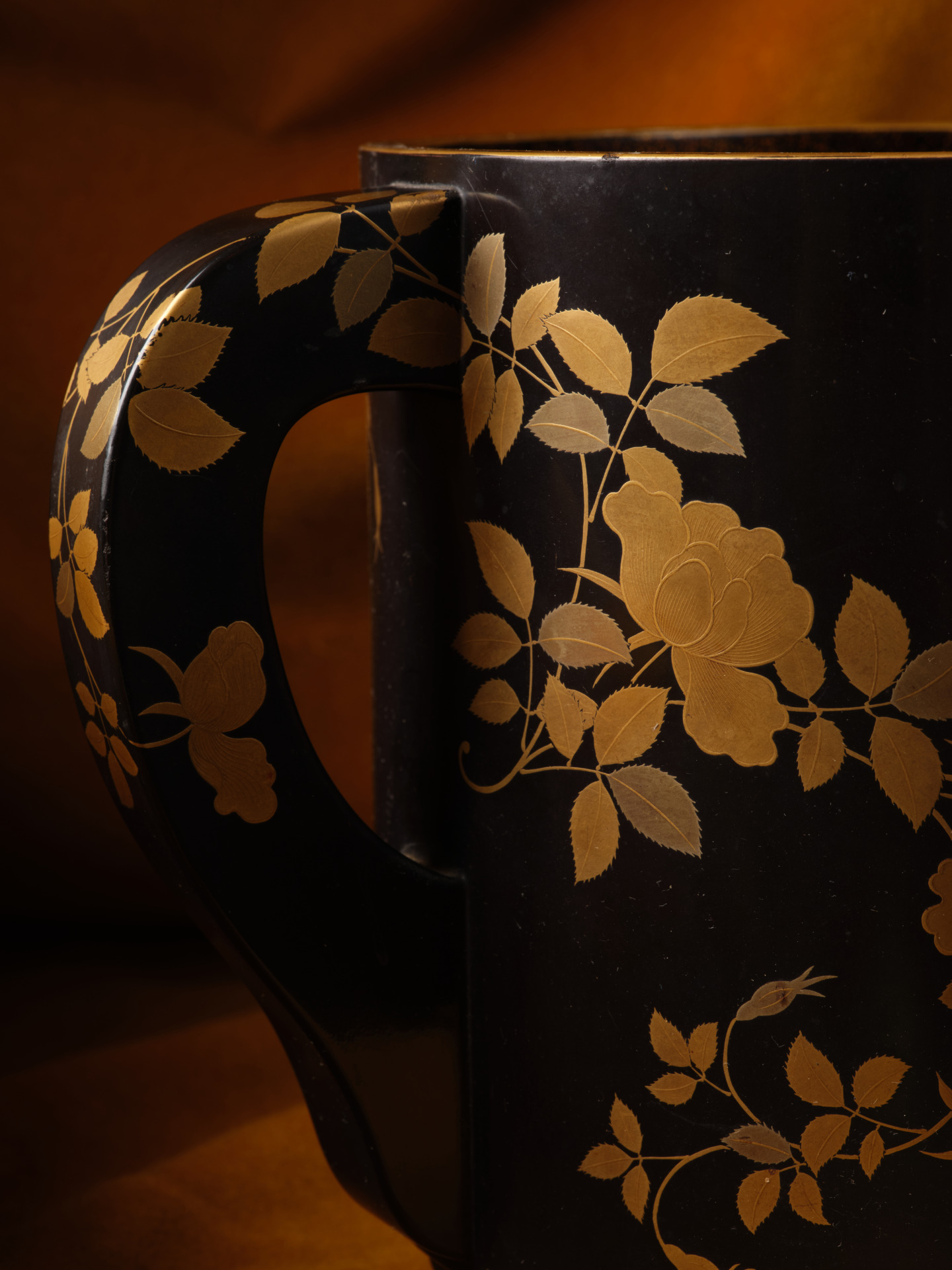
The traditional use of this kind of hot-water ewer (yutō 湯桶) makes it a relatively rare type of object in the West, unlike export lacquers proper—coffers, caskets, cabinets, necessaires—better suited to Western usage and made specifically for the Western market. The decoration of Japanese kerria (yamabuki ヤマブキ) leaves and flowers is executed in hiramaki-e, one of the three kinds of maki-e (蒔絵), literally ‘sprinkled picture’, a form of decoration in which motifs of gold or silver are applied in the last layers of lacquer, before the final polishing. Hiramaki-e (平蒔絵), ‘flat sprinkled picture’, stands midway between takamaki-e (高蒔絵), in higher relief, and togidashi-e (研ぎ出し蒔絵), almost without relief. The underside of the lid is decorated, for its part, with the motif known as nashiji (梨地), or ‘pear skin’, obtained by scattering in the lacquer countless irregular flakes of gold which, covered with translucent lacquer and then polished, gleam against the black ground.
This decoration, simple and pared-down, belongs to the style known as kōdai-ji maki-e (高台寺蒔絵), after the Kōdai-ji temple in Kyoto, famous among other things for its immense maki-e decoration, conceived in the Azuchi Momoyama period (1573–1615); in this style, historical or literary scenes give way to gilt leaves and flowers. Although this ewer probably does not date from that period, the simplicity of its design remains very close to that of Edo-period lacquers, and may be compared with that of a hiramaki-e yutō in the Tokyo National Museum (inv. H-4489).
Literature
See William Gerard Beasley, The Modern History of Japan, New York, 1963; The Great Japan Exhibition. Art of the Edo Period. 1600-1868, London, 1982; Iwao Seiichi, Iyanaga Teizo, et al., Dictionnaire historique du Japon, vol. XIV, Tokyo, 1988; Joe Earle, in Japanese Art and Design, London, 2009; Marie-Josèphe Arrestays, « L’or du Japon : les techniques de décoration des laques japonais », in L’Or du Japon. Laques anciens des collections publiques françaises, Bourg-en-Bresse, 2010; Gérard Siary, Histoire du Japon. Des origines à nos jours, Paris, 2020.